Expeditions, war stories & culture

War stories, articles & game guides

Gamer

Tribute

2026

Expeditions,

War Stories &

Culture

Contents

Icecrown WotLK Classic Lore Guide: Quests & Easter Eggs | Vikstone's Chronicles

Icecrown’s hidden lore, Easter eggs, and pop-culture references, plus the storyline threads tying the Lich King, the Ebon Blade, and the end of Arthas’s story back to Warcraft III and forward through Cataclysm, Legion, and into the modern game. Told through Vikstone’s War Journal and original 2008-2009 screenshots from the shadow of the Frozen Throne.

Icecrown Museum

Vikstone’s Chronicles · Northrend Lore Series


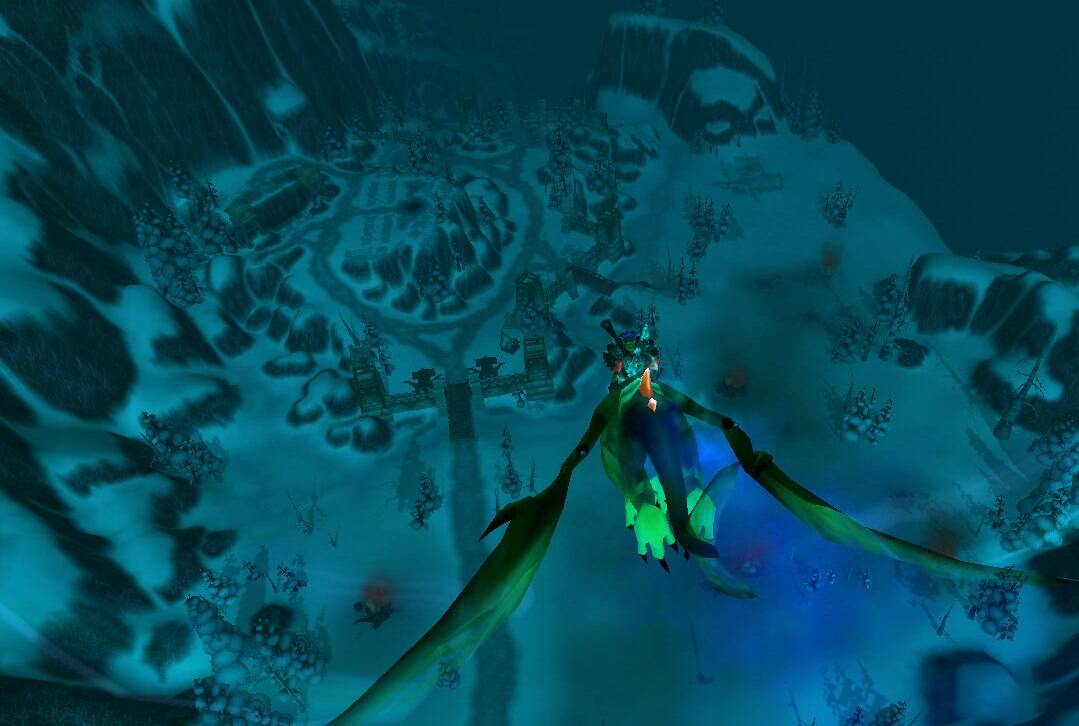
Every step Vikstone had taken across Northrend led here, to the frozen plains beneath the Lich King’s citadel.  

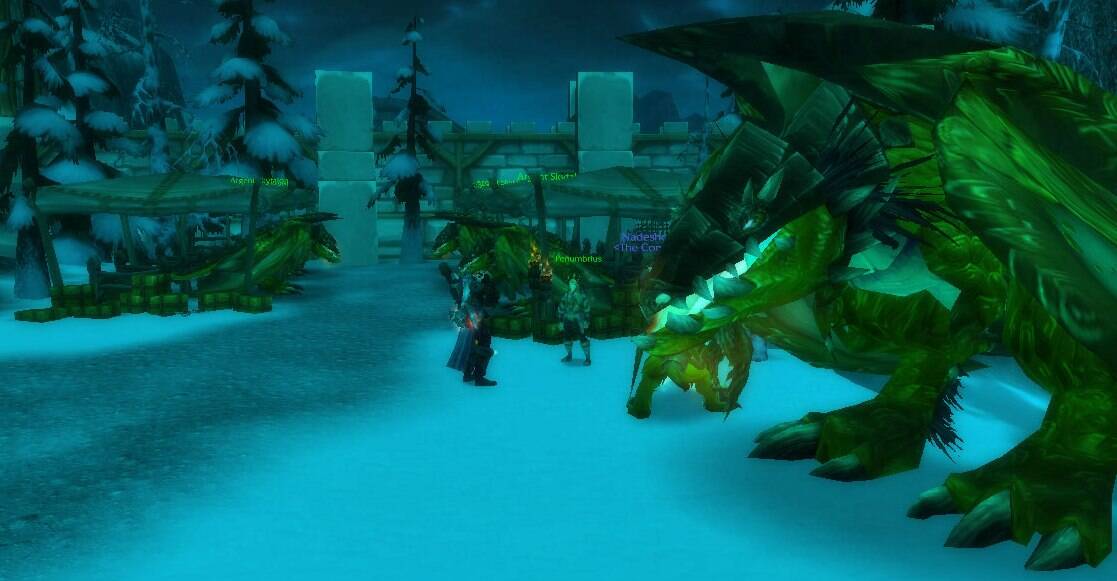
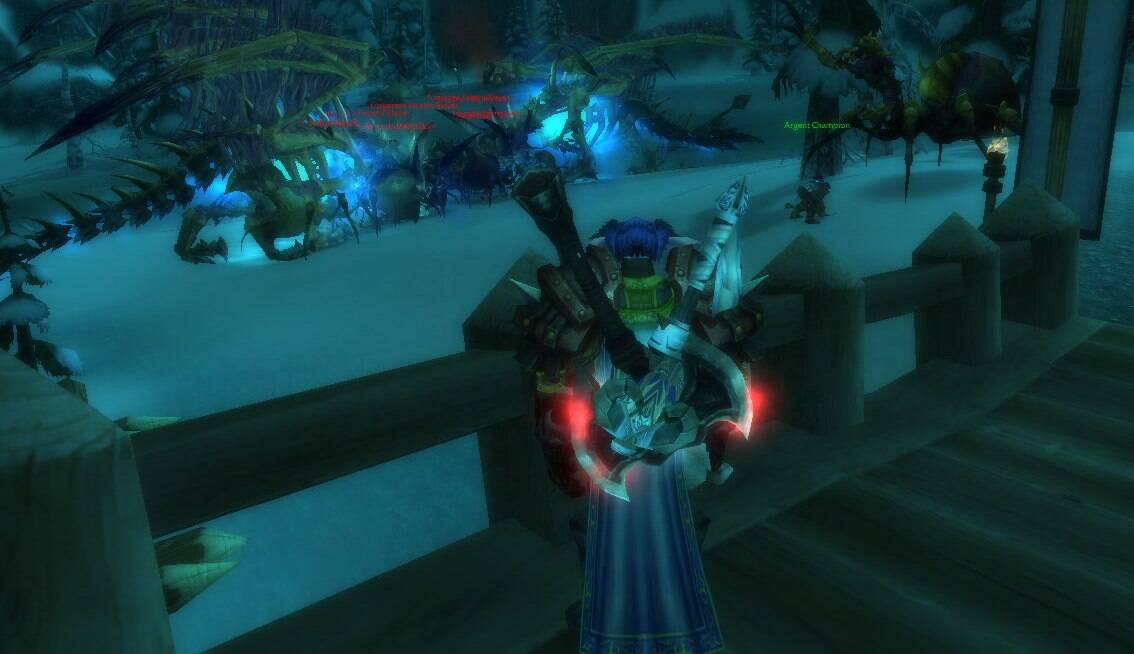
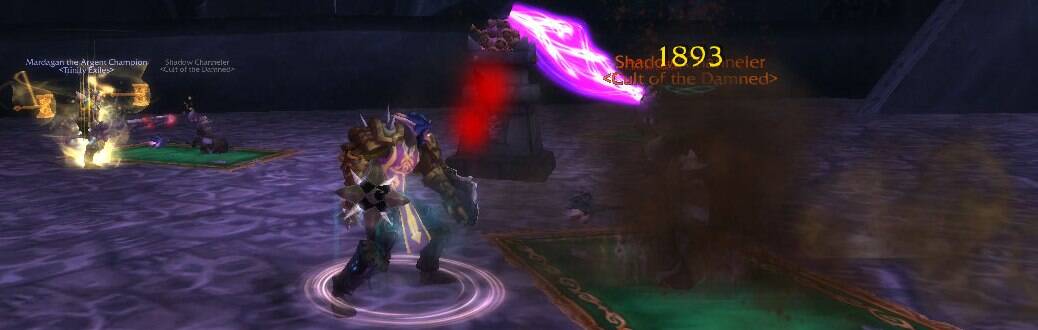
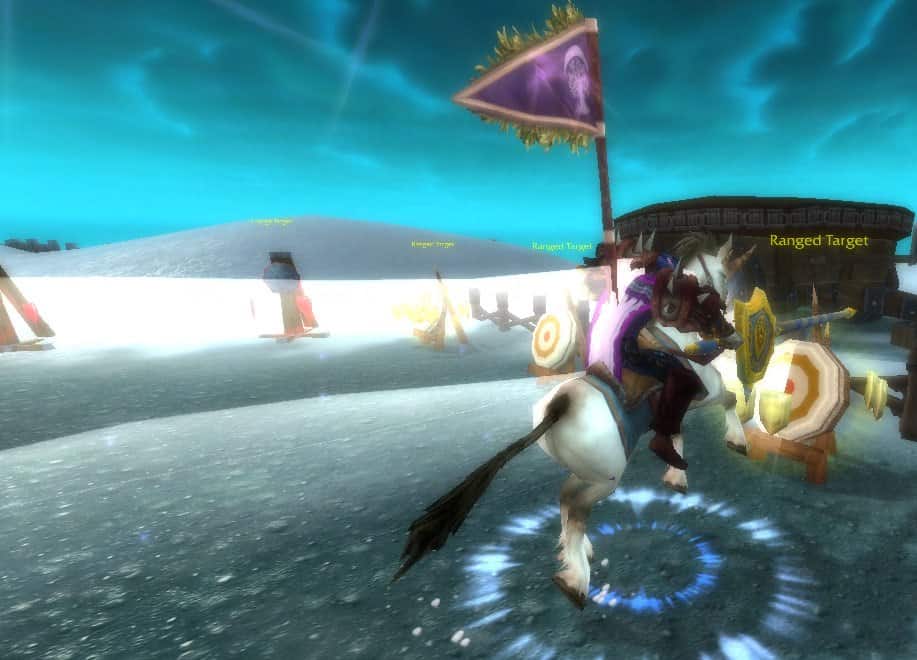
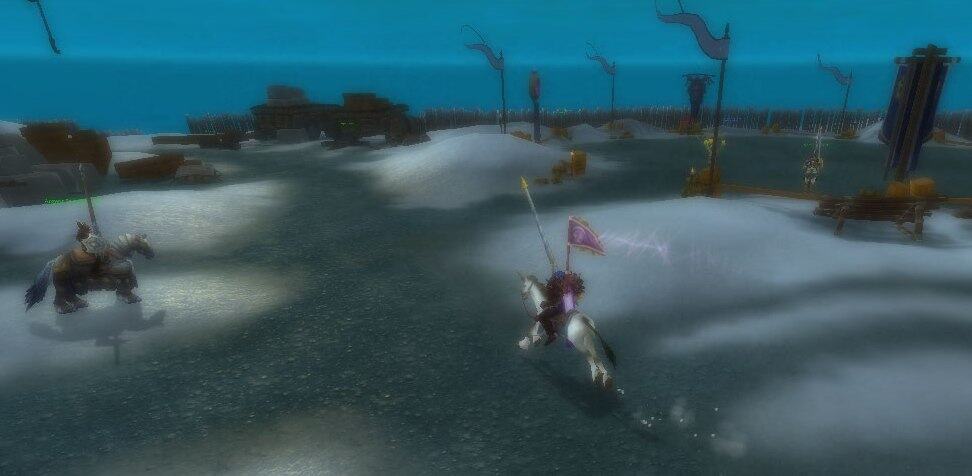
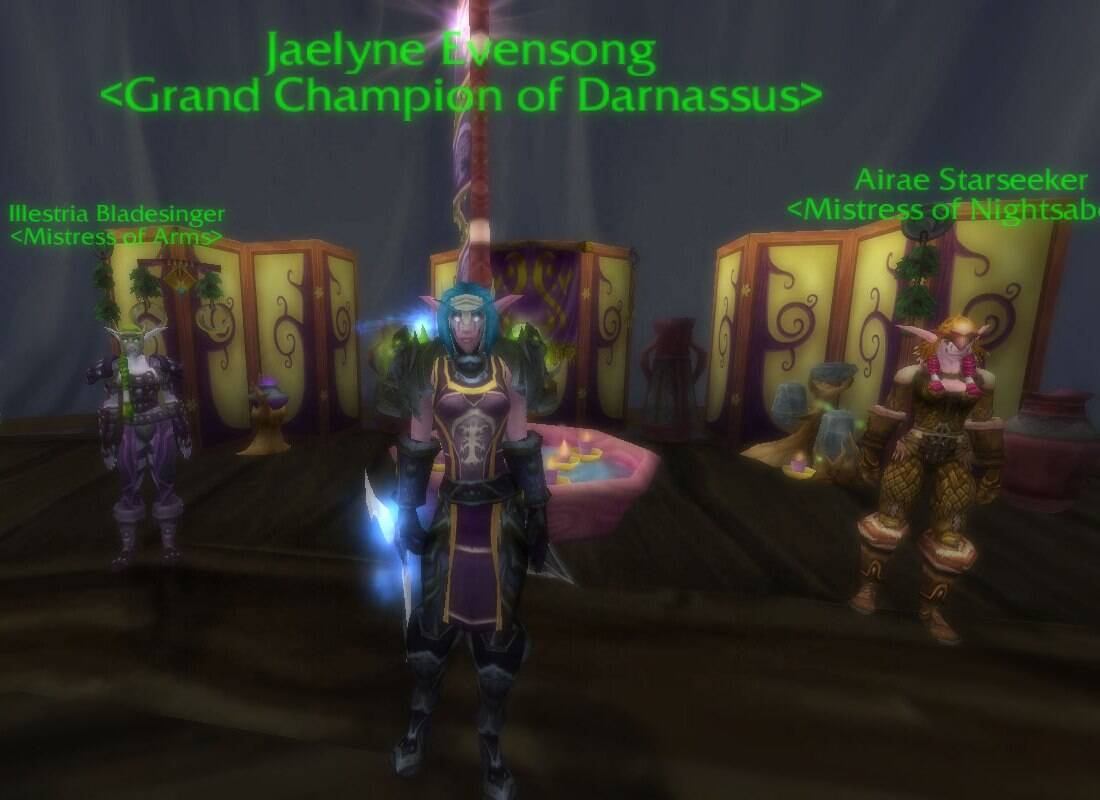
At the Argent Tournament Grounds, the Crusade gathered champions from both factions, staging competitions that felt absurd against the backdrop of war.

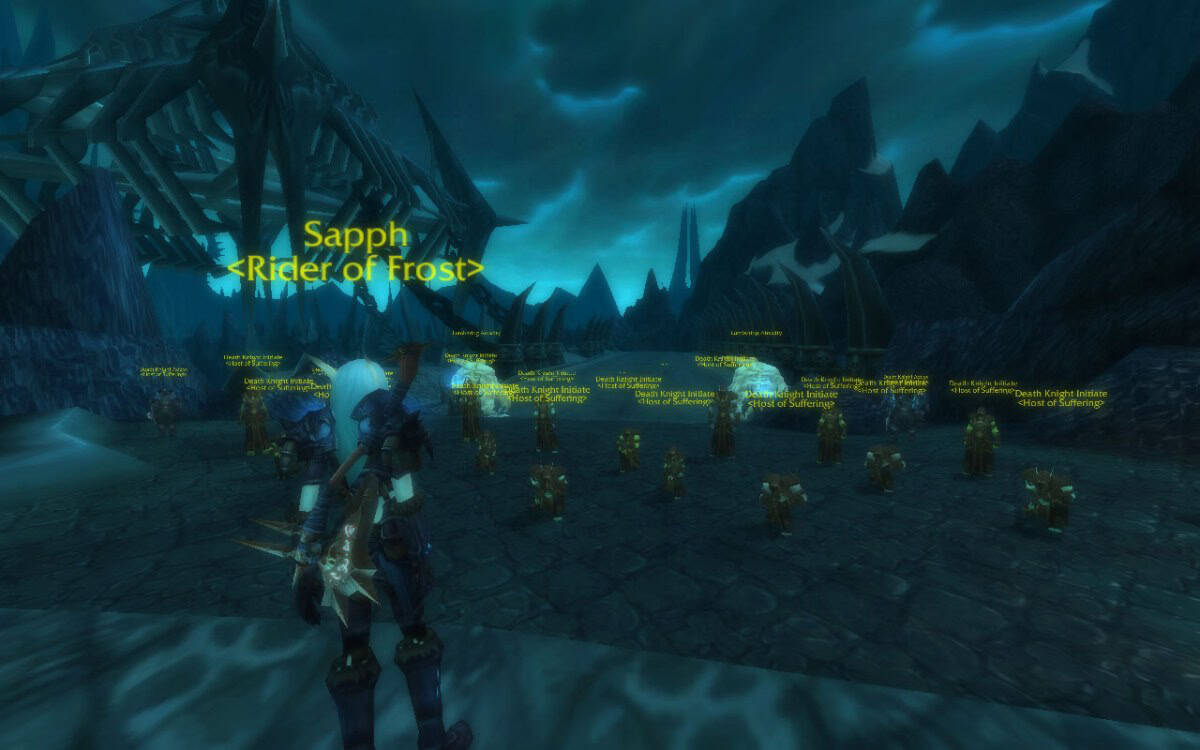
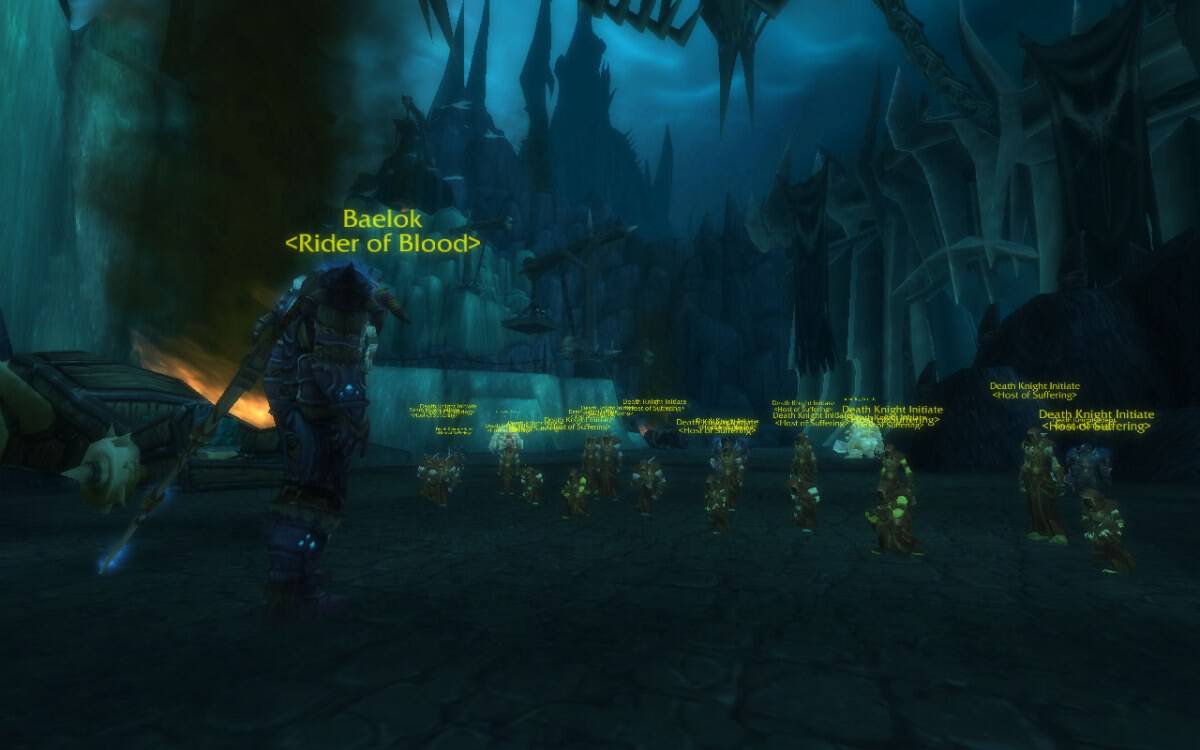
The Knights of the Ebon Blade operated from the Shadow Vault, death knights turned against their former master, proving that even the Lich King’s grip could be broken. And at the Crusaders’ Coliseum, Vikstone faced trials designed to turn raiders into weapons capable of standing before Arthas himself.

The ghosts of the Wrathgate haunted this zone. So did the memory of every fallen ally, every betrayal, every shrine where a Loa died. Icecrown was the answer to whether any of it mattered, and where Vikstone’s story comes to its end.


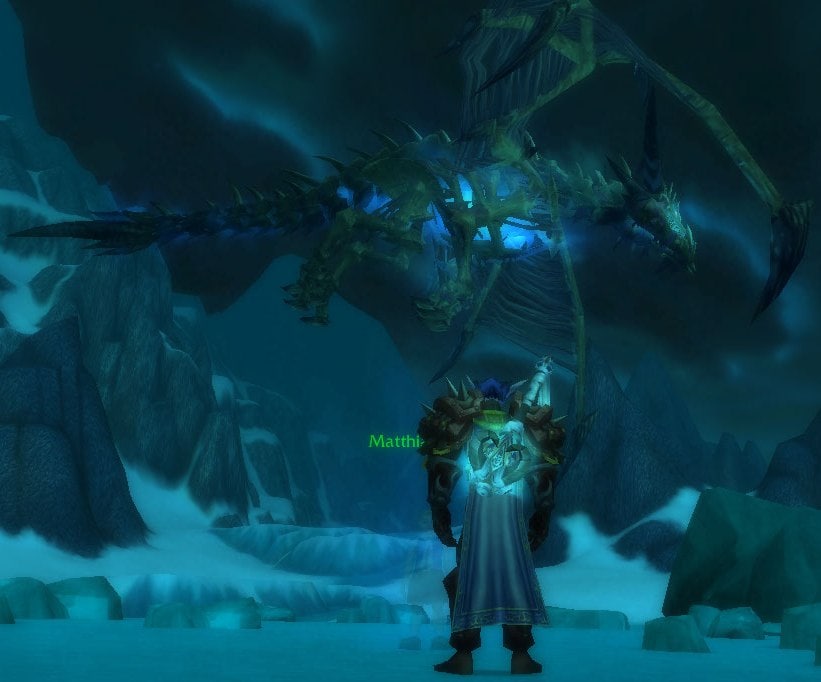
What follows is Icecrown as Vikstone found it in 2008, its buried secrets, the long road to the Frozen Throne itself, and the war as Vikstone recorded it to its end, quest by quest.

Vikstone Portrait Act 3
Illustrated by Christian DiBari and Simon Gough.
Icecrown quest ledger preview
Icecrown — The Enemy's Home Ground

Vikstone's Chronicles · The Final Zone

Icecrown

There is no neutral ground in Icecrown and almost nowhere to stand. The zone is the Lich King's fortress.

SELECT A FRONT

Core
The Gate at the End of Everything

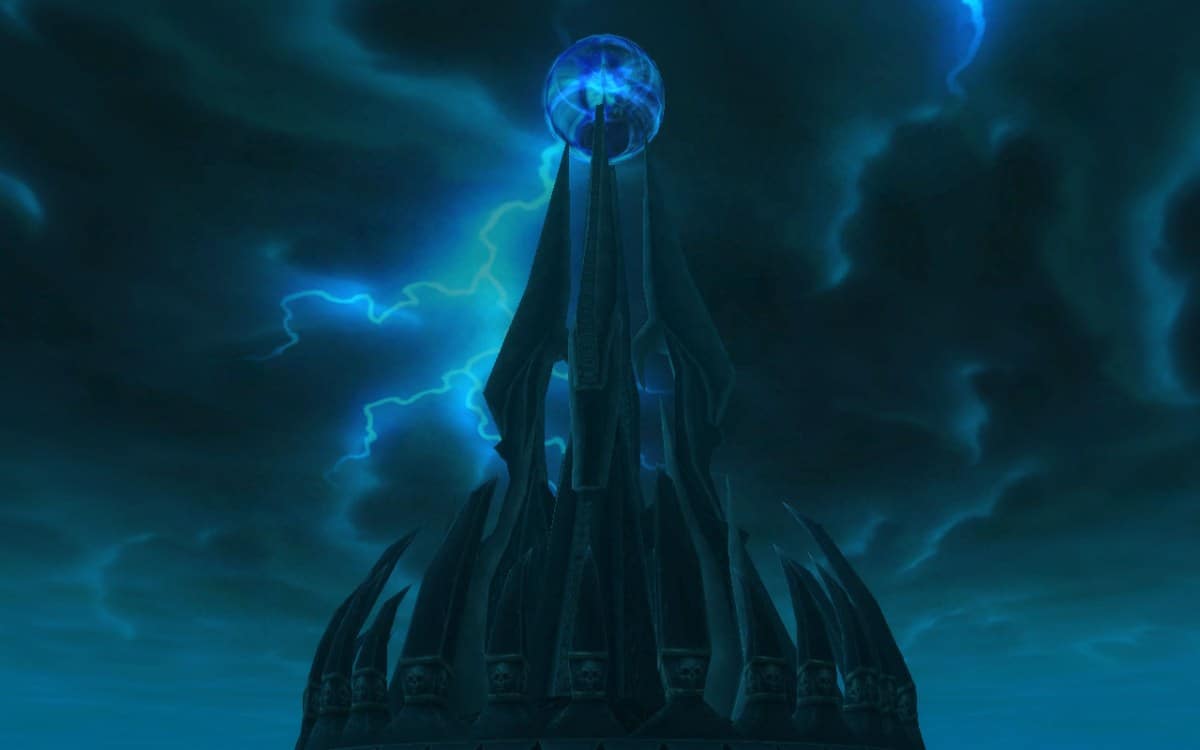
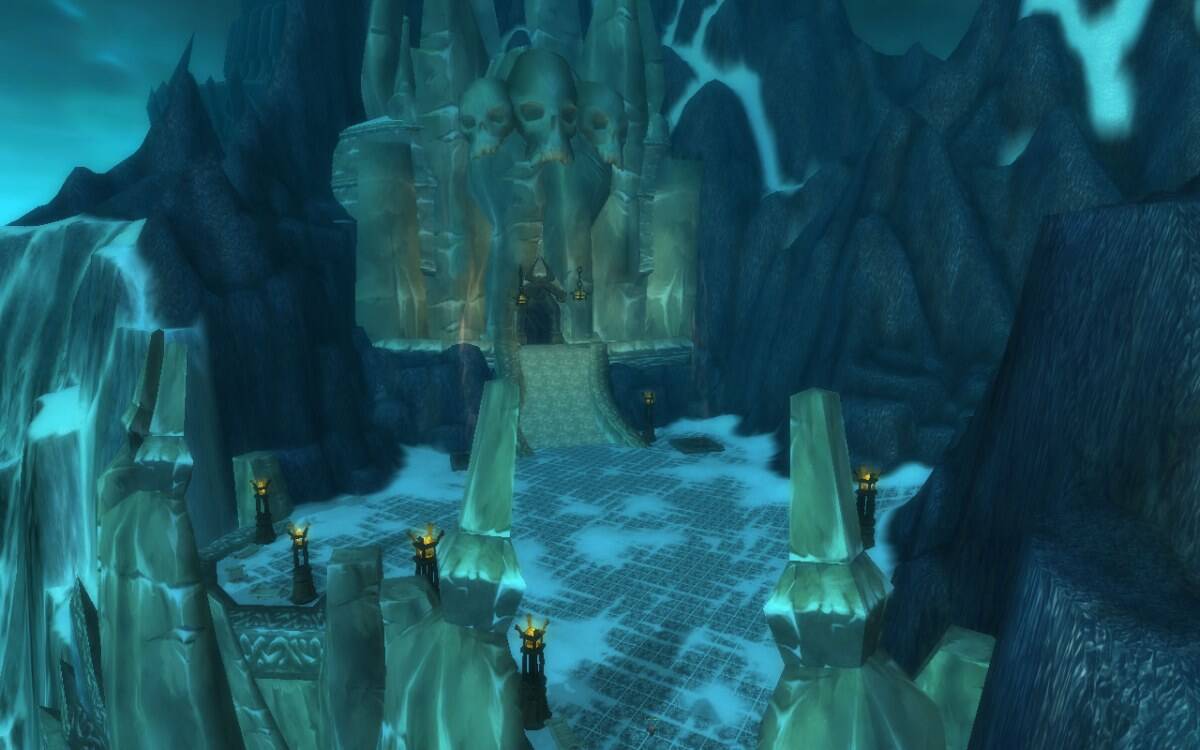
Icecrown Citadel rises from the glacier's center.

The approach

Airships, crusaders, and death knights carve footholds across the glacier.

The design

Quest after quest builds the coalition, and the gate stays shut, waiting for the raid that finishes what Northrend started.

The weight

Vikstone reached this glacier in 2009 with fifty-plus Terokkar names behind him. The Citadel is where the expedition, and the archive, point.

Front I
War from the Sky
The situation

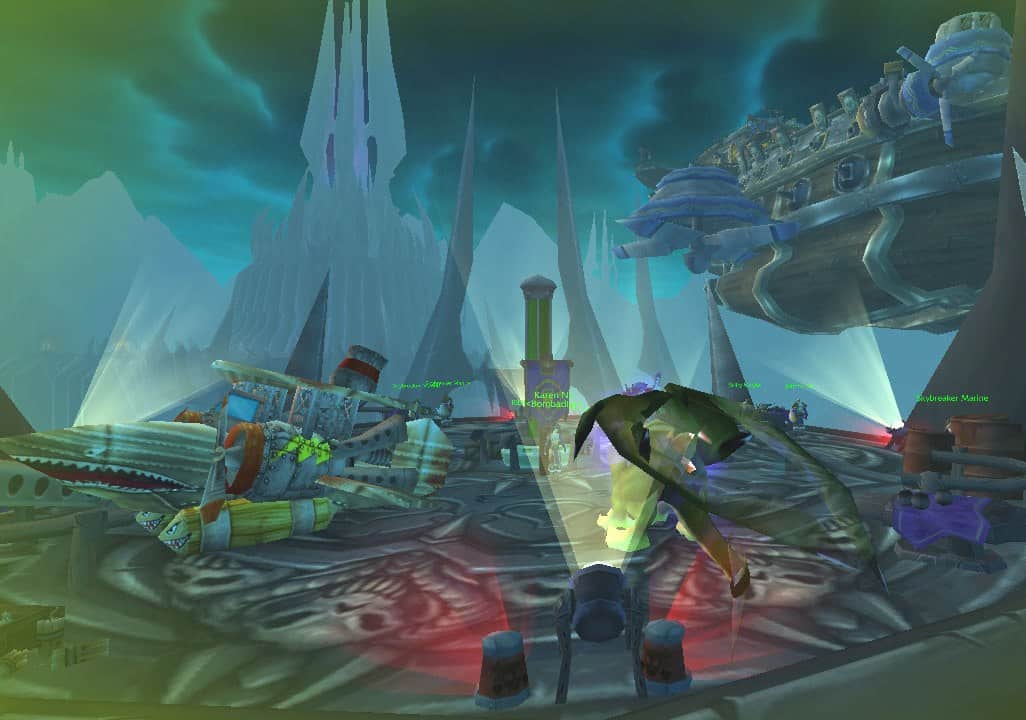
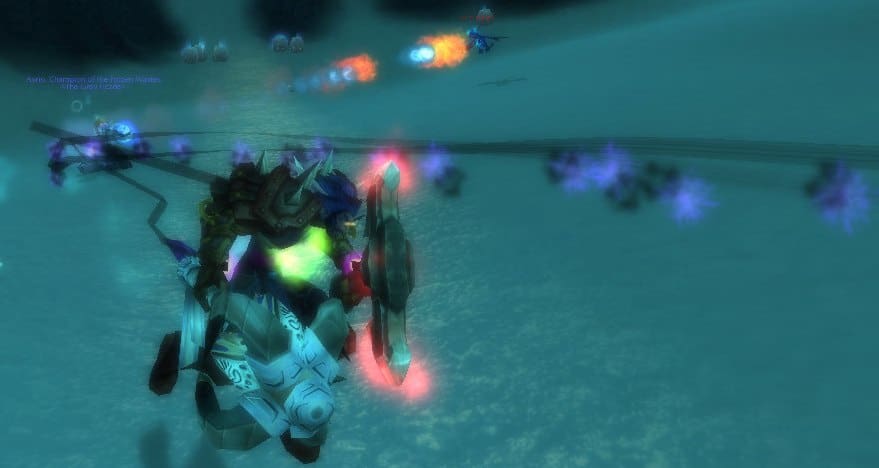
The Skybreaker and Orgrim's Hammer patrol overhead as flying fortresses, the only bases the Scourge cannot besiege.

The turn

Even a thousand feet up, the faction war continues. The two gunships trade fire over Icecrown while the real enemy watches from below.

Where it leads

The rivalry ends where it was always going to: the gunship battle inside Icecrown Citadel, fought in sight of the Frozen Throne.

Front II
The Crusade's Foothold

Tirion's Argent Crusade buys ground with their lives.

The situation

From the Argent Vanguard, the crusade grinds up the Valley of Echoes against everything the glacier can throw downhill.

The turn

The Battle For Crusaders' Pinnacle consecrates a spur of the enemy's own mountain, planting the Light's banner inside the Lich King's borders.

Where it leads

The Pinnacle becomes the staging ground for the Argent Tournament and, beyond it, Tirion's role at the Citadel's gates.

Front III
The Shadow Vault

The Knights of the Ebon Blade fight the war only former Scourge can fight.

The situation

From the airships, Thassarian and Koltira send agents into the Scourge's own machinery, beginning with It's All Fun and Games.

The turn

The Ebon Blade seizes the Shadow Vault and turns a Scourge stronghold into a forward base, weapons of the enemy choosing their own war.

Where it leads

The thread that began with Thassarian's rescue of Leryssa in Borean Tundra ends here, with death knights holding ground no living army could.

Front IV
The Boy Who Isn't There

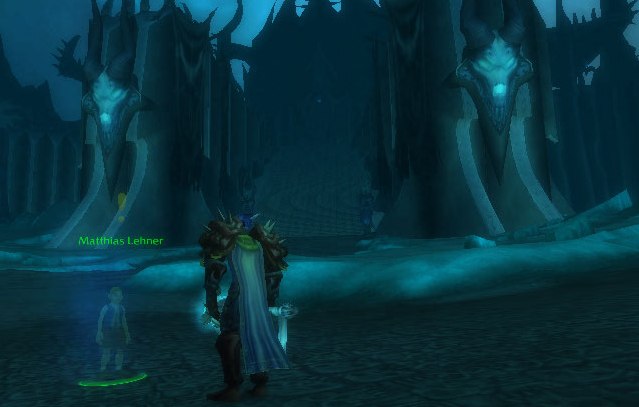
A ghost child only Vikstone can see keeps appearing near the Scourge's holiest sites. His name is an anagram.

The situation

Matthias Lehner, rearrange the letters and he is Arthas Menethil, walks the glacier as the remnant of everything the Lich King cut away.

The turn

The boy's visions reveal that a piece of Arthas's humanity survives, and the knowledge sets up Tirion's Gambit at the Cathedral of Darkness, the crusade's one attempt to end the war.

Where it leads

The gambit fails, and its failure defines the endgame: there is no one left inside the armor to save. Only the raid remains.

From the War JournalTirion's Gambit

Front V
Bridenbrad

One dying crusader, three offerings, and the only story in Icecrown where the Scourge loses completely.

The situation

Crusader Bridenbrad, infected saving others, waits alone on the glacier and refuses to let anyone near enough to share his fate.

The turn

The search for a cure gathers gifts from across the world, Alexstrasza's flower in Dahlia's Tears and Remulos's blessing in The Keeper's Favor among them, and every one of them fails.

Where it leads

In The Boon of A'dal, the naaru carries his spirit into the Light before undeath can claim him. The plague takes the body and gets nothing else. The full story lives in the memorial pages.

From the War JournalTime Yet Remains → Light Within the Darkness

Front VI
The Black Blood

The Scourge's miracle metal is everywhere in Icecrown, and the tuskarr already told everyone what it is.

The situation

Saronite plates the walls, the war machines, and the Citadel itself. The tuskarr call it the Black Blood of Yogg-Saron, and they mean it literally.

The turn

The Lich King's fortress is built from the congealed blood of an Old God, and miners who work it hear whispers. The war's architecture is corrupted before any army arrives.

Where it leads

The metal quietly ties Icecrown to Ulduar's prisoner and to the wall at Angrathar, one substance connecting the expansion's two great enemies.

From the War JournalSlaves to Saronite

Vikstone, night elf warrior of US-TerokkarVikstone's field read: every zone in Northrend asked what we were willing to fight. Icecrown asked what we were willing to become to finish it.

Beneath the Citadel: Courts, Grounds, Gunships


The Shadow Vault marks a turning point: a Scourge fortress captured and repurposed by the Knights of the Ebon Blade, proof that territory could be taken back.

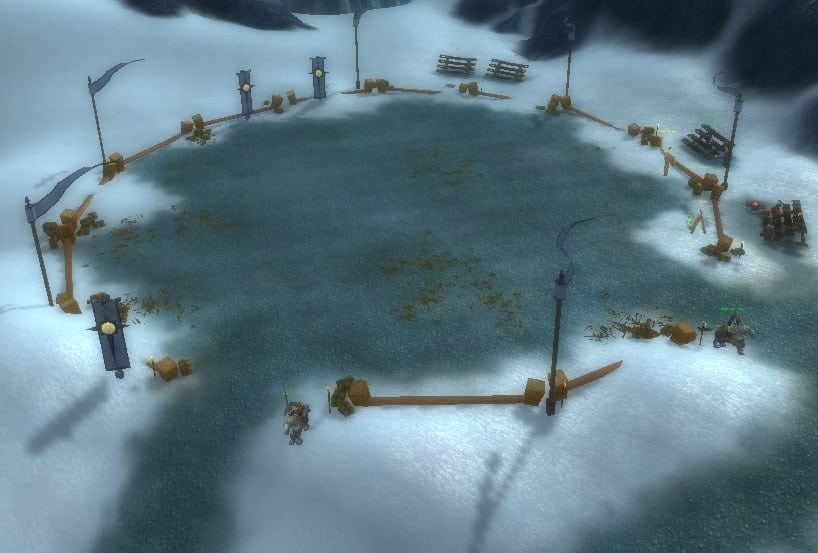
Players who arrived early in the patch cycle remember the Argent Tournament Grounds before they were finished. The construction phasing showed tents going up, structures incomplete, and NPCs preparing for something that hadn’t started yet. It was Blizzard building a world event in real time.

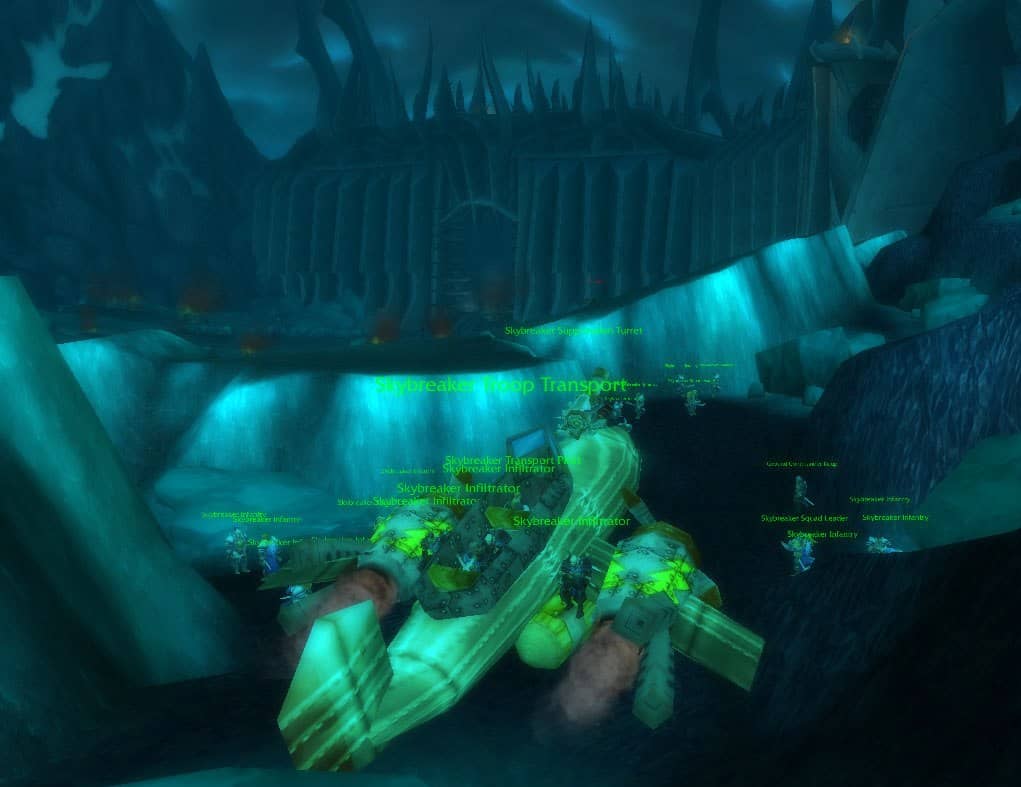
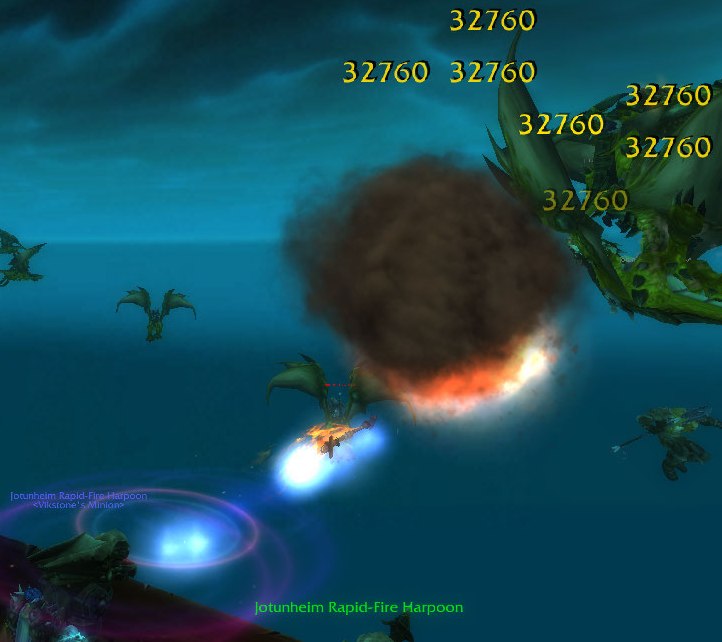
The faction gunships hovering above Icecrown became characters in their own right. Orgrim’s Hammer and The Skybreaker carried players into battle, hosted questgivers, and eventually crashed through Icecrown Citadel’s walls in one of Wrath’s most memorable raid encounters.

And at the Argent Tournament stables, Steen Horngrass quietly honors Jeremy M. Steen, a player memorialized in the game he loved.


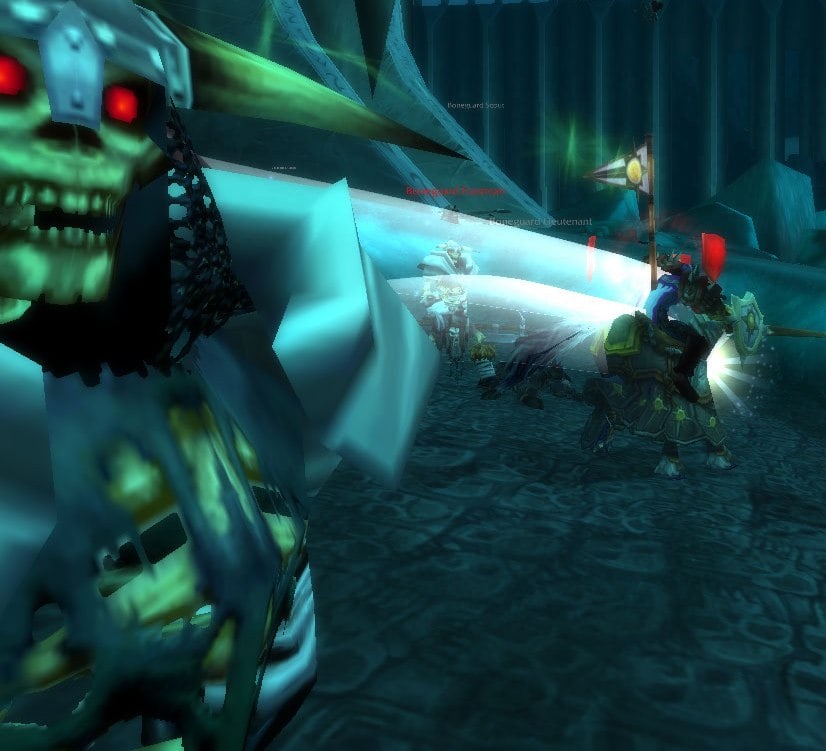
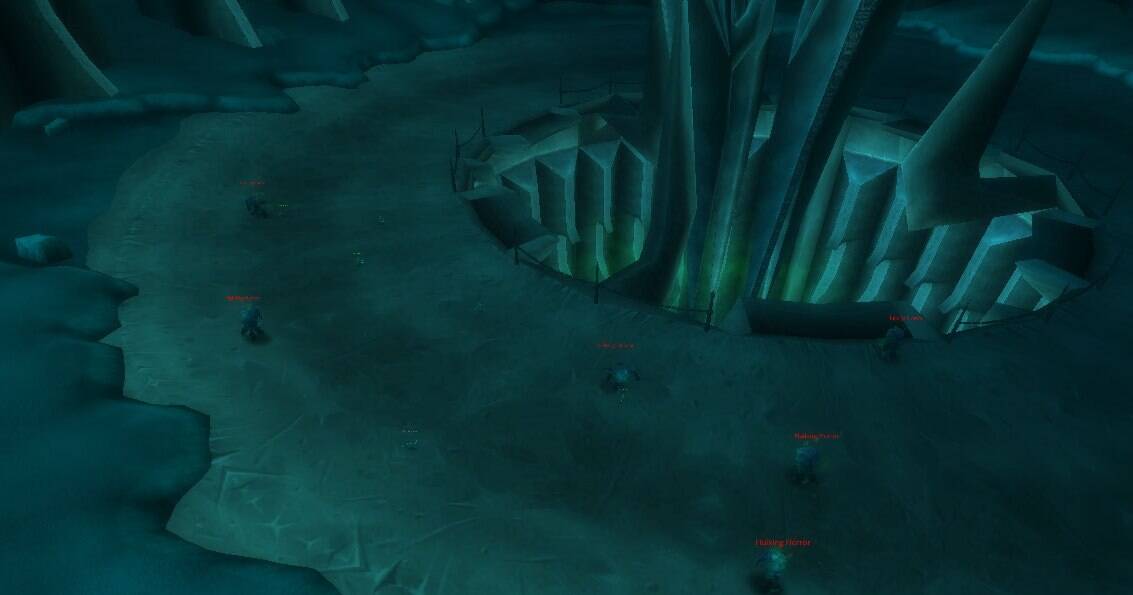
Court of Bones & Shadow Vault, Icecrown: Three "Museum Stops"

Court of Bones & Shadow Vault, Icecrown: Three “Museum Stops”


Stop 1: The Hunter and the Prince: Arthas vs. Illidan Reenacted 

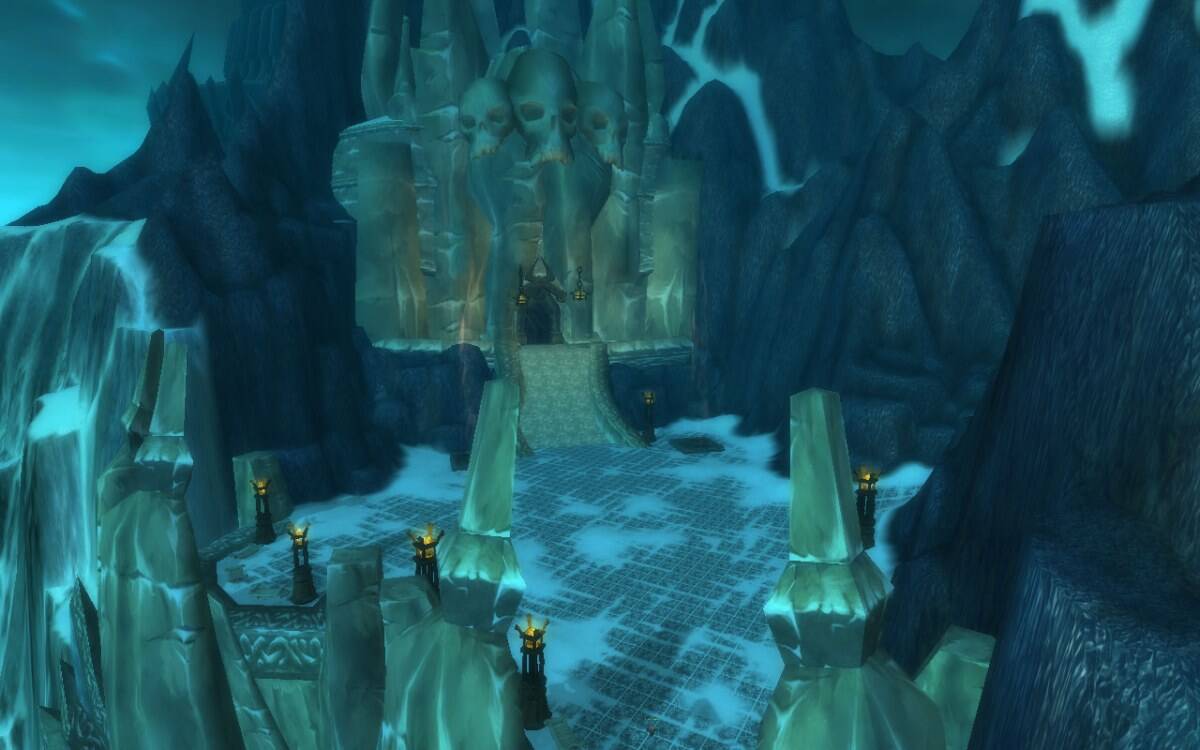
Where: Court of Bones, the open ground north of Icecrown Citadel’s entrance (~49, 73). 

What to notice: The Hunter and the Prince transforms you into Arthas for a one-on-one duel against Illidan Stormrage. This is the exact location where the Warcraft III: The Frozen Throne mission “A Symphony of Frost and Flame” concludes (that mission title, incidentally, references George R.R. Martin’s A Song of Ice and Fire).

Watch your debuff bar during the duel. Illidan’s glaives apply Pierced Heart, and its tooltip is Arthas thinking out loud: “Your heart has been grazed by Illidan’s glaives. If only you could rid yourself of this useless thing…”

The decision that damns him is offered to you first, as a status effect. You carry the temptation for the length of the fight; he carried it to the Frozen Throne.


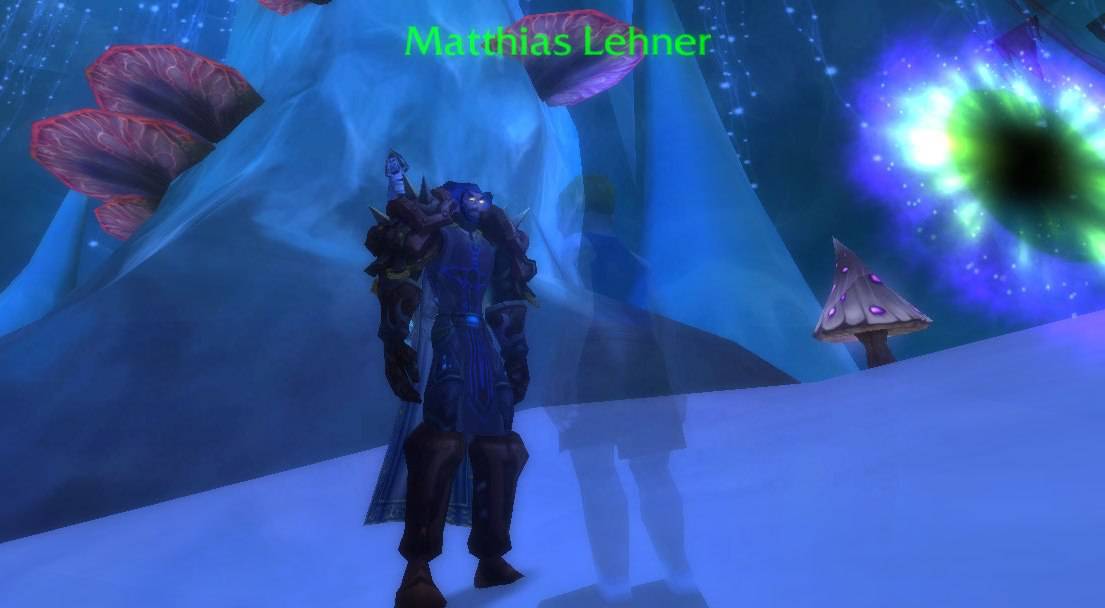
Matthias Lehner (Arthas’s discarded humanity in an anagram: rearrange Matthias Lehner and you get Arthas Menethil, letter for letter) tells you the rest: after the duel, “The first thing he did when he became king was to rid himself of it. He threw it down the pit where we first met. And you, <name>, were the first person to touch it since.”

Fifteen years of visitors to this museum, and the exhibit’s first line names you as the one who disturbed the collection. The Court of Bones is where Arthas won his duel with Illidan, and then lost a longer one with himself. This courtyard is where he decided to stop being human.


Icecrown Citadel


Stop 2: Frozen Scouts & the Crusade’s Assault 

Where: The same Court of Bones killing ground. 

What to notice: Ranks of Argent soldiers stand frozen mid-charge, victims of frost wyrm breath. During the Death Rising pre-patch event (Shadowlands), the Frozen Solid daily quest let you thaw these ice-locked scouts, turning the set-piece into a rescue mission.

The Argent Crusade represents a long paladin lineage: Tirion Fordring merged the Argent Dawn with the Knights of the Silver Hand after the Battle for Light’s Hope Chapel, forming a unified force specifically to challenge what Icecrown represents.


Stop 3: The Ocular: Blinding the Lich King (Shadow Vault, ~44, 21) 

Where: Northwest of the Court of Bones, above the Shadow Vault’s saronite spires. 

What to notice: It’s All Fun and Games has you destroy The Ocular, a giant surveillance eye floating above the vault. The quest name references the idiom “It’s all fun and games until someone loses an eye,” which was also a whispered line from the Old God C’Thun in the Temple of Ahn’Qiraj (later removed, though it survives in archived documentation of the whisper list). Blizzard removed the whisper, then built a quest around the punchline and hung the eye in the sky over Icecrown.

The Ocular’s design echoes the Eye of Sauron from The Lord of the Rings. After destroying it, you report to Baron Sliver at [44.1, 24.7], unlocking the Shadow Vault as a Knights of the Ebon Blade hub.

Under-Construction Argent Tournament Grounds


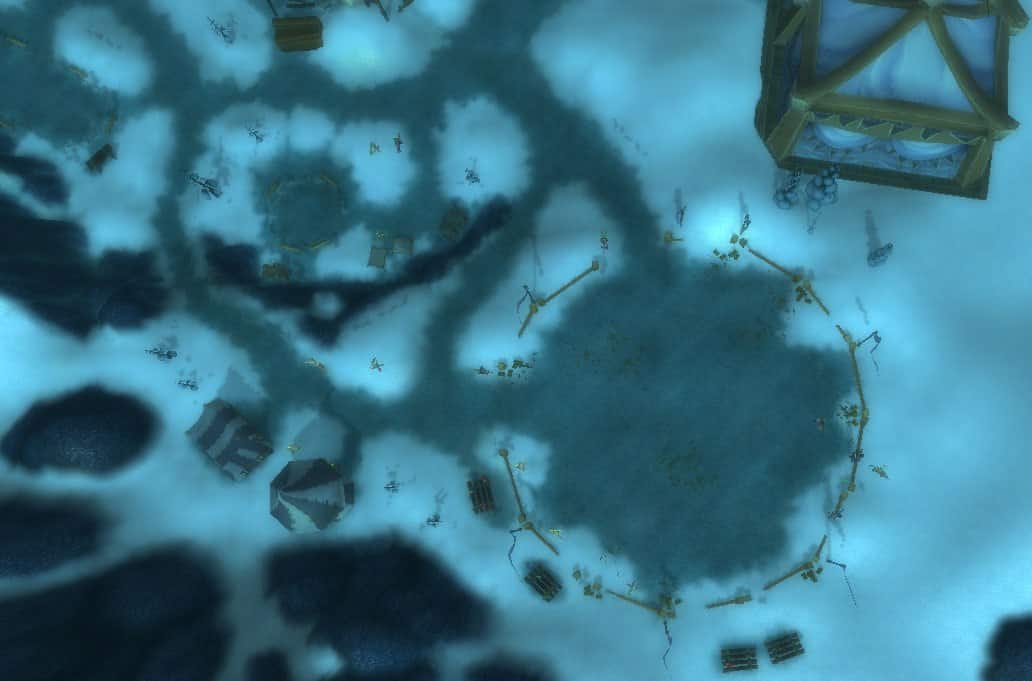
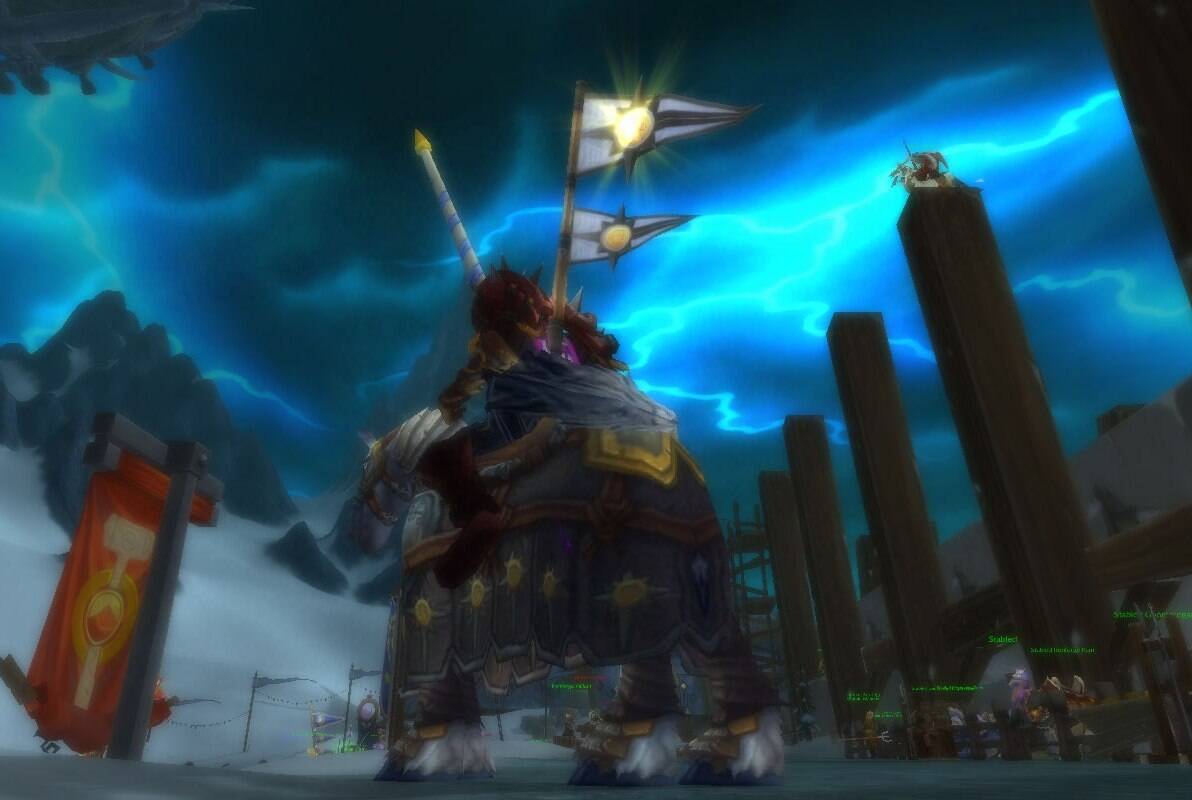
Far northeastern Icecrown, in the snowy crater around (~74, 20), is the future Argent Tournament hub. In Wrath Classic’s Phase 2 (January 17, 2023), the site appears mid-build: scaffolds, supply crates, and Crusaders barking about the coming “grand melee.”

As the phase settles, the full jousting loop rolls out, mirroring original Wrath’s cadence: the Tournament debuts in patch 3.1 (April 14, 2009), and the Crusaders’ Coliseum reaches completion in patch 3.2 (August 4, 2009).


The Argent Tournament


Foreshadowing. Even before you’re championing cities, you hear “grand melee” everywhere, then see it formalized once quests unlock (e.g., The Grand Melee daily).

Passing by on other business. Routes along Icecrown’s north rim toward Ymirheim naturally skirt the crater, an intentional geographic tease that something big is rising on the Lich King’s doorstep.

Living patchwork. The area evolves from tents and hammering to a full sanctuary with vendors, Silver Covenant/Sunreaver pavilions, and Tirion’s hourly stage address. By patch 3.3.0, three guard towers reinforce the perimeter, one between the Coliseum and Deathspeaker’s Watch, and one near each faction pavilion, showing the grounds fortifying even after construction ends.

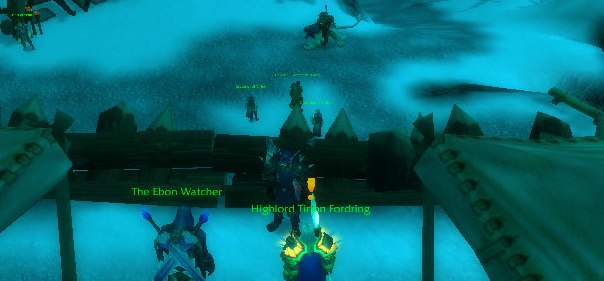
Tirion’s strategy. From the stage east of the Ring of Champions, Highlord Tirion Fordring delivers his address at the top of every hour: “A massive attack with every able-bodied man would end in needless slaughter. Every soldier lost would rise as the enemy. Azeroth would be left defenseless against the undead threat.”

His solution, in his own words from the same address: “Instead, we require a small, concentrated strike force for the attack to succeed. For that reason, we have created the Argent Tournament.”

The speech closes with a battle cry that still echoes: “We will stand together in the face of evil, and Arthas WILL fall!”

Classic timing notes. Wrath Classic Phase 2 began January 17, 2023 (Ulduar opened January 19). Community write-ups noted goblins “still hard at work” while Tournament dailies were available, echoing the original 3.1→3.2 progression where construction quests disappeared once the arena opened.


Curator’s Notes:

  • Learn the lance, then earn the colors. The rank ladder (Aspirant → Valiant → Champion → Crusader) locks in via daily jousts like The Grand Melee, which formalizes the mechanics hinted at by NPC barkers during construction.
  • An hour on the hour. Tirion’s stage address explains the purpose: avoid a mass assault that would only swell the Scourge; instead, field a vetted strike force for Icecrown. You’ll hear it on the hour from the Ring of Champions.
  • Goblins with clipboards. The Blastbolt brothers‘ construction dailies: A Chip Off the Ulduar Block, Jack Me Some Lumber, document the build phase and are removed in 3.2 once the arena opens. Bezzle handles lumber from Crystalsong oaks; Bozzle wants you blasting titan ruins in Storm Peaks for stone. Neither is subtle about cutting corners behind the Crusade’s back.
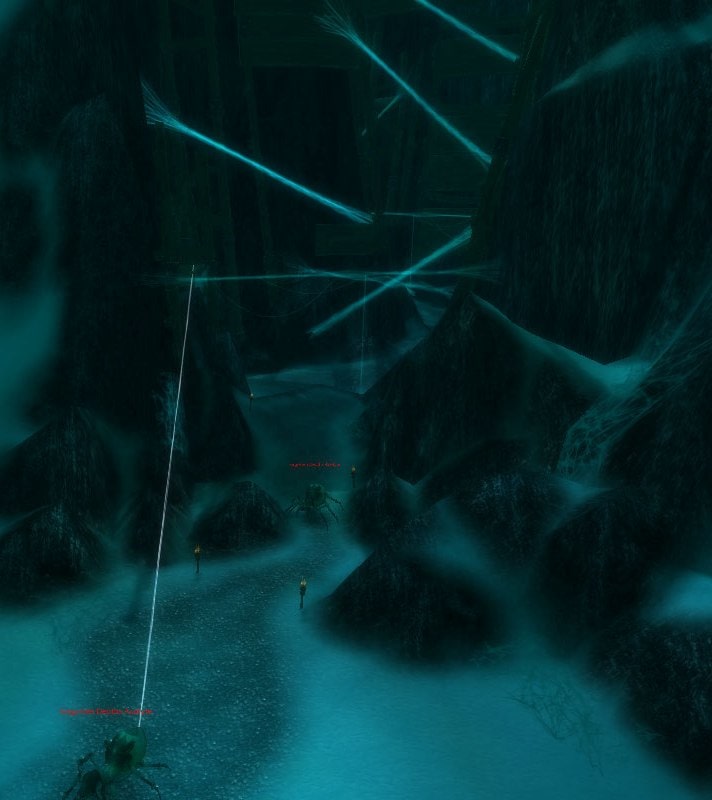
  • Scarabs in the shadows. Watch the ground near the faction pavilions. Critters named Innocuous Scarab surface now and then and skitter between the tents, untargetable, easy to miss. They’re foreshadowing: Anub’arak waits beneath the Coliseum floor, and the Lich King knows exactly where Tirion built his arena.
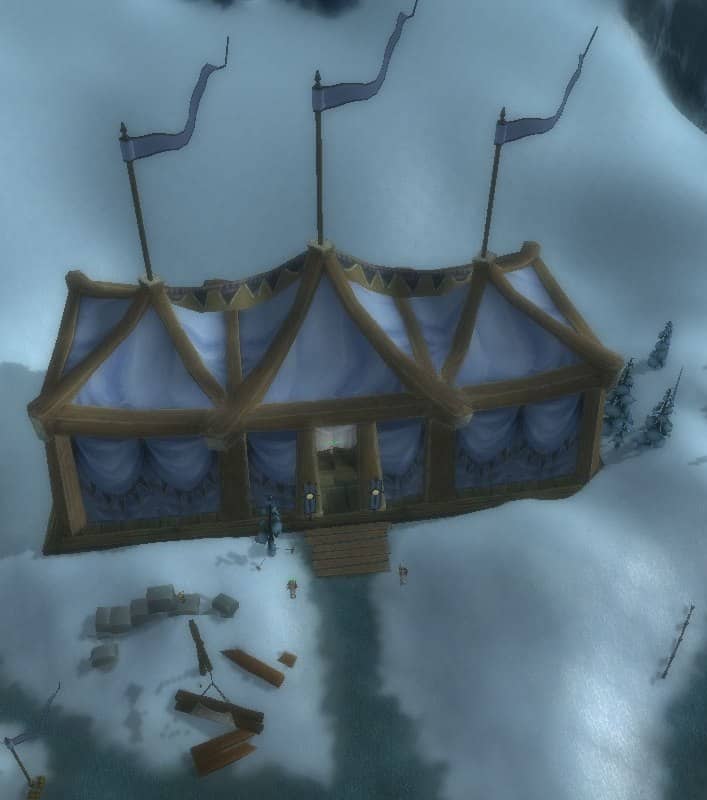
  • Architecture as heraldry. Viewed from above, the main Coliseum building is shaped like the Argent Crusade symbol, a detail most ground-level players never notice.
  • A sword from the lake. The daily A Blade Fit for a Champion sends you to Drak’Mar Lake with a Winter Hyacinth, and a maiden rises from the water to present you a blade. A jousting tournament, a lady in a lake, a sword given to the worthy: Blizzard built the full Arthurian set.


The Black Knight of Westfall

The Black Knight of Westfall?


Lore Threads:

  • The Black Knight thread. The Tournament’s internal mystery (The Black Knight chain) culminates in 3.2 and spills into Trial of the Champion, where the Black Knight becomes the dungeon’s final boss. He crashes the ceremony, kills the herald, and fights you in three phases: undead, skeleton, ghost. The quest chain is the prologue; the dungeon is the payoff.
  • The floor shatters. In the Trial of the Crusader raid, the Lich King himself appears the moment the Twin Val’kyr fall and the raid starts to celebrate. He informs the survivors that the nerubian kingdom runs beneath the whole continent, including the ground Tirion chose to build on. Those scarabs weren’t decoration.
  • From trials to the final march. The Coliseum serves as the narrative staging ground immediately before the push on Icecrown Citadel, your “trial by lance” before the assault on Arthas.
  • Across games. The event later inspires Hearthstone’s The Grand Tournament expansion (2015), which imagines the tournament continuing after Arthas’s defeat, purely for sport.
  • Design footnote. Early plans placed the grounds in Crystalsong Forest, but they were moved because Dalaran’s performance footprint was heavier than Blizzard anticipated. The relocation to far-northeastern Icecrown solved the lag issue: training grounds within sight of the Citadel itself.
  • Map quirk. Open the Northrend map and the grounds file themselves under the Storm Peaks, though every gryphon, goblin, and scarab on site is standing in Icecrown. The clerical error has survived since 3.1, uncorrected, as if even the cartographers refused to put anything of the Crusade’s on the Lich King’s page.

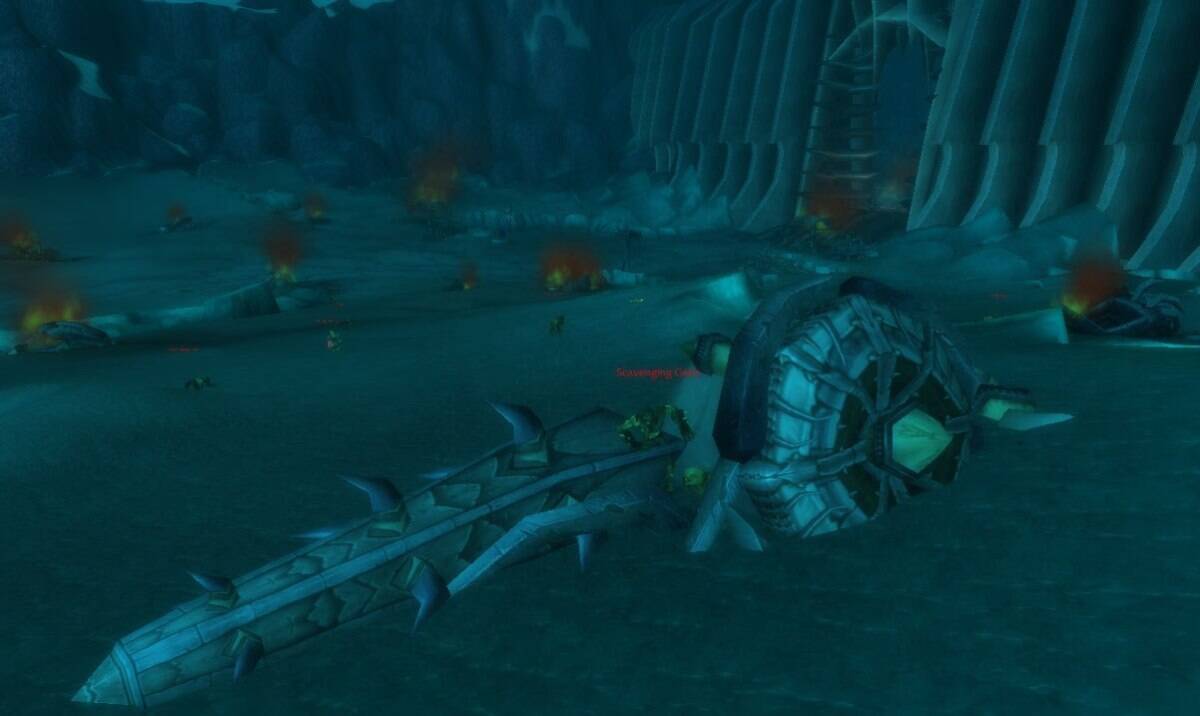
The Faction Gunships: Flying Fortresses


Most quest hubs stay in one place. The Skybreaker and Orgrim’s Hammer broke the mold: mobile bases patrolling Icecrown’s skies, evolving from daily-quest platforms into raid encounters into dramatic rescue vehicles. No other WotLK location plays so many narrative roles.


The Skybreaker

The Skybreaker


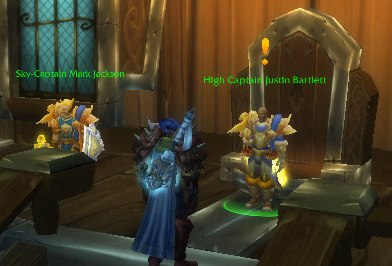
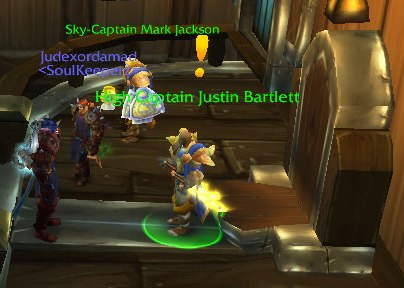
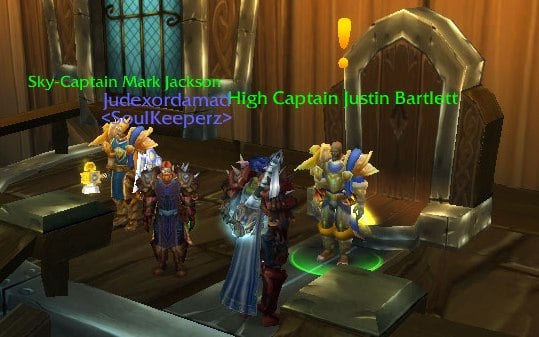
Alliance: The Skybreaker: A gnomish-dwarven marvel commanded by High Captain Justin Bartlett. The design philosophy is modular and naval: propeller banks for propulsion, over twenty broadside cannons staffed by dwarves and gnomes, twin battery turrets on the forecastle, and a bomb bay in the lowest deck housing ordnance “larger than a drake.”

A steel eagle figurehead cuts through frozen air. Even the lifeboats are engineered for flight, fitted with flapping wings and boat-style rudders adapted for aerial escape.

Horde: Orgrim’s Hammer: Goblin zeppelin engineering pushed to military scale, named for Orgrim Doomhammer. Two massive balloons (steel-reinforced beneath the fabric) keep it aloft, connected by a catwalk. Where the Skybreaker distributes firepower across dozens of guns, the Hammer concentrates it: a single enormous cannon runs nearly half the ship’s length, emerging through a carved stone wolf head at the bow.

Sky-Reaver Korm Blackscar commands, though his reputation took a hit after ordering an ambush on Alliance forces at the Broken Front. Thrall and Garrosh summoned him to Warsong Hold over it, and Garrosh, of all people, nearly took his head for the stain on the Horde’s honor. Blackscar offered his resignation. He got one more chance instead.


From quest hub to boss arena to escape vehicle: These ships start as daily-quest ferries and refuse to stay in that job. In the Icecrown Citadel Gunship Battle, both vessels are remodeled for combat (below-deck entrances sealed), with Muradin Bronzebeard commanding the Skybreaker and High Overlord Saurfang taking the Hammer’s helm.

Then in the Halls of Reflection escape sequence, your faction’s gunship rises from below the platform to blast the tunnel shut behind you as the Lich King closes in. The captain’s shout (“FIRE! FIRE!”) punctuates one of WotLK’s most cinematic 5-man moments.

Getting there: No direct flight path exists. Speak to Officer Van Rossem at Krasus’ Landing in Dalaran for shuttle service to the Skybreaker; Horde players find equivalent transport to Orgrim’s Hammer.


The Two Gunships


Curator’s Notes:

  • Precision vs. overclocking. The Skybreaker’s distributed broadside firepower versus the Hammer’s single massive cannon is faction engineering that echoes through later expansions. Alliance builds redundancy; Horde builds overwhelming force.
  • Remodeled for war. Blizzard physically altered the ships for the ICC raid encounter, sealing below-deck access. This detail rewards players who explored the quest-hub version first. You notice what’s changed when you board for the Gunship Battle.
  • The only rescue that matters. The Halls of Reflection gunship arrival is timed to maximum dramatic effect: you’re cornered on a ledge, the Lich King steps forward, and your faction’s vessel rises into frame with cannons blazing.
  • Steel beneath the fabric. Orgrim’s Hammer looks vulnerable, giant balloons supporting a warship, but the balloons are steel-reinforced beneath their crude exterior. The Horde disguises durability as recklessness.
  • A dishonorable captain. A dishonorable captain, redeemed on schedule. The one chance Garrosh granted him gets cashed at the Halls of Reflection, where Blackscar’s ship is the thing between Sylvanas’s party and the Lich King. The ambusher of the Broken Front ends WotLK pulling people out of the fire.
  • Most Horde players first heard the ship’s name from a dying man: Warlord Hork Strongbrow, pulled broken from the Broken Front, sends you aloft with his last breath and a salute he can no longer physically complete. “Fly high and avoid the Alliance juggernaut, Skybreaker. Tell Korm… tell him I died… fighting… For the Horde.”


Skybreaker Hold


Lore Threads:

  • The Skyfire succession. The Alliance gunship lineage continues: in Dragon Soul (Cataclysm), the Skyfire, a newer vessel, hosts the Warmaster Blackhorn encounter, another aerial defense fight where you protect the ship’s hull while repelling boarders. The Skyfire even retains harpoon guns “seized during its prior service in Northrend.” The lineage keeps its habits, too: the strike team that landed on Deathwing’s back exited through the Skyfire’s bomb bay, the same door-in-the-floor design that housed WotLK’s drake-sized bomb. The Alliance never changed the delivery mechanism, just changed the ordnance to people.
  • The pride of the Alliance fleet. The Skyfire’s service record spans Cataclysm through Legion: chasing Deathwing, ferrying forces to Pandaria, and participating in the Siege of Orgrimmar. In Legion’s Stormheim campaign, it finally falls, and the record is honest about who started it: the Skyfire spotted the Windrunner Fleet from above and Sky Admiral Rogers gave the order, hungry for revenge after the Broken Shore. The opening salvo shattered Forsaken ships. Then the boarding went both directions, Nathanos Blightcaller’s forces took her deck, and the vessel that once carried Deathwing’s killers came down burning in a fight she picked.
  • Helicarrier parallels. The Skybreaker is similar to S.H.I.E.L.D. Helicarriers from Marvel Comics: propeller-driven flight, heavy air support capability, and a flight deck for launching smaller craft.
  • Horde gunship attrition. Nearly every named Horde gunship introduced after Orgrim’s Hammer has been destroyed: Hellscream’s Fist shot down over Pandaria, Darkspear’s Might lost at the Broken Shore. The Hammer’s survival through WotLK stands out.

Argent Tournament Stable Master, Jeremy M. Steen Memorial


At the Argent Tournament Grounds in Icecrown (~75.6, 23.6), Steen Horngrass stands immediately right of the Sunreaver Pavilion stairs, tending mounts with his warp stalker Froggle at his side.

A friend, a father, a guildmate. Remembered where champions gather, with a loyal warp stalker keeping watch.


The Grand Melee

The Grand Melee


He is a memorial to Jeremy M. Steen (June 5, 1978 – March 14, 2009), a U.S. Air Force veteran who served four years before pursuing a career in computers and web design, working as a web developer and designer for firms including Northrop Grumman, Sungard, and Pavone. He died on March 14, 2009, after being struck on I-295 in Virginia; he had pulled over with two others to retrieve a piece of fallen luggage when a driver ran off the highway. He was 30 and a father of two.

His obituary remembers his infectious sense of humor, his gift for making friends instantly and keeping them forever, his Monday-night poker games at the “G-Man” in Mechanicsburg, and his regular dodgeball, volleyball, and indoor soccer nights. It also records that he and his son loved to square off against each other in video games.

The WoW community’s memorials fill in which game the father played. A friend who worked for Blizzard arranged the tribute. The NPC name and pet suggest Jeremy may have played a tauren hunter “Horngrass” with Froggle.

In-game: Added in patch 3.2.0 (August 4, 2009) as a Stable Master at the Sunreaver Pavilion. He was also present during the Death Rising pre-patch event in Shadowlands.


Curator’s Notes:

  • “The Sunreaver connection.” As a Horde-aligned NPC at the Sunreaver Pavilion (the Blood Elf faction camp), Steen serves Horde players primarily. His Alliance counterpart for stable services would be found at the Silver Covenant Pavilion.
  • “Froggle the warp stalker.” Warp stalkers are Outland creatures, Burning Crusade-era hunter pets. If Jeremy’s character came from TBC into WotLK, Froggle represents continuity across expansions, a pet carried through years of play.
  • “Still serving.” The NPC remained active through Shadowlands’ Death Rising event (2020), meaning Steen Horngrass has been in-game for many years, a permanent presence honoring a life cut short.

Roaming Rares and Hidden Faces


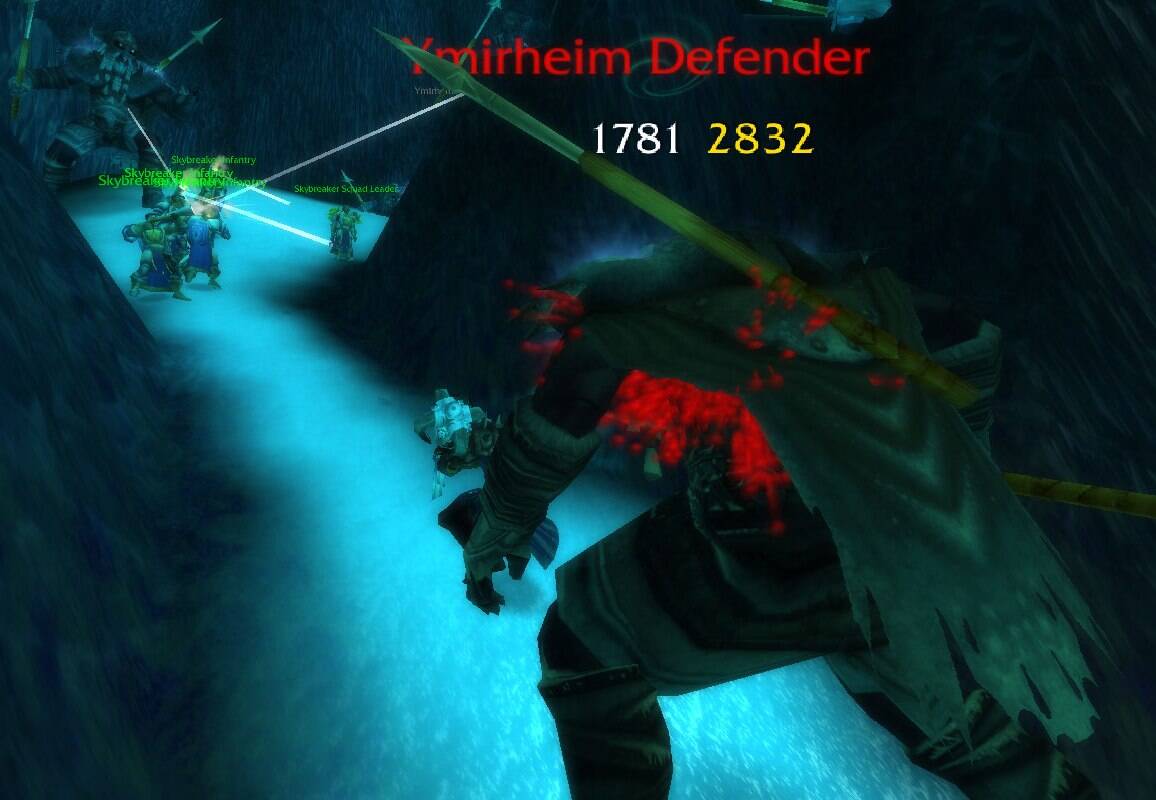
High Thane Jorfus patrols Icecrown as one of the zone’s wandering elite rares. The Ymirjar represent the vrykul who answered the Lich King’s call willingly, trading their independence for power.

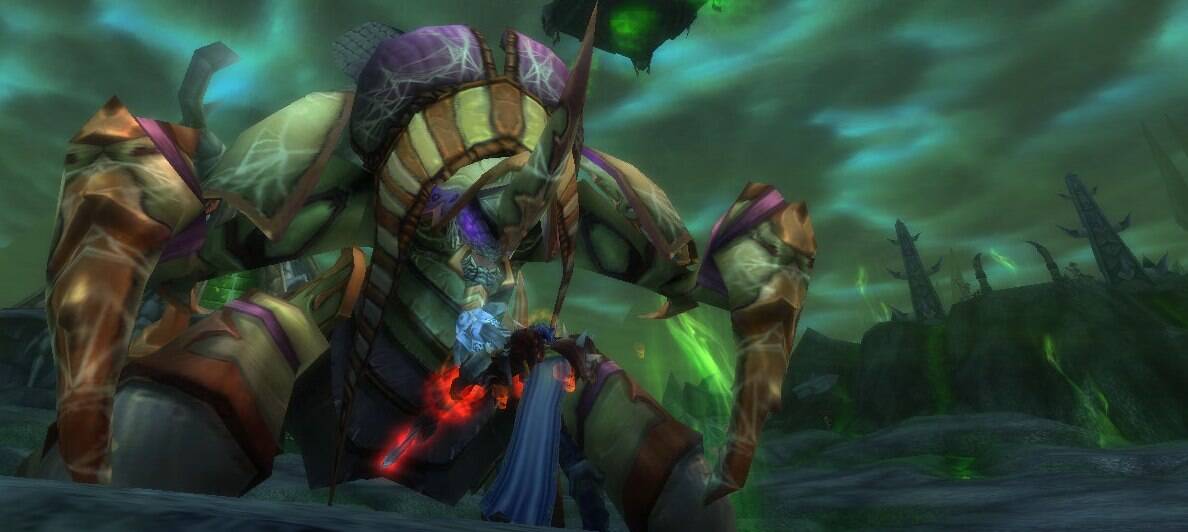
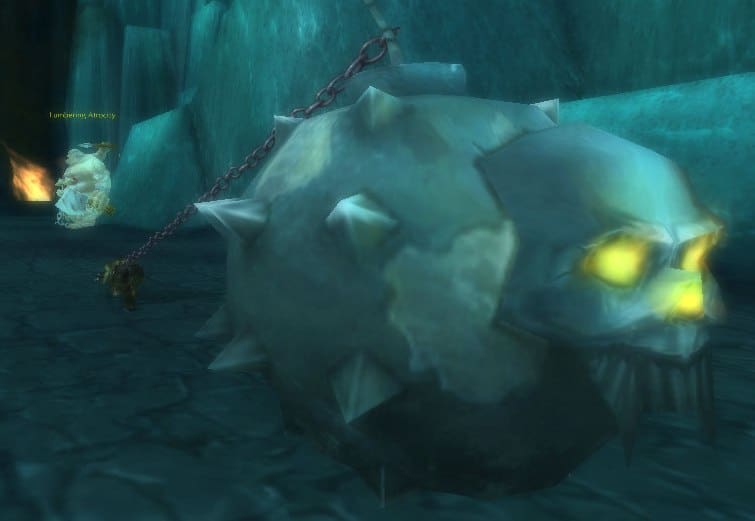
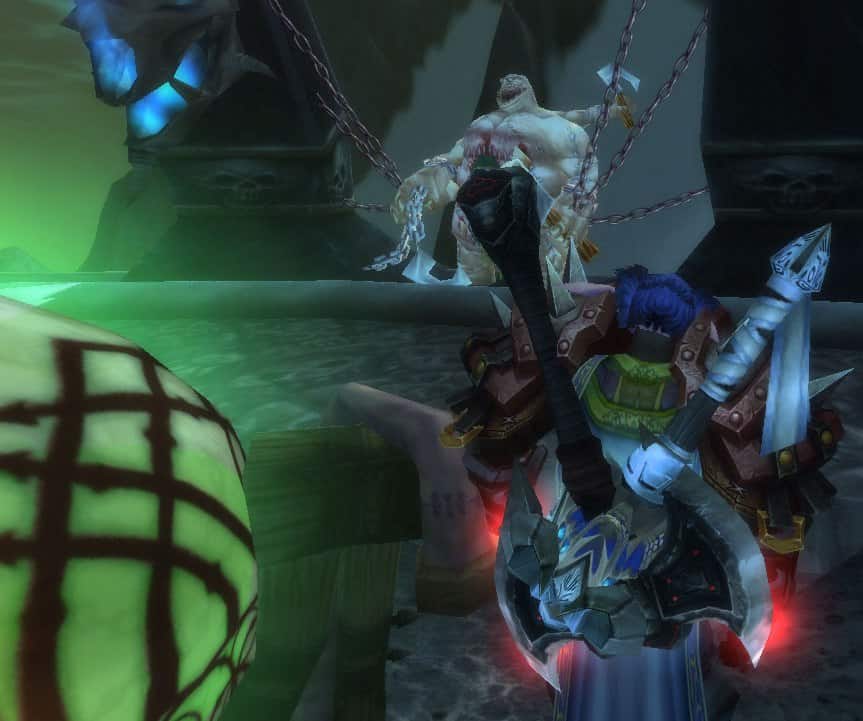
Putridus the Ancient is Icecrown’s roaming catastrophe. This massive flesh giant wanders a wide patrol path, crushing unprepared players who stumble into his route.

At Onslaught Harbor, the Scarlet Crusade’s Northrend expedition reveals its true puppet master.

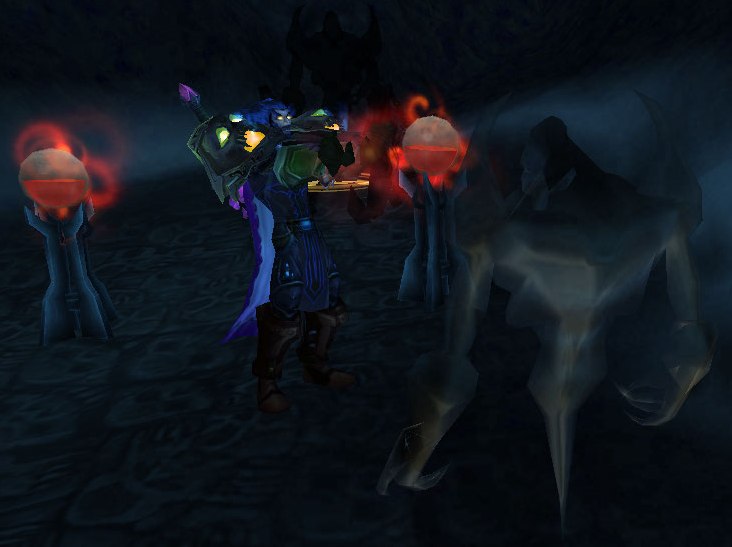
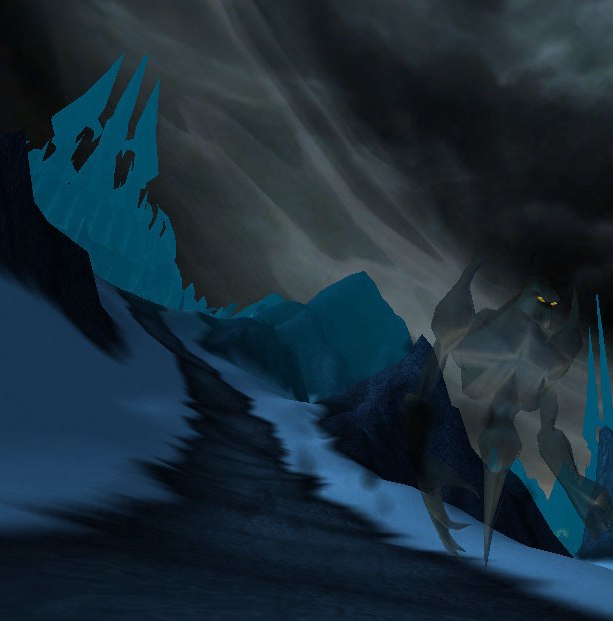
And in the wastes, a strange boy named Matthias Lehner offers quests that don’t make sense until you realize who he is. The name is an anagram. The child is what remains of Arthas’s humanity, carved out and discarded.


High Thane Jorfus: The Wandering Ymirjar

High Thane Jorfus: The Wandering Ymirjar


Where: Icecrown – spawns at one of three locations: Court of Bones, Sindragosa’s Fall, or the Fleshwerks.

High Thane Jorfus is one of the rares that credit Northern Exposure/Frostbitten; he hits hard and, like other Northrend rares, can drop a blue-quality BoE (Corroded Faceguard) and an Abandoned Adventurer’s Satchel with cloth and coin. 

Jorfus is an undead vrykul, one of the Ymirjar, “worthy” champions raised by the Lich King after the brutal trials of Valhalas in Jotunheim. Their elevation (and everyone else’s damnation) is central to Icecrown’s vrykul story: win the Valhalas rites, and you’re reborn as death’s elite; fail, and you swell the ranks of the vargul, cursed undead.

The Ymirjar are the ultimate consequence of the vrykul tragedy. Chronicle’s Northrend arc frames titan-forged vrykul, cursed into flesh by Yogg-Saron’s corruption, embracing the Lich King’s ironclad afterlife as an escape from mortal degradation. Jorfus roaming these killing fields is the consequence of that bargain.


Hunting tip: Fly a triangle between his three spawn areas; a targeting macro helps in the fog and snow. And note who shares the zone’s rare roster with him: Hildana Deathstealer, a val’kyr, and Putridus the Ancient, a flesh giant. A chosen champion, one of the choosers, and the assembly-line product. Icecrown’s three rares are the Lich King’s class system on patrol.


Jotunheim


Curator’s Notes:

  • “Ascend or be unmade.” The Ymirjar are the elite caste created for the Lich King: victors of Jotunheim’s Valhalas battles become Ymirjar; losers become vargul. Val’kyr oversee this transformation. Geirrvif still presides over Valhalas even after Arthas’s fall. Their cultural center is Ymirheim in central Icecrown.
  • “Rite, not rumor.” The Valhalas combat trials frame the vrykul’s theology of worthiness; Jorfus’s status as a high thane aligns with this ascension mythos. A massive scroll made from dragon skin depicts the process: a vrykul ascending into the heavens, surrounded by angelic beings, with a darkened figure looming in the background.
  • “Twisted reflection.” The Ymirjar path mirrors a dark version of the vrykul’s own belief in ascension. Set it beside Legion’s Halls of Valor and the trick becomes visible: Odyn lifts worthy vrykul into Valarjar, the Lich King lifts them into Ymirjar. Arthas didn’t invent a religion for his elite. He plagiarized the one the vrykul already believed, then graded the exams himself.
  • “After Arthas, the rites persist.” The Brothers Bronzebeard (Exploring Azeroth: Northrend) confirm the vrykul still challenge each other in Valhalas, and Geirrvif still presides. She is the last known Scourge val’kyr in existence, never one of Sylvanas’s Nine, survivor of the war and of every sister she had, and her greeting to visitors hasn’t softened: “Many have fallen within Valhalas and their corpses are a testament to the strength of our ways.” The death god is gone, his referee kept the whistle.
  • Legion echo. The Valarjar (Odyn’s chosen) present the uncorrupted template of vrykul ascension; the Ymirjar are the Lich King’s inversion. Both words derive from the Norse Einherjar, warriors brought to Valhalla.
  • ICC tapestry. Ymirjar units populate Icecrown Citadel: Deathbringers (necromancers in ICC and Pit of Saron), Battle-Maidens (Frostwing Halls), Wrathbringers (Pit of Saron). The arc from Valhalas pits to Arthas’s elite guard is complete.
  • Death Knight moveset. Jorfus wields Death Knight abilities: Blood Plague, Blood Strike, Death and Decay, Death Coil, Frost Strike, reinforcing his status as one of the Lich King’s chosen.

Putridus the Ancient: Icecrown’s Roaming Catastrophe


Where: Icecrown. Putridus patrols an arc through the bone fields stretching from Corp’rethar to Mord’rethar, often spotted east of Ymirheim near the Bombardment and the approaches to the Citadel.

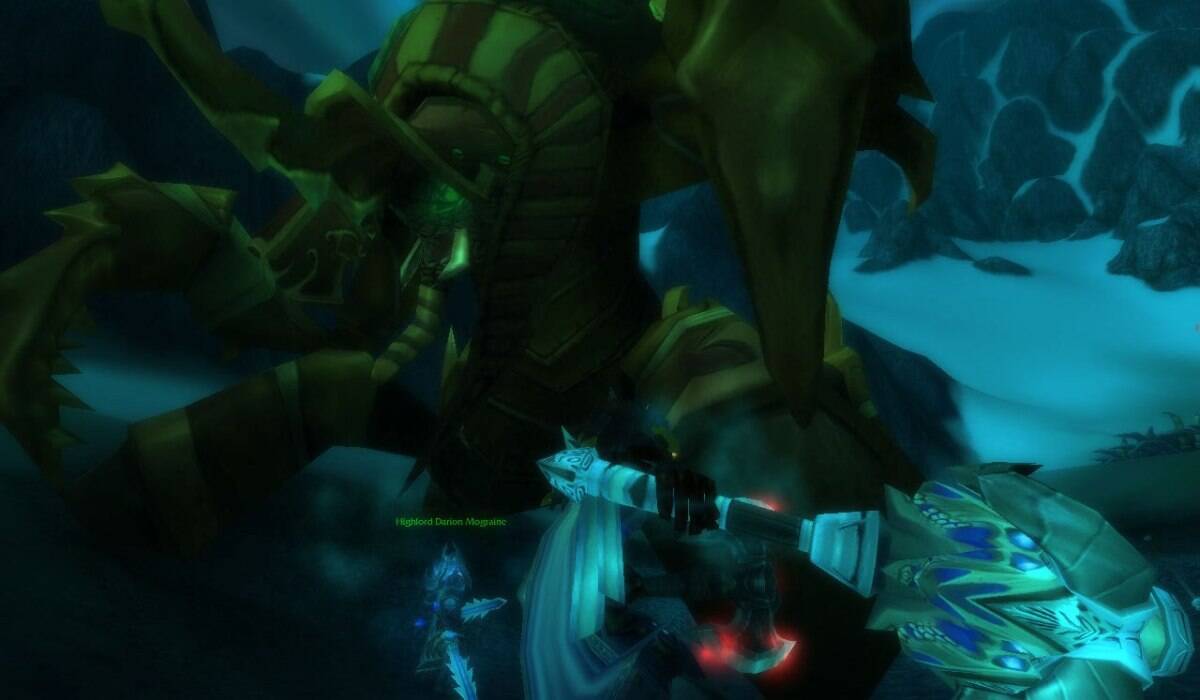
Putridus the Ancient is a colossal flesh giant and the long-standing estimate is that he’s spottable from a full 10,000 yards out, a distinction he shares with only a couple of creatures in the game, among them Zul’Drak’s Thrym, who is somehow bigger. Until Deathwing arrived to claim the belt, no rare mob in WoW was larger or hit harder.

Expect a towering health pool, War Stomp (5-second stun with knockback), and Putrid Punt, which can launch you clear across the valley. Bring friends if undergeared, and watch for his silhouette against the ridgelines.

Putridus is like a production-model siege weapon. The Fleshwerks shows how abomination tech scaled in Northrend: corpses became components, components became constructs, and industrial necromancy now fields monsters big enough to police whole valleys. Grobbulus proved the concept in Naxxramas; Icecrown perfected it.

And geography makes the factory’s purpose literal: the Fleshwerks hangs directly above the Avalanche, the breach into Sholazar Basin. Everything it builds is aimed downhill at Freya’s garden, and everything the Etymidian crushed at the bottom of that slope rolled off this assembly line. My Sholazar lore page holds the other end of this story.


Mord'rethar


Curator’s Notes:

  • “Named, and not subtle.” Putridus is part of a list of named Northrend flesh giants, part of the Scourge’s roster of documented colossi, not random spawns.
  • “From abomination to artillery.” Flesh giants extend abomination sorcery: assembled from many corpses, but uniquely harvested from multiple Northrend giant species to serve as living battering rams.
  • “Parts from the fallen.” Construction can include vargul components, tying Scourge recycling directly to vrykul battlefields like Jotunheim.
  • “Weaponized biology.” Their spinal fluid reacts with the plague to form corrosive acid, an in-universe reason these giants devastate fortifications and troops alike.
  • “Prototype to production line.” Grobbulus, the first successful flesh giant, appears in Naxxramas. WotLK scales up: flesh giants proliferate into patrols and raid trash, culminating in Morbidus, the boss of The Flesh Giant Champion, whom the quest text bills as “the Fleshwerks’ greatest accomplishment,” brought down with Margrave Dhakar’s reinforcements at the western heights.
  • Industrial necromancy persists. The quest chain ends with the Ebon Blade declaring the factory finished: “The Fleshwerks will never again produce soldiers for the Lich King’s armies.” Exploring Azeroth: Northrend files the correction that after the Jailer’s war, the Bronzebeards found the Fleshwerks still under Scourge control and still making monsters, aimless now, and slower, but the line never actually stopped. Never, it turns out, lasted about fifteen years.
  • Beyond Northrend. The flesh giant archetype persists in Hearthstone: Flesh Behemoth (March of the Lich King) and Repulsive Gargantuan continue Wrath’s bio-warfare visuals as franchise shorthand for industrial undeath.
  • “Two bodies, one monster.” In China, where game regulations barred the display of bones, flesh giants shipped wearing the storm giant model instead. An entire region’s worth of players killed Putridus without ever seeing him, a reminder that even the same 2008 game was never quite the same game everywhere.

Mal’Ganis in Scarlet Disguise: Onslaught Harbor Reveal


Where: Onslaught Harbor, Icecrown. Slip into the Hidden Hollow to trigger The Admiral Revealed.

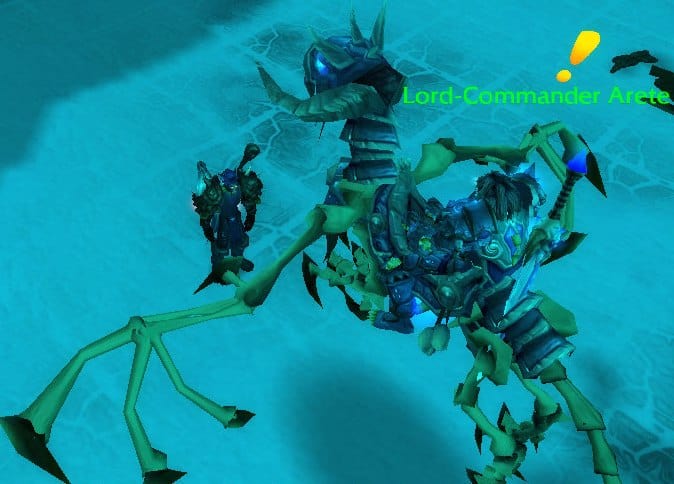
The Scarlet Onslaught’s “returned” fleet commander, Grand Admiral Barean Westwind, drops his glamour mid-fight, and the thing underneath is Mal’Ganis. With an Ebon Blade nullifier from Lord-Commander Arete, you strip his protection sphere.

He reveals his true form (“Kirel narak! I am Mal’Ganis. I AM ETERNAL!”), announces he must gather his strength on “the homeworld,” and pauses at the portal for one last promise: “You’ll never defeat the Lich King without my forces. I’ll have my revenge… on him AND you!”, an intimate reprise of the dreadlord’s taunting exits from Warcraft III.

Report back to Death’s Rise and the sting’s mastermind, the death knight who tortures souls as standard procedure, greets your findings with the entire Ebon Blade intelligence apparatus condensed into one line: “MAL’GANIS?!!”


How you get there: not through the Shadow Vault, whose arc runs separately, but through Death’s Rise, the Ebon Blade’s clifftop spy nest on Icecrown’s far western coast. The trail starts back in Dragonblight: warned by his “admiral,” High Abbot Landgren threw himself off a cliff at New Hearthglen rather than face interrogation.

The Scourge raised him again as Archbishop of Onslaught Harbor, so the Ebon Blade sends you to kill him a second time and carry his soul to Lord-Commander Arete, who wrings the Hidden Hollow’s location out of it and then destroys it, promising the priest no third life. Intelligence work, Ebon Blade style: the witness testifies after death, and then stops existing.

The reveal references Warcraft III: Mal’Ganis engineered Arthas’s descent at the Culling of Stratholme and baited him north, right down to the “gather your forces and meet me in Northrend” exit. It also mirrors earlier nathrezim hijacking of the Scarlet cause, Balnazzar possessing Grand Crusader Saidan Dathrohan, showing the dreadlords’ long game of weaponizing zealotry.

This set-piece plays like an Ebon Blade black-ops sting: knives in the dark, receipts later, stitching Icecrown’s spycraft to the saga of nathrezim manipulation while tipping the helmet to RTS-era Mal’Ganis.


The Admiral Revealed

The Admiral Revealed


Curator’s Notes:

  • The Admiral Revealed: Westwind’s disguise breaks to expose Mal’Ganis; he escapes through a portal, name-drops his “homeworld,” and Onslaught Harbor stands as the Scarlet splinter’s Icecrown base.
  • “Who leads where.” High General Abbendis commands New Hearthglen in Dragonblight; Westwind “returns,” advises, and spearheads Onslaught Harbor, later unmasked as the dreadlord who’d been whispering to her as “the Light” all along.
  • “The Light fell silent.” Abbendis noticed Westwind looked younger than he should and felt something was wrong. Tellingly, the voice she believed to be the Light stopped speaking to her the moment the admiral arrived.


Lore Threads and Easter Eggs:

  • RTS callback. Warcraft III’s The Culling is the ur-text for Mal’Ganis’s goad-and-vanish routine; the Harbor scene quietly remasters that villain’s exit. The Caverns of Time dungeon Culling of Stratholme lets players relive the original confrontation.
  • Raven priests = red flags. Westwind “blessed” High Abbot Landgren, birthing the Onslaught’s raven priest sect, a cultish clue that the faction had already been compromised from within.
  • Scarlet persistence. Even after Wrath, Onslaught ideology lingers into Legion; the priest class campaign returns to New Hearthglen to rescue “heretics” from execution. Proof that nathrezim meddling leaves long shadows.
  • Franchise recursion. Mal’Ganis resurfaces in Shadowlands as one half of the Lords of Dread encounter in the Sepulcher of the First Ones, still scheming, still eternal.
  • Name origin. “Mal Ganis” derives from a space vampire lord in the cancelled Blizzard game Bloodlines, an appropriate pedigree for a shape-shifting blood-drinker.

Matthias Lehner: Echoes of Arthas


A pale, barefoot boy appears in sequence across Icecrown, guiding you through the Lich King’s own memories. He is Matthias Lehner, an anagram of Arthas Menethil, and his quest chain transforms iconic Warcraft III moments into walkable dioramas.

The chain begins deep underground in Naz’anak: The Forgotten Depths, where you touch a strange Pulsing Crystal and Matthias warns you shouldn’t have done that. From there he appears at the First Legion Forward Camp in the Valley of Lost Hope, where Army of the Damned lets you witness the moment Arthas slaughtered and raised his own soldiers after claiming Frostmourne. 


Where Dragons Fell

Where Dragons Fell


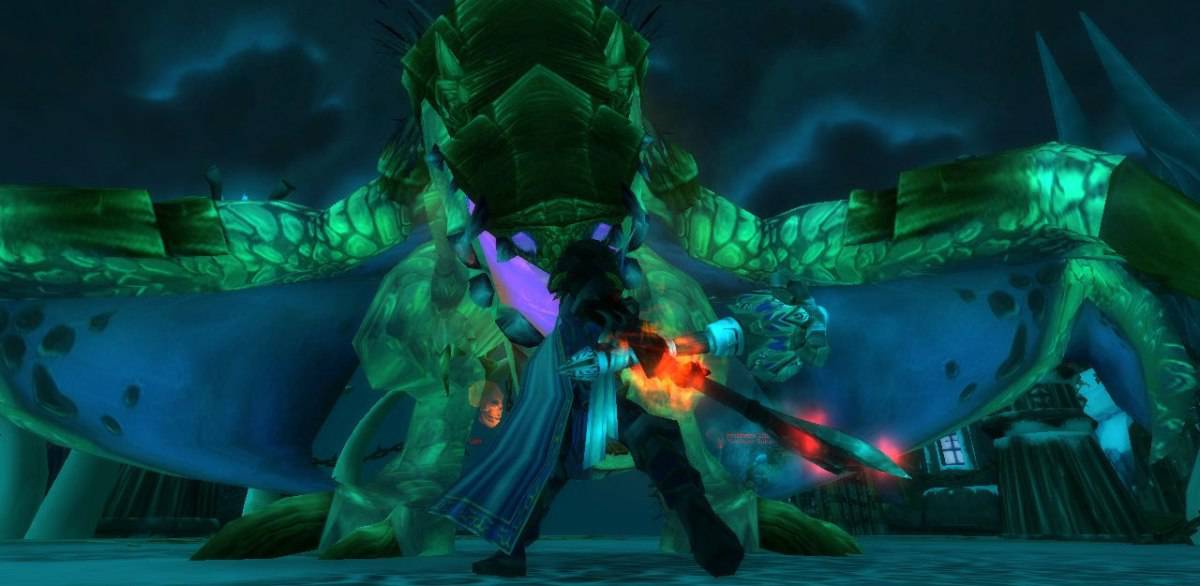
At Sindragosa’s Fall, Where Dragons Fell replays the WotLK cinematic trailer moment: the Lich King raising Sindragosa from the glacier. Finally, Time for Answers sends you to the Court of Bones, where The Hunter and the Prince transforms you into Arthas for his duel against Illidan Stormrage, a direct callback to Warcraft III: The Frozen Throne’s final mission, A Symphony of Frost and Flame.

In Knowledge is a Terrible Burden, Matthias reveals the Pulsing Crystal’s true nature: Arthas’s frozen heart, discarded when he merged with Ner’zhul because “the heart was his weakness.” That thread leads to Tirion Fordring and the Argent Crusade.

In Tirion’s Gambit, Tirion infiltrates the Cathedral of Darkness, hoping to redeem Arthas through the heart. Instead, upon gazing into it, Tirion concludes that nothing of Arthas’s humanity remains and destroys it with the Ashbringer. The Knights of the Ebon Blade, led by Darion Mograine, extract him before the Lich King’s wrath falls.


Curator’s notes:

  • Bookends in print. Arthas: Rise of the Lich King by Christie Golden depicts an unnamed blond-haired boy within Arthas’s mind, urging him to resist Ner’zhul’s influence. Later, in Edge of Night by Dave Kosak, Sylvanas encounters Arthas in the afterlife as “just a scared little blond child, reaping the aftermath of a lifetime of mistakes.” These literary appearances bracket the in-game Matthias, creating a unified image of Arthas’s remnant humanity across media. And Kosak’s scene supplies the arc’s true ending: face to face with the boy in the dark, Sylvanas comes within a breath of pitying him, because against the scale of what surrounds them both, the Lich King measures out as insignificant. Warcraft’s most feared villain, weighed by the void and found small. The child Matthias was always the honest size of him.
  • Parallel development. The boy in Christie Golden’s novel was not written as Matthias Lehner. A quest designer independently created the character based on the novel’s imagery, without Golden’s direct involvement, which explains minor discontinuities between the book’s depiction and the in-game version.
  • Alternative theory. Some players speculate that Matthias is an illusion of Yogg-Saron or another Old God, manipulating adventurers to destroy the Lich King’s heart and weaken a rival power. Supporting evidence includes Matthias’s first appearance in Naz’anak (connected to Azjol-Nerub and Old God influence) and his encouragement to “bring friends” when retrieving the heart. The game leaves interpretation open.
  • Dev perspective. Blizzard historian Sean Copeland implied Matthias’s inclusion may have been primarily for gameplay and story delivery rather than deep lore significance, though this hasn’t stopped the character from becoming one of WotLK’s most memorable quest NPCs.


Army of the Damned

Army of the Damned


Lore Threads:

  • RTS → MMO translation. The Illidan duel in The Hunter and the Prince recreates the climactic confrontation from Warcraft III: The Frozen Throne’s A Symphony of Frost and Flame, now presented as a playable memory rather than a cinematic. You control Arthas with abilities like Parry, Deathstrike, Stomp, and Annihilate, fighting an Illidan with 903,000 HP. The quest even includes a debuff called “Pierced Heart” with flavor text: “Your heart has been grazed by Illidan’s glaives. If only you could rid yourself of this useless thing…”
  • Cinematic recreation. The Sindragosa vision in Where Dragons Fell directly mirrors the WotLK cinematic trailer, and adds what the cinematic withheld: the Lich King’s voice, commanding her to rise and lead the Frostbrood into war. (A regional footnote: in China, where regulations barred skeletal models, Sindragosa was a modified living blue dragon, meaning an entire region watched this scene, the raising of a corpse, performed by a dragon that didn’t look dead.)
  • The heart arc literalizes the contest between Arthas’s conscience and the Lich King’s will. Christie Golden’s novelization foregrounds this internal struggle. The questline makes it physical: the conflict becomes geography (a heart at the bottom of Naz’anak) and then a choice (Tirion deciding to destroy rather than redeem).

The Light and What Arthas Lost


Crusader Bridenbrad lies dying in the northern reaches, and nothing can save him. The questline that follows takes players to A’dal, Alexstrasza, and the naaru themselves, each attempt to cure him failing against the plague’s grip. In the end, the Light doesn’t heal Bridenbrad. It takes him somewhere the Scourge can’t follow. The quest honors Bradford C. Bridenbrad, a Blizzard team member’s brother who lost his battle with cancer. It’s one of WoW’s most moving tributes.

At the Cathedral of Darkness, Tirion Fordring executes the gambit that sets up the final raid. His infiltration of the Scourge’s inner sanctum pushes the Argent Crusade’s greatest champion to the edge of what faith can justify.

The Matthias Lehner memory trail continues here, showing the moment Arthas hunted Illidan across the glacier.


Crusader Bridenbrad’s Light: A Silent Vigil

Crusader Bridenbrad’s Light: A Silent Vigil


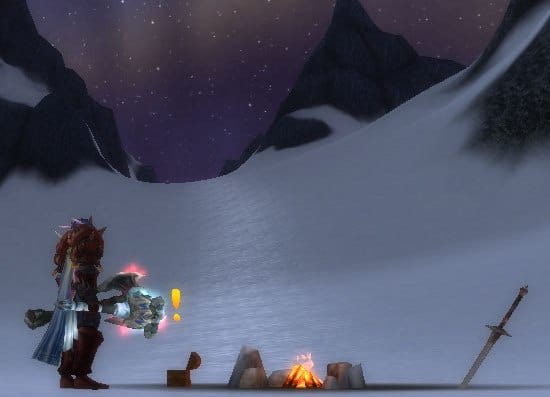
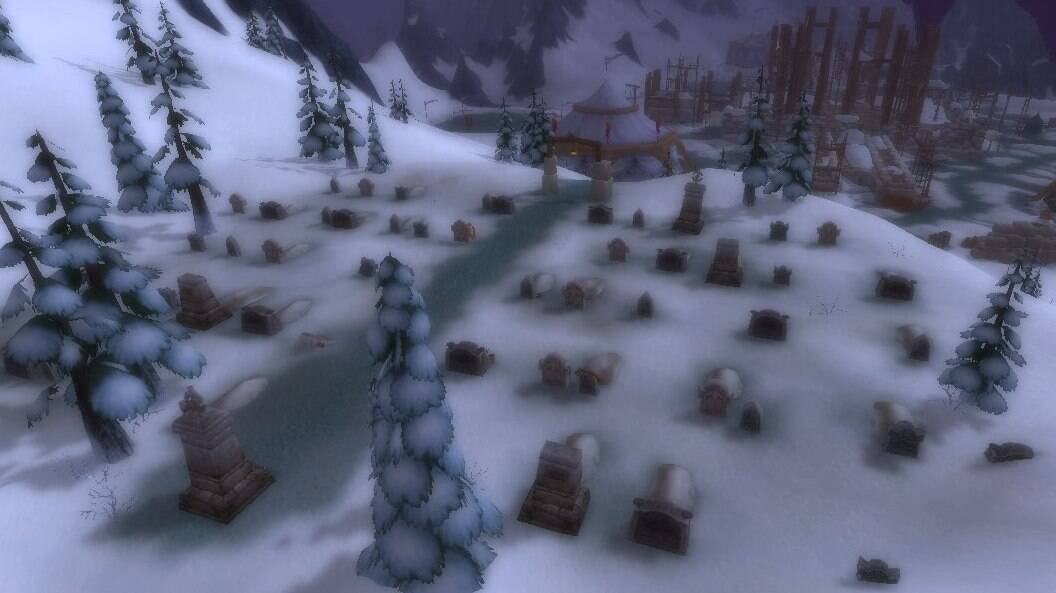
Where: Northeast Icecrown, the small campsite at (79.8, 30.7), just beyond the Silent Vigil graveyard.

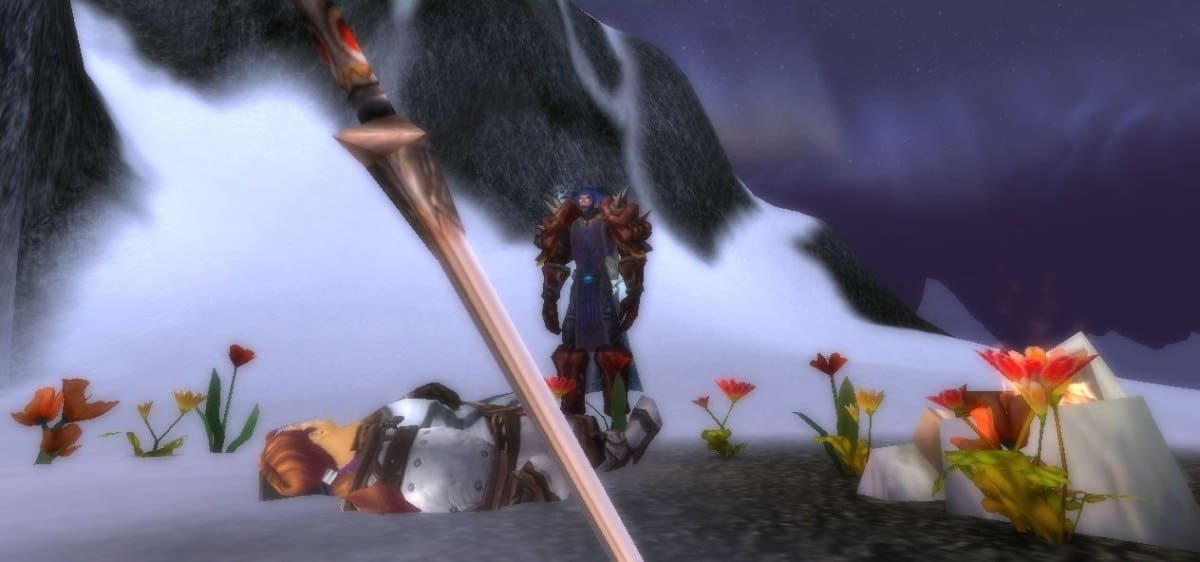
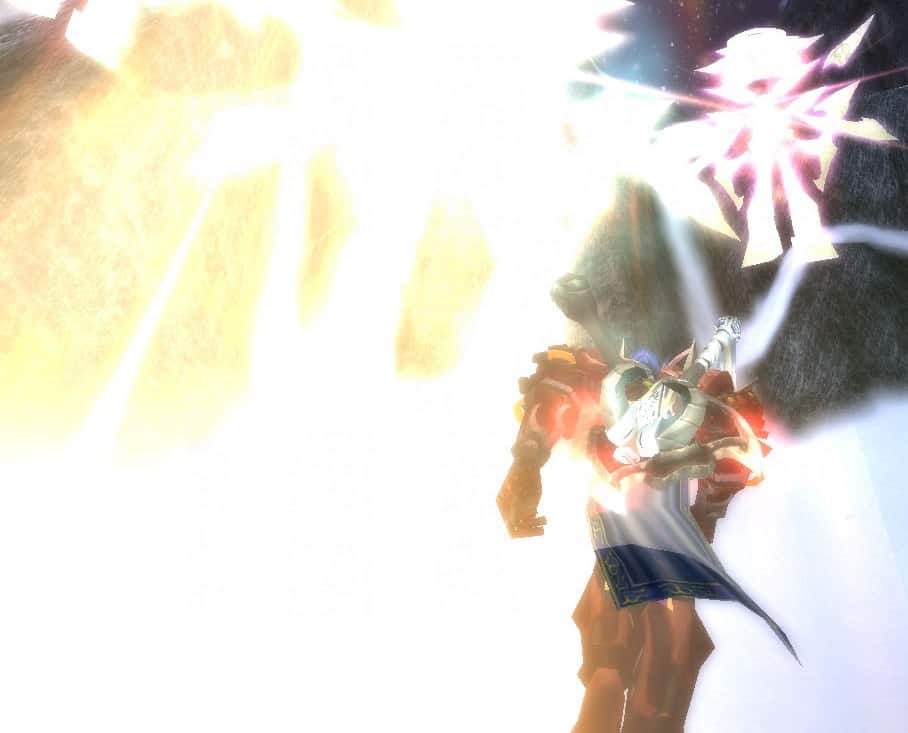
What to notice: After finishing the chain from A Tale of Valor through The Boon of A’dal, Crusader Bridenbrad‘s body phases out as A’dal, K’uri, and M’ori appear above him, lifting his spirit skyward in a pillar of Light (the effect’s internal name: Paradise Eternal). What remains is one of Wrath’s most understated uses of phasing to mark a story’s end, the fire pit cold, the cot empty, the crusader gone but not forgotten.

Why he’s out here at all is that after saving more than a dozen men at the Broken Front, Bridenbrad found the plague in his own veins, refused Tirion’s honors, and walked into the mountains alone, so that whatever happened next would happen only to him. The campsite is a quarantine he built himself.

Written as a real-world tribute to Bradford C. Bridenbecker, brother of Blizzard’s Robert Bridenbecker, then Vice President of Online Technologies, the story emerged after Robert emailed Blizzard following his brother’s death, requesting a character be created in his honor.

Chris Metzen had been at Brad’s funeral, and when the request reached him he put two paths on the table: write Brad into the expansion’s main storyline, or build him an epic chain of his own. The chain won, developed under Metzen and Alex Afrasiabi as a tribute to the years Brad spent fighting.


The Boon of Alexstrasza

The Boon of Alexstrasza


A former city manager for La Habra, California, appointed in June 2002 after working his way up from part-time intern in 1994, Brad passed away on June 18, 2007, at age 35 after battling a metastasized chordoma, a rare bone cancer. Nicknamed “Boy Wonder” by colleagues for his exceptional talent and rapid rise, he’s listed in the Wrath of the Lich King manual under Special Thanks as “Bradford C. Bridenbecker R.I.P. 6.18.2007.” His obituary headlines him as “The True Gentleman”, his favorite poem and personal creed:

“The True Gentleman is the man whose conduct proceeds from good will and an acute sense of propriety, and whose self-control is equal to all emergencies; who does not make the poor man conscious of his poverty, the obscure man of his obscurity, or any man of his inferiority or deformity; who is himself humbled if necessity compels him to humble another; who does not flatter wealth, cringe before power, or boast of his own possessions or achievements; who speaks with frankness but always with sincerity and sympathy; whose deed follows his word; who thinks of the rights and feelings of others, rather than his own; and who appears well in any company, a man with whom honor is sacred and virtue safe.” 

— John Walter Wayland, submitted to the Baltimore Sun, 1899


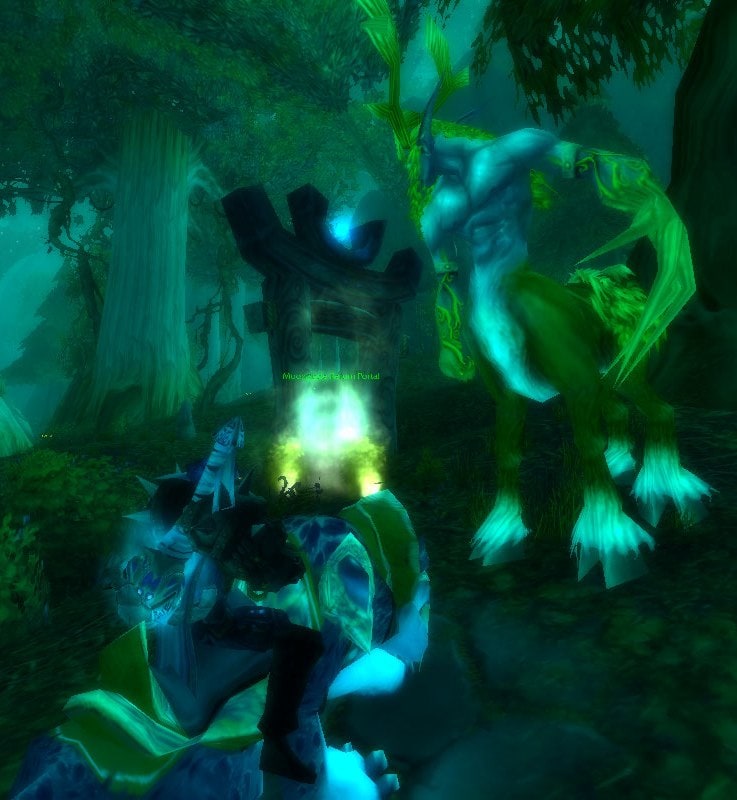
In-game, Tirion Fordring sends you from druidic hope (Keeper Remulos in Moonglade), to the Dragonqueen’s mercy (Alexstrasza the Life-Binder at the Ruby Dragonshrine), and finally Naaru grace (A’dal in Shattrath), who bears Bridenbrad’s soul beyond the Lich King’s reach: “In life, Bridenbrad was the bearer of great deeds. Now, in passing, he shall taste only paradise.”

Light vs. Scourge: The Naaru’s intervention counters Icecrown’s saronite-soaked nihilism, the Citadel built on Old God “black blood” and whispers, by planting a literal pillar of Light at the edge of the waste.

Paladin tradition: Tirion’s choice to commit Crusade resources to a single dying soldier aligns with the Argent Crusade’s ethos: duty tempered by compassion.

Start the story: Begin at Crusaders’ Pinnacle, then follow the thirteen-quest chain through Light Within the Darkness. Return later to find the vigil forever changed, Bridenbrad gone, his tabard left behind for Tirion.


Curator’s Notes

  • The scene persists because your story has. Once The Boon of A’dal is complete, Bridenbrad phases out permanently for that character. The campsite remains. Fire pit, cot, Bridenbrad’s Possessions. But the man is gone, his spirit claimed by the Light before the Scourge could take him.
  • A pilgrimage in three blessings. The chain is intentionally structured across cosmic powers: The Boon of Remulos (nature magic via the Emerald Dream) → The Boon of Alexstrasza (life magic via Dahlia’s Tears) → The Boon of A’dal (holy Light). Each tradition answers the same plea. None can cure him. Only the Naaru can ensure his soul escapes undeath.
  • Mercy, not mastery. A’dal’s farewell: “The Light does not abandon its champions” – lifts Bridenbrad to “paradise,” a direct counter to the Plague of Undeath and the Lich King’s claim on souls. The quest explicitly rejects the Scourge’s false promise of immortality.
  • A memorial with a name. The quest honors Bradford C. Bridenbecker, but Blizzard added a second tribute: Bradford Bridenbecker, a human boy NPC playing with his sister Ashley Bridenbecker outside their house in Elwynn Forest. And in La Habra itself, the city named a street “Bridenbecker Way” in the Brio housing community in 2008. The obituary directed donations to City of Hope Chordoma Research under the name “Bridenbecker Memorial.”
  • The chain as metaphor. Academic analysis (Gibbs et al., 2012, Game Studies) notes the quest functions as “a fairly detailed metaphor for the ups and downs of battling cancer, and for the process of dying in general”, hope raised and dashed repeatedly, and the ending arrives as acceptance: peace, on his own terms, before the disease could dictate any others.


The Boon of A'dal ending

The Boon of A’dal


Lore Threads

  • Cosmology confirmed. In a 2020 interview, Narrative Director Steve Danuser confirmed the Naaru “bound [Bridenbrad’s] soul to the realm of Light away from the Shadowlands.” This makes the quest an early, explicit statement of Light-based afterlife mechanics, predating Shadowlands’ exploration of soul destinations by over a decade.
  • The Light in later wars. Legion revisits the Light’s extremes via the Army of the Light and Xe’ra’s attempted forcible “salvation” of Illidan. A’dal’s gentle mercy here, patient, requested, freely given, is a foil to Xe’ra’s zealotry.
  • Icecrown’s corruption thread. Saronite, the “black blood” of Yogg-Saron, pervades the zone; in the architecture, the mines, and the Lich King’s armor. Placing a permanent moment of Light, one soul the Old Gods couldn’t claim, one corner of Icecrown where the whispers fall silent.
  • Tirion’s leadership philosophy. The Highlord commits Crusade resources, including direct appeals to demigods and Naaru, for a single dying soldier. This tracks with his established character: the paladin who broke with the Silver Hand rather than condemn the innocent, who founded the Argent Crusade on principle over politics.


Tirion Fordring’s Gambit: Cathedral of Darkness


After following Matthias Lehner’s memory trail, Tirion sends you from Crusaders’ Pinnacle (~79.7, 72.3) into the Cathedral of Darkness for Tirion’s Gambit. 

Inside the saronite cathedral, Arthas’s heart, the last fragment of his humanity, rests at the altar before High Invoker Basaleph, freshly retrieved from Naz’anak: The Forgotten Depths at the cost of many cultists to the faceless ones.
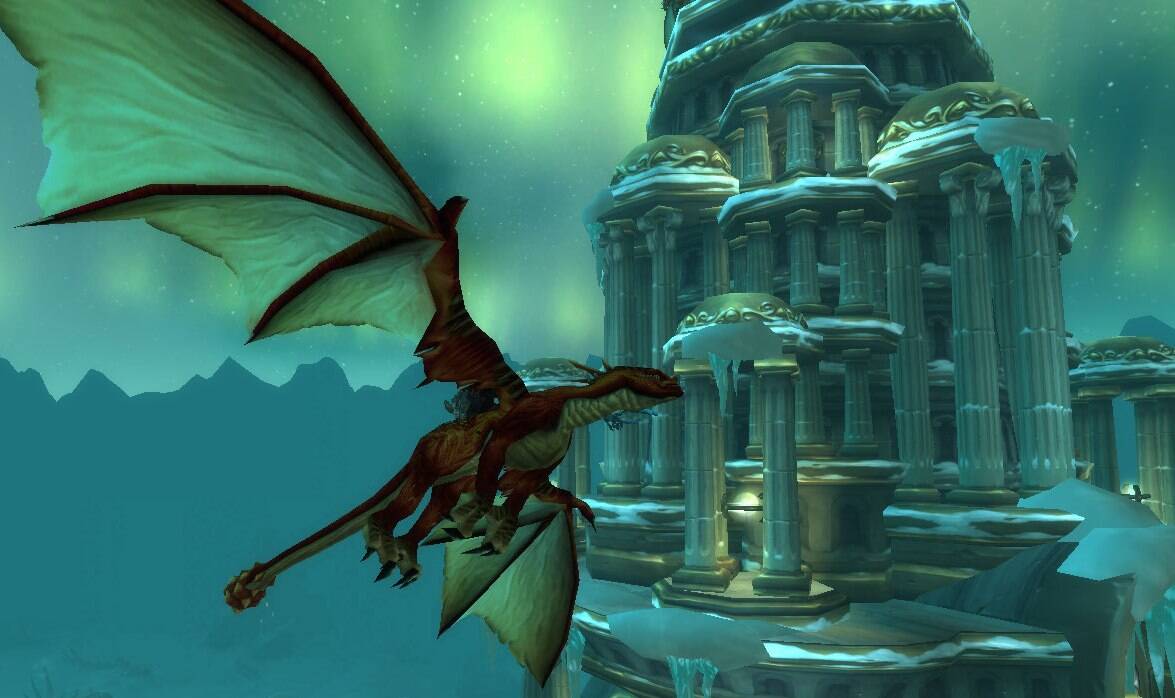
The Lich King arrives and sees through the disguise. Tirion draws the Ashbringer, declares he doesn’t need holy ground to destroy that disembodied heart, and runs it through with the blade. 

The heart detonates. The blast throws the Lich King back and strips him to 30% of his health, kills High Invoker Basaleph outright at his own altar, and leaves Tirion senseless on the cathedral floor. One sword stroke, three bodies down, and only one of them gets back up angry.
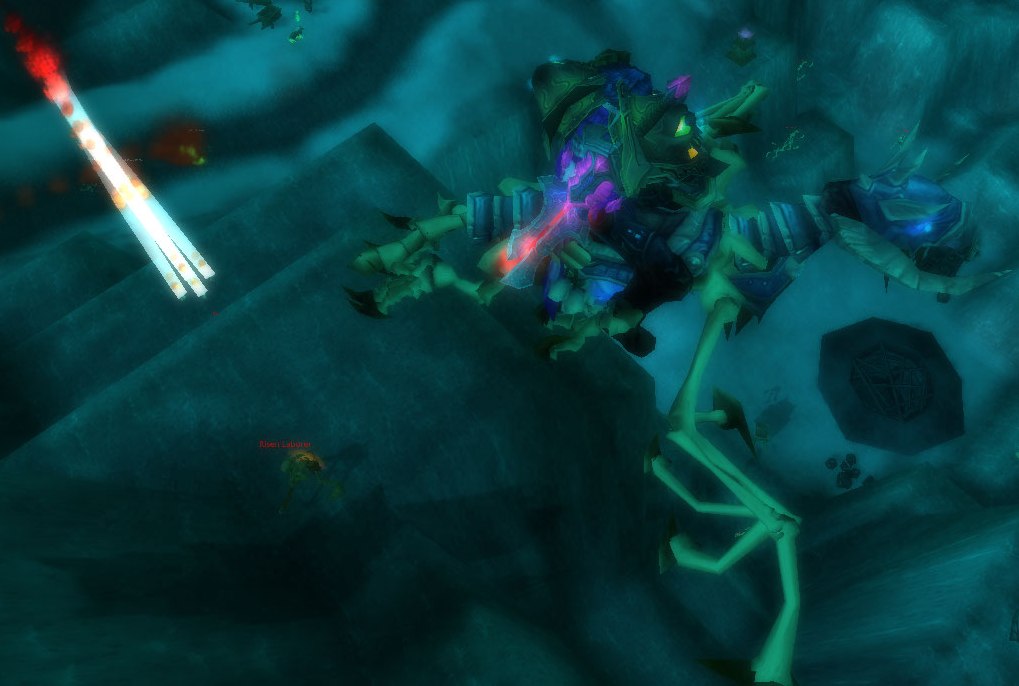
It’s the pivot of Icecrown’s story: Tirion abandons redemption and commits to ending Arthas. “There is no Arthas Menethil anymore—there is only the Lich King.”


Highlord Darion Mograine, Thassarian, Koltira Deathweaver, and the Knights of the Ebon Blade crash the aftermath, dispatching the cultists and opening a Death Gate before the Lich King recovers. From here, the campaign swings toward Patch 3.3‘s joint offensive: Argent Crusade + Ebon Blade ⇒ Ashen Verdict, staging from Light’s Hammer for the Icecrown Citadel push (and the Ashen Band reputation rings). Ashbringer’s arc comes full circle: purified at Light’s Hope, now turned on the heart itself.


Tirion's Gambit

Tirion’s Gambit


Curator’s Notes:

  • Into the Cathedral. Tirion’s Gambit begins at Crusaders’ Pinnacle and sends you into the Cathedral of Darkness for the heart confrontation. You’ll need a Cultist Acolyte’s Hood from the patrolling acolytes around [46, 76]. Tirion’s challenge (“I don’t need to stand on holy ground to run that disembodied heart of yours through with the Ashbringer”) and the shattering moment are preserved in the quest dialogue. Two survival notes the quest doesn’t spell out: keep the hood on inside, because an undisguised visitor aggros the entire congregation, and when the Ebon Blade opens their Escape Portal, take it. Linger and the Lich King begins an eight-second cast called Lich King’s Fury, and it does exactly what it says to exactly whoever is still standing there.
  • Matthias → the heart. The sequence Where Dragons Fell → Time for Answers → The Hunter and the Prince → Knowledge Is a Terrible Burden leads directly into Tirion’s Gambit, reframing Arthas’s past before revealing his heart.
  • “Only the Lich King remains.” The frozen organ is explicitly Arthas’s heart; its destruction weakens the Lich King as Ebon Blade knights extract Tirion. Darion’s parting shot: “Be content that for once, it is Tirion who is in our debt.”
  • Naz’anak origin. The Chosen Zealots reveal: “We lost many to the faceless ones, my lord. But we succeeded in retrieving the heart from Naz’anak.” The heart wasn’t stored in the Cathedral. It was just delivered there, pulled from Yogg-Saron‘s territory at tremendous cost.
  • Verdict rendered. The Ashen Verdict forms for the Icecrown Citadel offensive in Patch 3.3.0 (December 8, 2009), introducing Ashen Band reputation rings from Ormus the Penitent and a shared AC/Ebon Blade hub at Light’s Hammer with both Highlords present in their Tier 10 armor.
  • Saronite setting. The Cathedral is built entirely of saronite, the “Black Blood of Yogg-Saron” as the Tuskarr call it. The heart’s retrieval from Naz’anak (faceless one territory) reinforces Icecrown’s Old God taint around the Citadel. The Lich King’s fortresses are literally constructed from crystallized corruption.
  • A 2009 footnote. The event was famously fragile at launch, a known issue by January 2009 had Tirion and his knights freezing mid-infiltration, leaving the era’s most dramatic confrontation stuck like a paused film until a reset. Ask anyone who quested Icecrown that winter. Half the server’s memories of this cathedral involve the Highlord standing very still.


Tirion's Gambit part 2


Lore Threads:

  • From Light’s Hope to dark ground. At the Battle for Light’s Hope Chapel, the Lich King vowed: “When next we meet, it won’t be on holy ground, paladin.” In the Cathedral, he taunts: “Last time we met, you had the advantage of fighting on holy ground. You’ll find that our situation has been… reversed.” Gambit pays that off. Ashbringer still prevails without the chapel’s thousand-hero ward.
  • Raid pivot. Gambit narratively hands off to Icecrown Citadel, Light’s Hammer hub with Tirion and Darion standing together, Ashen Verdict vendors, Tier 10 quartermasters, and the endgame ascent to the Frozen Throne.
  • Old God undercurrent. The heart was stored in faceless one territory; the Cathedral is pure saronite. Yogg-Saron’s vision in Ulduar shows Arthas’s coronation and prophesies: “He will learn—no king rules forever! Only death is eternal!” The Old God’s corruption permeates the Lich King’s power base even as Arthas believes himself in control.
  • Later echoes (spoilers). Tirion shatters Frostmourne at the Frozen Throne and crowns Bolvar Fordragon the new Lich King. Years later, he falls at the Broken Shore, tortured by demons and succumbing to his wounds after passing the Ashbringer to a new Highlord of the Silver Hand. His final words: “You must become… the Ashbringer.”

The Hunter and the Prince: Matthias Lehner’s Memory Trail


At Sindragosa’s Fall (≈71.3, 37.5), the pale boy Matthias Lehner offers Where Dragons Fell. Accept and linger: you witness the Lich King commanding, “Rise, Sindragosa! Rise and lead the Frostbrood into war!”, a recreation of Wrath’s iconic opening cinematic that adds the one thing the cinematic withheld, the Lich King’s voice, staged in the very boneyard where Malygos’s consort died ten thousand years ago.

Separate memory, different location: The Hunter and the Prince follows at the Court of Bones (via Time for Answers). Here the vision stops being a diorama and hands you the controls: you play as Arthas in his climactic duel with Illidan Stormrage, the same confrontation from The Frozen Throne’s finale (A Symphony of Frost and Flame), complete with the familiar camera sweeps and finishing blow. 

The Court of Bones is the actual site where Arthas cut Illidan down before ascending the Frozen Throne.


About Muradin (what this vision is not): Warcraft III shows Muradin Bronzebeard felled when Frostmourne is claimed; Arthas assumes him dead. WoW later reveals Muradin survived with amnesia, eventually becoming king of the Frostborn as “Yorg Stormheart.” Matthias’s Icecrown visions skip past Muradin’s fall entirely, focusing on Sindragosa’s raising and the Illidan duel as Arthas’s defining thresholds.

Lehner is invisible at Sindragosa’s Fall until the quest Futility is complete.

Sindragosa, prime consort of Malygos, is canonically raised by the Lich King to serve as queen of the Frostbrood, later ruling Frostwing Halls in Icecrown Citadel. Watching her “second birth” in the very crater of her death lets the zone itself do the storytelling: a dragonflight matriarch reforged into a frostbrood queen, then faced as a raid end-boss.


The Hunter and the Prince

The Hunter and the Prince


Curator’s Notes:

These two vignettes form a compact syllabus on Arthas’s arc, first the perversion of life (Sindragosa’s raising), then the crowning of purpose (defeating Illidan to ascend the Frozen Throne). They echo Christie Golden’s Arthas: Rise of the Lich King’s framing of a composite will with flickers of conscience still trapped inside.


Lore Threads:

Cross-expansion echoes:

  • Classic/BC → Wrath: Ashbringer’s purification at Light’s Hope sets up Wrath’s moral dilemma; Matthias’s visions turn it into walkable dioramas.
  • Cataclysm: A Destiny of Flame and Sorrow in Felwood depicts their first encounter, a brief, inconclusive duel where Arthas pointed Illidan toward the Skull of Gul’dan. A prequel to the finale you just played in The Hunter and the Prince.
  • Legion: Frost DK artifact Blades of the Fallen Prince houses echoes of Arthas, including Memories of Arthas scattered across the Broken Isles and the Echo of Arthas Menethil faced during the artifact quest.
  • Shadowlands: The Remnant of Arthas within Kingsmourne is the last footnote to these memories. When Anduin shattered Kingsmourne back into Shalamayne, what emerged was almost nothing: a faint flicker, worn away in the Jailer’s forges until too little soul remained to even stand judgment. Jaina, Uther, and Sylvanas watched it gutter. It was Sylvanas, of all people, who spoke the franchise’s last words to Arthas Menethil: “May the last whisper of your name fade and be forgotten.”


A flicker, not a redemption.

Icecrown Storyline Quests


Every quest below was documented during my original 2008-2009 playthrough, before I knew how the assault on the Frozen Throne would end. Each quest page includes War Journal excerpts from the field, as Vikstone tells his story.

Click through for full walkthroughs, lore notes, and the original screenshots that make this time capsule possible.


Support the Archive
GamerTribute is a free museum, built and hosted out of pocket. If these pages brought back your Northrend, you can help keep them online.
Cover the Repair Costs
One-time support through Ko-fi. Every contribution goes to hosting and upkeep.

The Argent Vanguard

The Crusader’s Pinnacle

The Skybreaker

Valley of Echoes

The Shadow Vault

Aldur’thar: The Desolation Gate

Saronite Mines

Blackwatch

Jotunheim

Death’s Rise

The Argent Tournament

Icecrown Citadel

First Legion Forward Camp

Sindragosa’s Fall

Share this:

The Making of the Guide

Solo PvP Guide

The Guide to SWGEmu

>