Borean Tundra’s hidden lore, Easter eggs, and pop-culture references, plus the storyline threads tying the Nexus War back to Warcraft III and forward through Cataclysm, Legion, Dragonflight, and into the modern game. Told through Vikstone’s War Journal and original 2008-2009 screenshots from the front lines.
The frozen shores marked his first steps into Northrend, a beachhead where the Alliance’s Valiance Keep held the line against constant Scourge assaults.
From these tundra wastes, the Nexus War unfolded as Malygos declared his crusade against mortal magic-users. DEHTA activists waged their own battle against Nesingwary’s hunters.
And at En’kilah, the Scourge’s temple city, Vikstone encountered Thassarian, a freed Death Knight searching for his lost sister.
What follows is the Borean Tundra Vikstone walked in 2008: its buried secrets, its mysteries, and the war as he recorded it, quest by quest.
Illustrated by Christian DiBari and Simon Gough.
Borean Tundra quest ledger preview
Vikstone's Chronicles · The Story So Far
Borean Tundra: The Stories Begin on One Frozen Shore
Select a front to see the conflict it opens and the later story it sets in motion.
01
Campaign Front
The Two Beachheads
VK
Alliance and Horde land with different weaknesses. Valiance Keep is being hollowed out from the inside by a spy nobody suspects, while Warsong Hold exposes the widening divide between Garrosh's hunger for battle and Saurfang's hard-earned restraint.
What begins
Two military footholds try to survive the first shock of Northrend.
What changes
"Counselor Talbot" is unmasked as the San'layn prince Valanar, and Horde command shows its internal fault line.
Where it leads
The San'layn threat, the Wrathgate era, and Garrosh's long climb to power.
Thassarian turns the zone's paranoia into a rescue story. His search for his sister Leryssa proves a freed death knight can still act out of loyalty and grief instead of the Lich King's command.
What begins
A freed death knight searches for the sister he left behind in Lordaeron.
What changes
Valanar's deception is broken atop Naxxanar and Leryssa is recovered alive.
Where it leads
The Ebon Blade's identity as former weapons choosing their own war.
The Horde finds ancestral kin of the tauren who survived the north by forcing the elements to yield instead of asking them. Their shamanism looks brutal to outsiders. It is the price the tundra charged for their survival.
What begins
Mutual aid between Horde expeditions and isolated taunka settlements.
What changes
The taunka become living proof that shared blood can produce a hard, unfamiliar worldview.
Where it leads
The taunka's formal oath to the Horde later in Dragonblight.
04
Dragonflight Front
The Nexus War
NW
Coldarra makes the expansion's magical war personal. Malygos has decided mortal spellcasters are a disease, and the red dragon who dares to fight back pays the worst price.
What begins
The Blue Dragonflight moves openly against mortal use of arcane magic.
What changes
Freed from Malygos's shattered prison, Keristrasza lures his consort Saragosa to her death. Malygos seizes her as the replacement.
Where it leads
Her mercy kill in the Nexus dungeon, and the Eye of Eternity beyond it.
The temple city shows the Scourge as an organized state rather than a wandering plague. Three spires named Blood, Decay, and Pain feed the necropolis Naxxanar floating overhead, where Prince Valanar runs an infiltration mission from a seat no army can reach.
What begins
A direct assault on the Scourge's northern command network.
What changes
The three high priests fall, their scrolls open Naxxanar, and Valanar's game ends in the confrontation known as Last Rites.
Where it leads
The San'layn's larger role and the increasingly militarized road to Icecrown.
Kaskala's war is smaller than the faction war and easier to miss. The Kalu'ak defend their homes and the carved statues that hold their elders' spirits from kvaldir raiders sailing out of the mist, while at Riplash those same raiders sacrifice captives to wake something worse.
What begins
Kvaldir longships hit the tuskarr capital, and the survivors fall back to Unu'pe.
What changes
Veehja, the last naga of Riplash, reveals the kvaldir plan to wake Leviroth, a kraken Azshara imprisoned five centuries ago.
Where it leads
The Kalu'ak's wider story through Dragonblight and Howling Fjord.
Gearmaster Mechazod calls flesh a defect and offers immortality through forced "restoration." The comedy of malfunctioning gnomes hides one of Wrath's central questions: what is perfection worth without the freedom to refuse it?
What begins
Fizzcrank engineers accidentally rebuild an ancient mechagnome zealot.
What changes
Mechazod starts "curing" the gnomes one by one, converting flesh back to metal.
Where it leads
Mimiron's workshops in Ulduar, Yogg-Saron, and the mechagnomes' long road to Mechagon.
While dragons and the Scourge fight over the world, D.E.H.T.A. wages a deadly serious campaign against Nesingwary's poachers. It plays as parody and lands as a real question about the player's own appetite for trophies.
What begins
Druids conscript every passerby into an animal-rights war of placards, effigies, and revenge.
What changes
The campaign ends with the death of Harold Lane, Nesingwary's lieutenant, and an achievement named as a punchline: D.E.H.T.A's Little P.I.T.A.
Where it leads
Nesingwary's Sholazar Basin chapter, where the hunt and the argument both continue.
Vikstone's field read: nearly every faction on this shore claims it is saving someone, while deciding what that person, people, or world must become.
Satire: D.E.H.T.A., Nesingwary, and Blizzard's In-Jokes
Borean Tundra’s reputation as a starter zone hides how much Blizzard packed into the margins. At Fizzcrank Airstrip, the Mechagnomes reveal Titan secrets tied to the Curse of Flesh, a thread that runs all the way to Battle for Azeroth’s Mechagon Island.
The ongoing war between Hemet Nesingwary and D.E.H.T.A. remains one of WoW’s sharpest pieces of environmental satire, along with Hemingway references most players never catch. And tucked into the zone’s wildlife and cave systems are a Diablo II callback, critter details that reward a slow camera, and the kind of small-scale world-building that made Northrend feel lived in.
Hemet Nesgingwary vs D.E.H.T.A.: Satire in the Snow
Hemet Nesingwary vs. D.E.H.T.A.: Satire in the Snow
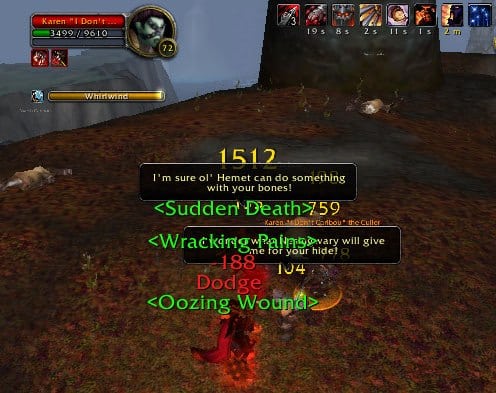
Blizzard lampoons real-world animal rights activism by pitting the Druids for the Ethical and Humane Treatment of Animals (D.E.H.T.A.) against big-game legend Hemet Nesingwary. The joke is that Hemet isn’t even here. He’s off in Sholazar Basin, yet the druids have built an entire protest camp anyway, complete with a burning dwarf effigy of the man himself.
The acronym D.E.H.T.A. rearranges to spell DEATH. Hemet Nesingwary is an anagram of Ernest Hemingway, and WoW’s Nesingwary questlines are stuffed with Hemingway references. Jeffrey Kaplan (yes, that Jeff, who later led the Overwatch team) created the character while he was a WoW quest designer and Hemingway superfan.
The finale target here, Harold Lane “The Fur Baron” (the druids prefer “The Borean Butcher”), is named for the protagonist Harry from Hemingway’s The Snows of Kilimanjaro (surnamed Street in the 1952 film), with Street changed to Lane.
Lane first showed up in Nagrand, where a thorn scratch slowly incapacitated him across the Talbuk Mastery questline, only for him to make a suspicious full recovery the moment you killed Bach’lor, the last of the great talbuk. That thorn mirrors how Harry dies in the story: gangrene from an untreated thorn wound on safari. Blizzard borrowed the death, too.
Where to See It:
D.E.H.T.A. Encampment (~57, 44), central Borean Tundra.
Nedar, Lord of Rhinos… → kill the “self-proclaimed Lord of Rhinos” and his tainted rhino mount “Lunchbox.” In a rare moment of hypocrisy, D.E.H.T.A. asks you to kill an animal here, justifying it as mercy.
Unfit for Death → sabotage poacher traps by laying fake hides over them.
Finale:The Assassination of Harold Lane → Hunt the Fur Baron at Lake Kum’uya. You’re given a carved oak horn that summons stampeding rhinos and mammoths to trample him. Completing this awards the D.E.H.T.A.’s Little P.I.T.A. achievement. (P.I.T.A. = both PETA wordplay and “Pain In The Ass.”)
Don’t get dogpiled: Killing any animal in Borean Tundra (including hostile ones) gives the Animal Blood debuff. D.E.H.T.A. NPCs turn hostile, chase you, and scream insults until it wears off. Jump into the water to wash it off instantly.
Reputation quirk: All D.E.H.T.A. quests award Cenarion Expedition rep, making this a cross-expansion oddity for completionists.
Route efficiency: Do coastline clam/poacher tasks in one sweep, then swing inland for mammoths/rhinos to minimize backtracking.
Arch Druid Lathorius: After you kill Harold Lane, Lathorius says, “Alas, Nesingwary is gone. Perhaps he was never here to begin with… The demon is a slippery one, but his days are numbered.”
Zone-to-Zone Storytelling: The Borean poster foreshadows your later rendezvous with Hemet at Nesingwary Base Camp (Sholazar Basin), where the hunters-vs-conservationists running joke continues.
The conflict returned years later in Legion’s Highmountain, where D.E.H.T.A.’sPrimal Payback world quest transforms you into a local animal to hunt Hemet’s Pinerock Hunters, with the immortal saying: “Hit a man with a fish, and he will stop fishing for a day. Hit a man AS a fish, and he will stop fishing for the rest of his life!”
Mechagnomes and the Curse of Flesh (Fizzcrank Airstrip)
Mechagnomes & the Curse of Flesh (Fizzcrank Airstrip)
At Fizzcrank Airstrip, the titan-forged Gearmaster Mechazod declares that modern gnomes are defective (softened by Yogg-Saron’s Curse of Flesh) and offers to “restore” them to perfect machinery, his version of immortality. It’s an early Wrath thesis statement that later leads into King Mechagon’s whole “reverse the curse” crusade.
Origin Story: The gnomes of Fizzcrank accidentally awakened this ancient terror. While siphoning oil from the Geyser Fields, they found strange mechanical parts stuck in their pipelines. Since no gnome can resist a puzzle, they reassembled the pieces into a giant mechanical gnome. It activated, called itself Gearmaster Mechazod, claimed to be one of the first gnomes created by “The Grand Architect” (the Keeper Mimiron), and promptly began kidnapping gnomes to “cure” them. Typical gnome luck.
For the finale, ride to the Fizzcrank Pumping Station (≈ 65, 23.5). Climb to the top cabin, read the Gearmaster’s Manual to spawn Gearmaster Mechazod, defeat him, and turn in Mechazod’s Head back at the strip.
Horde mirrors with Defeat the Gearmaster from Greatmother Taiga at Taunka’le Village (same showdown, different dispatcher).
The Ultrasonic Screwdriver (quest + usable gadget) is a Doctor Who nod, complete with whirry “fix anything” energy. You loot it off busted bots around the pools and hand it to Crafty Wobblesprocket, who sends you right back out to reprogram Mechazod’s robots with it.
Converted units intone multiple Borg references: “We are Mechagnome… resistance is futile,” “We can decurse you, we have the technology” (also a Six Million Dollar Man nod), “You are cursed and we are the cure,” and “You will be decursed!” The “facilitate assimilation” purpose of Yogg-Saron’s Curse of Flesh gives the joke actual lore teeth.
Quest titles double as jokes:Re-Cursive (CS/gnomish humor) and Lefty Loosey, Righty Tighty (workshop mnemonic). Master and Servant, the quest where you reprogram bots, is primarily a Depeche Mode reference (their 1984 single), though some argue it also nods to Doctor Who’s villain “The Master” given the screwdriver connection.
The Four Lieutenants (a deep cut):Twonky, ED-210, Max Blasto, and The Grinder are all named after robots from Richard Garfield’s board game RoboRally (Garfield created Magic: The Gathering). ED-210 also parodies ED-209 from RoboCop.
Twonky itself is named after a 1953 sci-fi film about a sentient machine, so the reference goes one layer deeper than RoboRally.
The Lore:
Old God fingerprints: Yogg-Saron designed the Curse of Flesh specifically to “facilitate assimilation” of the Titans’ creations: transforming immortal metal constructs into mortal flesh that could be more easily killed or corrupted. Framing the Curse here ties Northrend’s undercurrent (Yogg’s whispers, saronite veins) to a pan-Azeroth mystery.
Titan-forge family tree: Mechazod names gnomes’ mechagnome ancestry (Mimiron’s line), teeing up Storm Peaks/Ulduar and making later stories (Mechagon Island) feel inevitable.
Philosophy of perfection: The “cure” pitch (trade feeling for forever) echoes across Wrath and beyond: machinery vs. mortality.
When you eventually reach King Mechagon (Battle for Azeroth), clock how the island reframes Mechazod’s theology with a king, a city called Mechagon, and a civil war over the pursuit of perfection. King Mechagon’s device, the Mechoriginator, was designed to reverse the Curse of Flesh across all of Azeroth, not just gnomes. Worse, any race not descended from the titan-forged (trolls, elves, goblins) would be obliterated outright. Mechazod’s little clinic in Borean Tundra was a prototype for apocalypse.
His son Prince Erazmin leads the Rustbolt Resistance, representing the next generation’s realization that “balance is the key to happiness.”
Mechagon’s research was probably doomed from the start. He based it on a corrupted Disc of Norgannon, one of the titan record-keepers, with damaged data he never managed to fix.
Beyond WoW: Mechazod proved memorable enough to become Hearthstone’s first cooperative content. The “Unite Against Mechazod!” Tavern Brawl (November 2015) and its sequel “Return of Mechazod!” let two players team up against the tiny terror, making him one of the few WoW questline bosses to achieve cross-game immortality.
Critter Ecology: Borean Marmots and Tundra Penguins
Critter Ecology: Borean Marmots & Tundra Penguins
Borean Marmots flicker across the windswept flats while Tundra Penguins crowd frosty floes. Small details, but they’re the reason the zone feels like a frozen coast instead of a painted backdrop.
Where to Spot Them:
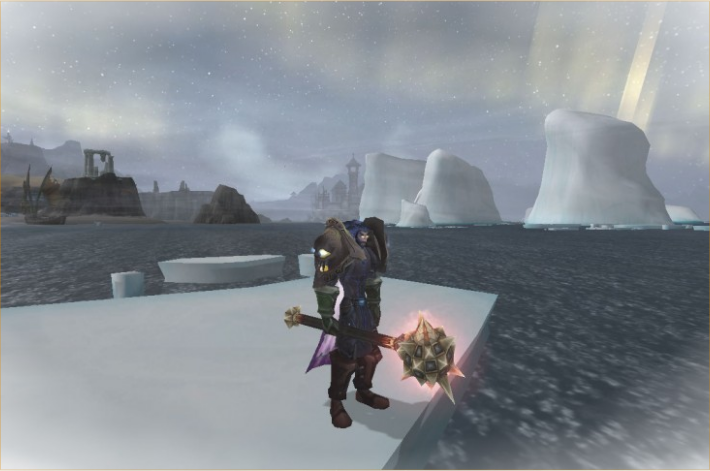
Penguins: Work the ice along the south/west coast. Riplash Strand (~48, 75) is a dependable overlook; scan the floes just offshore and the shoreline ledges. They’re also common along the Frozen Sea and into Dragonblight. Fun fact: Tuskarr keep penguins in their villages, and penguin lore goes back to Warcraft III, where the Penguin King offered Arthas treasure near Azjol-Nerub. He’s apparently worshipped by the local Tuskarr as a god.
Marmots: Free-roam the interior. You’ll trip over them naturally running routes between Fizzcrank Airstrip, D.E.H.T.A. (~57, 44), Kaskala, and the Warsong/Valiance corridors.
Watch out for the Animal Blood debuff if you kill any animal near D.E.H.T.A. territory. Full breakdown in the Hemet vs. D.E.H.T.A. blurb above.
The quest rewards lean into the satire: you can earn [Ethical Epaulettes], [Faux Leather Hood], [Moral Sabatons], and the [Rod of Poacher Punishment]. Complete it all for the achievement D.E.H.T.A.’s Little P.I.T.A. (yes, that stands for what you think it does).
Achievement Ping: Both Borean Marmot and Tundra Penguin count for To All The Squirrels Who Shared My Life. Target each and /love to tick them off while you’re pathing between hubs.
Speed & Spotter Tips:
/target macro: /tar Borean Marmot and /tar Tundra Penguin help in the tundra glare.
Water tools: Penguins often idle on floating ice. Water Walking, Path of Frost, a swim speed buff, or a gentle slow fall make screenshots painless. The icebergs each contain 15+ birds, standing still for easy targeting.
Pet battle collectors: In later expansions, both show as wild battle pets in Northrend. Scoop a Borean Marmot on the plains or a Tundra Penguin along coasts if you’re filling a Pokedex.
Critter Bites (Cooking): Charm a little parade for photos or roleplay; marmots and penguins happily follow for a bit. This is also the key item for the Critter Gitter cooking achievement.
While You’re on the Coast:
The Kalu’ak reputation vendors sell the baby penguin companion Pengu at Exalted rep, a perfect souvenir after your shoreline survey. The confusion started because Mr. Chilly, the free anniversary penguin, shared Pengu’s model. Blizzard made them identical in 3.3, players rioted, and 4.3 gave Pengu his own look with the demon eyes restored.
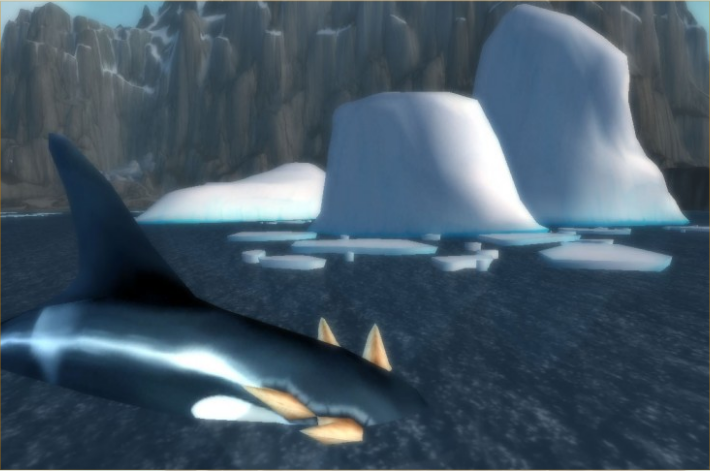
Keep an eye out for Glimmer Bay Orcas and kvaldir longboats along the same coast; they share the stage with the penguins. The orca king is named Glrggl (yes, like a murloc).
Rare-spawn hunters: King Ping is a slightly larger penguin found on the islands south-west of Kamagua in Howling Fjord, possibly related to the legendary Penguin King from Warcraft III.
An unused escort quest in the game files would have let Arthas return a penguin named Little Timmy to the King for a reward. The quest was cut, but Little Timmy still waddles around the Tuskarr village.
Diablo Echo: Kaganishu "Rakanishu" Tribute
Diablo Echo: Kaganishu “Rakanishu!” Tribute
A Horde-only Easter egg honoring one of Diablo II’s most notorious mini-bosses. Kaganishu, an elite snobold shaman in Magmoth’s depths, parrots the Fallen’s famous battle cry “Rakanishu!” and recreates their leader’s signature lightning kill in a vision sequence.
The Diablo II Source Material: In Diablo II’s Act I,Rakanishu guards the Cairn Stones in the Stony Field, the very portal that rescues Deckard Cain. He’s always Lightning Enchanted, firing Charged Bolts every time melee characters hit him. For many players, he was their first brutal lesson about dangerous monster affixes. The Fallen across Sanctuary chant his name as a war cry, treating him as a demigod alongside Bishibosh and Colenzo.
Where & Chain:
Magmoth tunnels, northern Borean Tundra (~60, 20). Descend to the lowest tier of the cave network.
Part of the Bor’gorok Outpost vengeance line; the quest is literally calledKaganishu. You’ll speak withFarseer Grimwalker’s Spirit, who explains that Kaganishu killed him, created a fetish from his body to steal his shamanic knowledge, and now keeps his soul imprisoned.
Fight Beats:
Kaganishu: Bursts of Blast Wave and Fire Nova Totem (396-442 fire damage if the totem isn’t killed within 4 seconds). Interrupt or burn fast.
Adds yell “Kaganishu!” on aggro, a direct lift of Fallen shouting “Rakanishu!” when charging to their deaths in Diablo II.
The Vision Paradox: Grimwalker’s death-vision shows a lightning strike killing him, even though Kaganishu uses only fire spells in combat. This intentional disconnect preserves the Rakanishu homage; the lightning is the Easter egg, the fire is the gameplay.
Tips for the Run:
Sweep the lower ring first to keep the pull clean; pop a defensive before his first Nova if you’re undergeared.
Click the totem post-kill to free Grimwalker and complete the story. His remains trigger the follow-up quest Return My Remains.
Blizzard’s Ongoing Rakanishu Tributes:
Legion (2016): Highmountain kobolds yell “Rakinishu!” in combat, keeping the gag alive with a one-letter twist.
Battle for Azeroth (2018): TheRanishu creatures of Vol’dun are lightning-themed bugs whose name echoes the Fallen demigod.
Diablo III: TheShrine of Rakanishu in Dahlgur Oasis lets players interrupt fallen cultists trying to resurrect him, spawning the Avatar of Rakanishu.
Hearthstone: Kobolds & Catacombs (2017):King Togwaggle‘s crown lantern contains Rakanishu as a fire elemental, who pops out during the Dungeon Run boss fight as part of Togwaggle’s Hero Power. He later became a playable hero in The Dalaran Heist.
Beneath the Geyser Fields: Machines, Heavy Metal, Secret Cave
The Geyser Fields hold elemental secrets tied to Northrend’s unstable geology. A hidden underwater cave contains one of WoW’s rarest vanity pets, unknown to most players who pass overhead.
Blizzard named an NPC after Cannibal Corpse vocalist George “Corpsegrinder” Fisher, a longtime WoW player whose rants about the Alliance became internet legend.
Goblin shredder technology carries a direct nod to StarCraft’s Terran vehicles. And along the southern coast, the ancient conflict between the Naga at Riplash Ruins and the Kvaldir threatening Kaskala hints at deeper oceanic lore that resurfaces in later expansions.
The Geyser Fields: Elemental Chaos in the Ice
The Geyser Fields: Elemental Chaos in the Ice
A hydrothermal basin stretching between Fizzcrank Airstrip and Coldarra, the Geyser Fields are Borean Tundra’s most geologically volatile terrain. Oil seeps bubble through mineral-crusted earth, steam vents hiss beneath sulfurous skies, and nerubian sinkholes pockmark the southern reaches, tunnels bored by Scourge forces.
Location: Geyser Fields proper (65-70, 23-37), with the Fizzcrank Pumping Station at (65, 23.5). Surrounding sub-zones include Steam Springs to the west, the Scalding Pools to the east, and the Festering Pools to the north (the latter corrupted by the crashed necropolis Talramas).
The Sinkholes Quest Arc
Both factions must neutralize the nerubian tunnels threatening their operations, but how they do it couldn’t be more different.
Alliance (Fizzcrank Airstrip): Quest chain from Abner Fizzletorque:
Scouting the Sinkholes — Mark three sinkhole locations (South: 70.4, 36.6; Northwest: 66.4, 32.5; Northeast: 69.7, 32.6)
Fueling the Project — Deploy the Portable Oil Collector on 8 oil seeps across the flats
A Bot in Mammoth’s Clothing — Gather 6 Thick Mammoth Hides to insulate the earthquake device against Northrend’s cold (the title is a pun on “wolf in sheep’s clothing”)
Deploy the Shake-n-Quake! — Activate the mammoth-hide-wrapped robot at the South Sinkhole to collapse the nerubian tunnels and draw out Lord Kryxix
The Horn of Elemental Fury — Recover an ancient artifact’s two halves from Gorloc chieftains Burblegoggle and Gurgleboggle (yes, those names)
The Collapse — Sound the Horn to summon Alluvius, a bound ice elemental who triggers the earthquake and draws out Lord Kryxix
Same battlefield, same nerubian commander, completely different worldviews. The gnomes engineer their solution while the Taunka commune with spirits.
Lord Kryxix acknowledges this in his combat taunts: Alliance players hear “Feebleminded tinkerer, do you really think your pathetic creation can stop me?” while Horde players get “Foolish elemental slave! You and your master will pay for your meddling!”
The Oil-stained Wolves
The zone’s atmosphere is deliberately oppressive. Oil-stained Wolves prowl the Scalding Pools, their slick black coats an actual mechanical buff: a 20% miss chance on attacks that made them coveted hunter pets. Keeping the oily coat required a precisely timed tame while the wolf ran for quest bait, a trick the taming community refined for years until Patch 6.2.0 closed it for good. Pets tamed before then were grandfathered in and kept the effect. Polymorph turns them into black sheep, a visual gag on the “black sheep” idiom.
Hunters who took their grandfathered wolves into Timewalking dungeons lost the effect permanently, a lesson the Petopia forums learned the hard way.
These are the same wolves from Lupus Pupus, the quest where you throw Wolf Bait at an Oil-stained Wolf, then loot Microfilm out of the Wolf Droppings. Gnome spies passing intel through wolf digestion is typical Fizzcrank humor.
Post-war lore suggests the geyser fields remain relatively dry because nerubian tunnels are draining groundwater and interfering with oil drilling.
Engineering Paradise
The gnomes built the Pumping Station to produce fuel for their flying machines, but pipeline crews accidentally excavated Gearmaster Mechazod, one of Mimiron’s original mechagnomes.
For engineers, the zone offers two key resources:
Steam Cloud Extraction: Use the Zapthrottle Mote Extractor on Steam Cloud motes floating around the Geyser Fields and Scalding Pools to harvest Crystallized Fire and Crystallized Water.
Mechagnome Salvaging: After looting defeated mechagnomes, right-click their corpses again with an engineering spanner to salvage parts. This can yield engineering components and, rarely, Schematic: Jeeves. The salvage mechanic functions like skinning but requires engineering skill.
Titan Connections
The Geyser Fields’ volcanic activity isn’t random. Azeroth has been geologically unstable since the Old Gods’ corruption weakened the barriers between the physical world and the Elemental Plane. Titan facilities throughout Northrend (including Ulduar) sit atop tectonic stress zones.
The chaotic elemental energy here prefigures the instability Deathwing would later exploit when he tore out of Deepholm into Azeroth, fracturing the World Pillar on the way and triggering the Cataclysm. The same planetary wounds run through both storylines, even if nobody at Blizzard was planning that far ahead.
Hidden Underwater Cave and the Secret Pet (Terky)
Hidden Underwater Cave & the Secret Pet (Terky)
In Patch 6.2.2 (September 1, 2015), Blizzard quietly added the White Murloc Egg to a hidden Borean Tundra grotto. Originally a Taiwan-exclusive iCoke promo, this marked the first baby murloc obtainable without attending BlizzCon or buying a Collector’s Edition.
The egg sat undiscovered for 46 days until October 17, when a French player leveling an alt mage stumbled into the cave and didn’t even realize he’d found something new.
Where to Find It: Cave entrance: 55.8, 88.1 (Riplash Ruins coast). The opening sits just below the surface near some tall seaweed and purple coral outcrops, not on the seafloor. Swim through the narrow crack, then upward into a small grotto.
The egg: 54.6, 89.4. Don’t be fooled by the glittering giant pearl on the central altar; the actual lootable egg is in a debris pile behind it. If invisible, log out and back in while standing in the cave.
The Chaos: When word spread, servers erupted. Hundreds of players crammed into a cave barely big enough for a dozen, deploying toys and taking S.E.L.F.I.E.s while hunting for the clickable nest. PvP realms saw faction battles for control. The egg respawns quickly, but finding it under a pile of character models required zooming the camera through bodies. If you don’t see the egg, /logout → log back in while standing in the cave (common render fix).
The Dance: Terky periodically performs a top-hat-and-cane routine, a tribute to Michigan J. Frog from the classic Warner Bros. cartoons. Use the Magic Pet Mirror toy to transform into Terky, then /dance to perform the routine yourself.
Quick Reference:
Pet is unique, account-wide, and uncageable
No quests, reputation, or prerequisites required
Both factions can loot it
Waypoints:
/way Borean Tundra 55.8 88.1 Cave entrance
/way Borean Tundra 54.6 89.4 White Murloc Egg
More Secret Pet Rabbit Holes:
Sun Darter Hatchling (Legion): Puzzle cave in Winterspring requiring specific consumables
Baa’l (BfA): Multi-zone riddle hunt, easier after completing Uuna’s story
Squirky (Legion): Purple murloc on Seabreak Isle off Azsuna, pet-battle capturable
Gorge the Corpsegrinder: Heavy Metal in the Snow
Gorge the Corpsegrinder: Heavy Metal in the Snow
At Garrosh’s Landing (~32.3, 54.1), Horde players meet a tank commander who launched Wrath’s most obvious metal cameo. Originally named Gorge the Corpsegrinder after Cannibal Corpse vocalist George “Corpsegrinder” Fisher, the NPC was renamed to Annihilator Grek’lor in Patch 9.1.5 (November 2021).
The reference wasn’t random: Fisher played WoW obsessively, claiming four accounts with level 70 characters and declaring “WoW is f***in’ life for me.” The NPC model is larger than standard orcs, a nod to Fisher’s famously massive physique.
Getting There + Quest Flow: From Warsong Hold, complete theMagic Carpet Ride to reach Garrosh’s Landing. Grek’lor kicks off the tank arc:
Why It Became a Talking Point: A 2007 interview where Fisher praised the Horde while using homophobic slurs about Alliance players was replayed at BlizzCon 2011, prompting then-president Michael Morhaime to apologize. The NPC name survived until 2021, when renewed attention led to the rename. The cameo stayed and only the name changed.
The rename landed in Patch 9.1.5 alongside other targeted content changes (including dialogue edits to quests like “Damsels Were Made to be Saved”), part of Blizzard’s broader internal review during the 2021 workplace controversies. This included many quests from Northrend (we all remember Going Bearback).
Goblin Shredders and the StarCraft Crossover
Goblin Shredders & the StarCraft Crossover
Pan your camera inside a goblin shredder cockpit, and you’ll spot a tiny portrait of Sarah Kerrigan, the Queen of Blades. The texture is pulled directly from the StarCraft: Brood War (1998) box art, featuring her iconic infested appearance with bone wings and chitinous features. It’s a pin-up in the classic military tradition: cockpit decoration as personal flair.
Where to see it here: Horde side is easiest. Check the shredder row at Garrosh’s Landing (~32, 53) on the west coast. Press right up to a cockpit and tilt your camera through the glass to see the Kerrigan portrait on the console. Alliance players can find the same Easter egg on Venture Co. shredders throughout Azeroth (Northern Stranglethorn, Stonetalon), but Borean Tundra’s stationary cluster makes for easier screenshots.
Sky Golem (Patch 5.4.0, September 2013) updates the cockpit photo to StarCraft II Kerrigan art, reflecting her redesign for Wings of Liberty. Wings of Liberty (2010) mostly featured human Kerrigan; the infested Queen of Blades redesign was more prominent in Heart of the Swarm (2013), which shipped six months before Patch 5.4.0 added the Sky Golem.
Siegecrafter Blackfuse‘s custom shredder swaps the pic entirely for Garrosh Hellscream. Same gag, different idol: the mercenary engineer worships his patron the way other pilots worship the Queen of Blades.
This is one of several StarCraft nods scattered through WoW. In Netherstorm, a shrine flashes the letters N-O-V-A and plays the original StarCraft theme, a memorial to the cancelled StarCraft: Ghost. A stealthed blood elf named Nova Terra occasionally appears beside it. She appears around 1 PM server time and stays for five minutes. Blizzard built her from a blood elf model dressed in a white “ghost suit” to mimic Nova’s stealth-operative look from the game’s trailers.
Blizzard has been cross-pollinating its franchises through Easter eggs since at least 2004, and the shredder cockpit is one of the oldest surviving examples.
Screenshot tip:/console fov 90, zoom in all the way, nudge the camera into the dash, and frame the portrait with the lever bank. Grab a second, wider shot of the shredder row for a two-panel spread.
Riplash Ruins and Kaskala: Naga vs. Kvaldir on the South Coast
Riplash Ruins & Kaskala: Naga vs. Kvaldir on the South Coast
Two storylines come together along Borean Tundra’s southern rim.
Riplash Strand/Ruins (~48, 75): The Riplash naga maintain shrines to Queen Azshara here; the Shrine of Scales stands on the beach at [44, 81]. Offshore, among clustered islands, sits what was once a great night elven city from before the Sundering. The most intact building is a temple of Elune, but the goddess hasn’t been there in a long time. Naga replaced her statue with one of Azshara.
At BlizzCon 2007, Blizzard mentioned that the naga here sought to flood the region by melting the ice caps with massive generators. The flooding plot never made it into any quest text, possibly because the kvaldir invasion overtook it, or possibly because Blizzard just scrapped the idea.
Kaskala (east of the strand): Once the tuskarr’s capital and the largest of their ports, now sacked. Kvaldir longships came sailing out of the mists, and the slaughter began, with Valiance Keep next on their list. Survivors fled east to Unu’pe.
“Kaskala” is an anagram of “Alaska” with an extra K. Development screenshots from BlizzCon 2007 show Kaskala originally designed as a neutral tuskarr town; the besieged ruins represent a late design change.
You’ll kill Ragnar Drakkarlund (one of the Skadir’s leaders) for the Trident and use it to slay the kraken Leviroth beneath the ruins, tying the naga-kvaldir feud into one set-piece climax.
Azshara’s footprint in Northrend: Beachside shrines, swapped statuary, and naga presence keep her shadow on the zone. In BfA, players would finally confront her directly in Nazjatar’s Eternal Palace raid, where she freed N’Zoth before her defeat.
Kaskala’s fall feeds the tuskarr storyline continuing at Moa’ki Harbor (Dragonblight). In Dragonflight, the Iskaara Tuskarr became a major faction on the Dragon Isles, tying tuskarr culture to fishing and cooking mechanics. The Bronzebeard brothers report that Northrend tuskarr still dream of reclaiming Kaskala.
Lore Notes & Deep Cuts:
Naz’jan & the kraken:Raj Naz’jan was emperor of the Riplash naga 500 years ago. When Azshara imprisoned Leviroth in the waters below, she blessed his trident to slay the beast if ever freed. Raj Naz’jan later appeared as a legendary Hunter minion in Hearthstone’s Voyage to the Sunken City expansion.
Why the kvaldir are here: Northsea Freebooters robbed a vrykul burial ground, disturbing the spirits of the dead. The Skadir came ashore, wiped out the naga (leaving only Veehja), and began sacrificing them to awaken Leviroth. When they ran out of naga, they started taking tuskarr. The two storylines connect through this sacrificial chain.
Post-Shadowlands footnote: The Bronzebeard brothers report the Skadir still summon their mists here, making surveying difficult. Moa’ki Harbor in Dragonblight has become the largest tuskarr settlement since the loss of Kaskala.
Archaeology angle: The ruins are a night elven dig site. According to Muradin, the entire area would be an archaeology treasure trove if the kvaldir would stop fogging everything up.
Hidden Easter egg: In the tower where Ragnar Drakkarlund stands, look up at the ceiling mural of constellations. On a narrow ledge tucked into a crevice below it, you can find an actual Easter egg, a literal decorative egg object.
Tuskarr Futures, Thassarian's Redemption, and a Memorial
The Tuskarr introduced in Kaskala and Unu’pe return fifteen years later in Dragonflight’s Dragon Isles, their culture finally expanded into a full reputation faction.
Thassarian’s questline at the Temple City of En’kilah marks the beginning of the Death Knight redemption arc that continues through Dragonblight and beyond. At Riplash Ruins, the battle against Leviroth and the Trident of Naz’jan ties into deeper Naga mythology that resurfaces in Battle for Azeroth.
And on Coldarra’s mountain rim, Kanai Griffith holds a sketch class honoring Kevin Kanai Griffith, a Blizzard artist whose legacy extends to Diablo III’s Kanai’s Cube.
Tuskarr: Seeds for the Future (Borean Tundra → Dragon Isles)
Tuskarr: Seeds for the Future (Borean Tundra → Dragon Isles)
Wrath introduces the tuskarr as kindly, sea-hardy fisherfolk: turtle-boat sailors with whalebone crafts and ancestors preserved in “stone elders.” They first appeared in Warcraft III as neutral hostile creeps on Icecrown maps, but WotLK transformed them into one of the game’s most endearing cultures.
Fourteen years later, Dragonflight delivers the payoff: full clans, festivals, children playing, communal feasts, and ottuk companions. Borean Tundra is the prologue; the Dragon Isles are where it all blooms.
Where their story begins (on your route): Start on the east coast: Kaskala lies under kvaldir siege while survivors regroup at Unu’pe (turtle ferries run to Moa’ki Harbor in Dragonblight). From Utaik at (64.0, 45.8) pick up Not Without a Fight!, and the daily Preparing for the Worst. This is your first taste of the tuskarr ethos: protect the young, feed the village, honor the elders.
Turtle boats shuttling along the coast. The tuskarr steer these giants by dangling carrots on fishing lines in front of them.
Stone elders: moai-like heads housing ancestral spirits, carved at the sacred Coldrock Quarry. The stone elders range from shorter than a dwarf to taller than a house, and according to Brann Bronzebeard, the coastal ones mark the tuskarr’s fishing routes. As Malygos geared up for the Nexus War, the blue dragonflight massacred every tuskarr at that quarry to harvest their stone for surge needles. The spirits of slain shamans still wander there.
Oacha’noa, the kraken-like goddess of wisdom worshipped by Northrend tuskarr, foreshadows their ocean spirituality
Everyday craft: whalebone weapons and buttons, whale-oil lamps, oilskin jackets, and kites riding the coastal wind.
Long-arc payoff in Dragonflight: In the Azure Span, the Iskaara Tuskarr (an offshoot who settled the Dragon Isles generations ago) embody and expand what Wrath established:
Community Feast at the village soup pot every 90 minutes. Chef Big Kinook directs players in this recurring world event and serves as a social anchor.
Female tuskarr and children finally appear in-game. Lani Minella recorded female tuskarr voice lines for WotLK, but none made it into the game. Female tuskarr first surfaced in the short story “One Small Tuskarr” in Folk & Fairy Tales of Azeroth before their in-game debut in Dragonflight.
Ottuks (tusked otters) serve as companions, mounts, and family members. Hunters can tame them with Ottuk Taming. Character Artist Natacha Nielsen designed them after winning Blizzard’s 2017 Student Art Contest with an otter mount concept; years later, hired at Blizzard, she got to build them for real.
Gral worship: The Iskaara revere the shark loa Gral (also worshipped by the Zandalari). When he appears at a funeral and devours the boat, they celebrate it as the god choosing the deceased.
Turtle boat network expanded: Young Belvo now travels from Iskaara to Grizzly Hills, Azsuna, Drustvar, Vashj’ir, Vol’dun, Kun-Lai Summit, and Azshara.
The Kalu’ak rep loop and Kaskala dailies teach values that carry forward into Iskaara renown, feasts, and ottuk bonds, turning this culture into a major faction.
Loose Threads & Retcons:
Climate retcon: In The Jig is Up (Howling Fjord), Annie Bonn claims tuskarr slaves die within days outside Northrend’s cold. Later expansions show tuskarr thriving in Pandaria, the Broken Isles, and Zandalar. Trawler Yotimo in Krasarang Wilds addresses this directly: “Call me crazy, but I love this warm weather! I always felt like an outcast back in Borean but I think this new climate is going to work out great for me!”
Faction stance: The WotLK flash site implied tuskarr would ally exclusively with the Horde. In-game, the Kalu’ak are neutral to both factions.
Name oddity: Warcraft III files and early WotLK concept art spelled it “tuskaar.” Live has always used “tuskarr.”
Cultural inspirations from real life:
Inuit and Polynesian motifs blended with a fantasy seafaring culture.
“Silap Inua” references the Inuit concept of Inua (life/spirit).
Stone elders echo Easter Island’s moai.
Possibly inspired by the Tuska, humanoid walruses from ThunderCats.
Thassarian’s First Steps Toward Redemption
Thassarian’s First Steps Toward Redemption
In Valiance Keep and the blighted farms of Farshire, a simple missing-persons lead (Leryssa searching for her brother) becomes the Alliance’s first clean redemption arc for a former Scourge champion: Thassarian, the first death knight to rejoin the living cause.
The “helpful” Counselor Talbot is eventually unmasked as Blood Prince Valanar, a San’layn running a quiet infiltration while the Cult of the Damned rots Farshire from within.
How to follow it. Work the keep → Farshire setup, then ride east with Thassarian to Death’s Stand and the Wailing Ziggurat for his focused strike:
You’ll disrupt cult logistics, seize the Words, and push up into Naxxanar above En’kilah for the reveal.
Set-piece finale:Last Rites. Talbot drops the mask; Leryssa and General Arlos stumble forward under mind control; an image of the Lich King arrives to appraise his blood prince. You and Thassarian cut Valanar down and free Leryssa. A sharp character turn for a knight who once helped scour Lordaeron and Quel’Thalas, forced by Arthas to kill his own mother to prove his loyalty.
Icecrown (Wrath): Thassarian serves aboardThe Skybreaker, coordinating assaults with the Ebon Blade.
Western Plaguelands (Cataclysm): He leads the Alliance at Andorhal in grim parallel to his Horde counterpart (and “brother in death”) Koltira Deathweaver. Their secret truce collapses when Sylvanas deploys Val’kyr. Thassarian’s skeleton companion Lurid falls in the Forsaken counterattack.
Legion (Class Hall): Returns as a champion. The Ebon Blade’s Undercity heist to free Koltira finally pays off their long, uneasy bond. Sylvanas had refused every negotiation for years, attempting to purge Koltira’s compassion in the Apothecarium.
Shadowlands: Found in Oribos with Koltira, staring into the Maw. They trade wry, world-weary lines about the veil beyond death, culminating in Koltira’s deadpan: “I remember you were the one who killed me.” Thassarian’s reply: “You are most welcome.”
The War Within: Appears outside the Caverns of Time with Koltira. Lorewalker Cho narrates “The Tragedy of Thassarian” at the Storyteller Stage, with Valanar himself appearing as a projection in the tale.
Deep cuts & trivia:
First to return: Thassarian is canonically the first death knight to rejoin the Alliance after Light’s Hope. His father, Killoren, appeared in spirit during the battle, convincing him to stand down.
“In death, we are brothers.” Even under Arthas, Thassarian broke Scourge code concerning “the weak” to rescue Koltira during the Crimson Dawn operation. The seed of their later storyline.
Lurid lives (again): His named skeleton (Lurid) follows him from Borean Tundra → Skybreaker → Andorhal. Unusually for a death knight, Thassarian favors skeletons over ghouls.
Player-facing nod:Threat of Thassarian was a Frost death knight talent making dual-wield viable (removed in Patch 6.0.2, merged into Might of the Frozen Wastes).
The chain: His oft-quoted resolve: “I have a role to play now. I’m part of a chain. And I will not be the weakest link in that chain.” This lands harder once you’ve seen Last Rites.
Death Knight manga: Dan Jolley and Rocio Zucchi’sWorld of Warcraft: Death Knight (2009) tells his full origin, from farm boy to Frostmourne Cavern to the scourging of Lordaeron.
Valanar callback: When the Blood Prince Council is engaged in Icecrown Citadel, Valanar declares “Naxxanar was merely a setback! With the power of the orb, Valanar will have his vengeance!” The first half, a tribute to Kael’thas Sunstrider’s infamous “Tempest Keep was merely a setback,” confirms the Borean Tundra defeat still stings.
Thassarian’s Borean Tundra arc is the earliest proof in WoW that a death knight’s story can bend back toward duty and family.
Leviroth & the Trident of Naz’jan (Riplash Ruins “myth-cycle”)
Leviroth & the Trident of Naz’jan (Riplash Ruins “myth-cycle”)
The Riplash Ruins entry covers how the kvaldir overran a naga stronghold and why Leviroth lies beneath these islands. This entry is about the quest chain that turns that backstory into a playable myth: reclaim a god-blessed weapon, stop a sacrificial rite, and kill a kraken.
Five hundred years later,Skadir kvaldir overran the ruins and began sacrificing prisoners to rouse the monster.
KillRagnar Drakkarlund for theTrident of Naz’jan at the NE tower (≈ 55.0, 88.5).
Dive and use the trident to impale Leviroth on the seabed (≈ 51.8, 88.5). The trident drops the elite to 7% HP, so you can finish the kill.
Veehja‘s text spells it out: Azshara imprisoned Leviroth five hundred years ago. The Skadir began sacrificing first naga, then tuskarr, to rouse it.
Your job: reclaim the trident, stop Ragnar, and prevent the kraken’s return.
This arc compresses coastal themes: Azshara’s long shadow, kvaldir mist-raiding, tuskarr collateral, and a ritual weapon. The islands appear to be a night elven archaeology dig site.
Tuskarr revenge subplot. Karuk’s father, Ariut, was killed by Gamel the Cruel. The spirit of Ariut appears mid-chain, directing you to help Veehja.
Tuk-hariq. The tuskarr call kvaldir “walkers of the fog.” Their legends predate the pirates’ grave-robbing.
Leviroth’s name. Likely a portmanteau of “Leviathan” and “Behemoth,” two biblical sea monsters.
Quick tips. Veehja grantsRiplash Blessing (+60% swim speed for 5 min). Pop the trident on cooldown underwater, then burst Leviroth down. Clear the tower platform before pulling Ragnar to avoid adds.
Where the thread goes next. In Legion, the kvaldir’s true origin was revealed: they are vrykul corrupted byHelya while seeking to cure the Curse of Flesh. Their mist-raiding aesthetic may reference John Carpenter’s 1980 horror film The Fog.
Kanai Griffith: Coldarra Memorial Sketch Class
Kanai Griffith: Coldarra Memorial Sketch Class
On the mountain rim ofColdarra in Borean Tundra (~35.2, 35.2), near the Transitus Shield, an NPC namedKanai Griffith holds an open-air art class. The Forsaken bears the title “Art Teacher” and cheerfully invites passersby: “Anyone up for sketch group?”
His dialogue captures his personality: “Welcome to the sketch group! Grab an easel, get comfortable. No judgments here—unless you’re a Paladin, of course. Today we’re studying the nexus. Such beauty! Such chaos! So much… blue.”
Nearby sit his two students:Fara, a blood elf who periodically walks to a nearby wagon to kneel beside picture frames, andXega, a pandaren, notably the only pandaren NPC in all of Northrend. A skeletal mount and wagon with extra canvases complete the scene.
A sketch circle on Coldarra’s heights, an artist-teacher remembered in the game he helped shape, inviting Azeroth to keep drawing together.
The Nexus
Who he was: Kevin Kanai Griffith (March 24, 1982 – October 17, 2014) was an artist at Blizzard Entertainment who attended the Art Institutes of California–Orange County before joining Blizzard in 2005.
His work shaped the visual identity of The Burning Crusade, Wrath of the Lich King, and Mists of Pandaria, as well as the World of Warcraft Trading Card Game. When the Diablo III team formed, Kevin transitioned over and pioneered the weather and day/night cycles in Adventure Mode. The atmospheric shifts you experience while hunting bounties are his legacy.
He also designed environments like the Icefall Caves and produced Diablo holiday art throughout the base game and Reaper of Souls.
Kevin was famous for his infectious energy. Blizzard remembered him from “footage of his Diableard being shaved live on stage at BlizzCon 2011 launch of Diablo III, his Artist’s Stage Demo at BlizzCon 2013, or our second anniversary livestream.” He organized the weekly Blizzard sketch groups referenced by his WoW memorial, fostering creative community across departments.
In February 2012, Kevin was diagnosed with alveolar soft part sarcoma (ASPS). He continued working on Diablo III through treatment, maintaining the same positive spirit his colleagues remembered. He passed away on October 17, 2014, survived by his wife.
The tributes: The WoW memorial NPC was added inPatch 6.2.0 (June 2015), but Diablo III’sKanai’s Cube, added in Patch 2.3.0, became his most visible memorial. The Cube’s lore states that Chief Elder Kanai was the last barbarian guardian of the artifact, who was killed while defending Sescheron against Baal.
Blizzard modeled King Kanai’s ghost after Kevin’s own Barbarian character, which he was particular about transmogging into just the right look.
Every March (Kevin’s birth month), players can visit the Immortal Throne in the Ruins of Sescheron. King Kanai’s spirit awakens and opens a portal to Kanai’s Stomping Grounds, where he fights alongside players against hordes of Infernal Bovines in the “Udder Cowlamity” event.
During the final week of March, a Mysterious Chest appears containing Kanai’s Skorn transmog. Even Diablo IV continues the tribute: “the ‘Vanquished Elder’ cosmetic set for Barbarians appears to reference Sescheron’s fall.
Friends and colleagues formedGamers for Good in his memory, and 283 artists contributed to the Gamer for Life artbook, creating 476 pieces of fan art drawn from Kevin’s favorite games, including Chrono Trigger, Final Fantasy IV, Super Metroid, and World of Warcraft. The Indiegogo campaign raised $67,760 by March 2015, with proceeds supporting Game Changer and CureASPS.org.
Every quest below was documented during my original 2008-2009 playthrough, before I knew what waited deeper in Northrend. Each quest page includes War Journal excerpts from the field, as Vikstone tells his story.
Click through for full walkthroughs, lore notes, and the original screenshots that make this time capsule possible.
Support the Archive
GamerTribute is a free museum, built and hosted out of pocket. If these pages brought back your Northrend, you can help keep them online.