Expeditions, war stories & culture

War stories, articles & game guides

Gamer

Tribute

2026

Expeditions,

War Stories &

Culture

Contents

Grizzly Hills WotLK Classic Lore Guide: Quests & Easter Eggs | Vikstone's Chronicles

Grizzly Hills’ hidden lore, Easter eggs, and pop-culture references, plus the storyline threads tying the iron dwarves, the worgen curse, and the furbolg’s fall back to Warcraft III and forward through Cataclysm and beyond. Told through Vikstone’s War Journal and original 2008-2009 screenshots from Northrend’s haunted wilderness. 

Grizzly Hills Museum

Vikstone’s Chronicles · Northrend Lore Series


Grizzly Hills was where Northrend remembered it had been beautiful once.

The towering pines and rushing rivers felt like a reprieve after the frozen wastelands and dragon graveyards. But the war had reached even here. At Grizzlemaw, Vikstone found the furbolg nation tearing itself apart, their world tree corrupted and their people descending into madness.

The iron dwarves of Thor Modan revealed another layer of titan history buried beneath Northrend’s surface, while Venture Company loggers stripped the forest for profit, indifferent to the war raging around them. And in the hills themselves, Arugal’s worgen curse spread unchecked, the same darkness that had consumed Silverpine now loose in Northrend.

The trap Drakuru had been setting since Drak’Tharon revealed its shape here, a betrayal Vikstone walked into with eyes half-open.


What follows is Grizzly Hills as Vikstone found it in 2008, its buried secrets, one of the most beloved soundtracks Blizzard ever wrote, and the war as he recorded it, quest by quest.

Vikstone Portrait Act 2
Illustrated by Christian DiBari and Simon Gough.
Grizzly Hills quest ledger preview

Vikstone's Chronicles · Grizzly Hills Lore Compass

Shadows Beyond the Firelight

Amberpine's fiddle and fire make Grizzly Hills feel safe.

Choose a shadow
The Broken Crown
What the firelight shows

A colossal stump, furbolg totems, and the remains of a sacred forest civilization gathered inside Grizzlemaw.

What lies beneath

Andrassil's unblessed roots pierced Yogg-Saron's prison. The tree was cut down and renamed Vordrassil, and its taint left the furbolgs open to madness and a corrupted rebirth of Ursoc.

Where the root leads

The corruption points toward Ulduar, while Ursoc and the wounded Wild Gods return in Legion's Emerald Nightmare.

From the War JournalChildren of Ursoc

The Trappers
What the firelight shows

Silverbrook appears to be a wary frontier town that might become an Alliance partner against Conquest Hold.

What lies beneath

The trappers are becoming Arugal's Wolfcult. Diplomacy turns into a mounted escape as familiar neighbors shed their human forms mid-chase.

Where the trail leads

Bloodmoon Isle closes Arugal's second life, while the worgen curse itself rides on toward Gilneas in Cataclysm.

From the War JournalEscape from Silverbrook

Drakuru's Welcome
What the firelight shows

A charming Drakkari captive at Granite Springs offers a truce, then guides Vikstone from brazier to brazier as a summoned spirit with a plan to cleanse Drak'Tharon Keep.

What lies beneath

Every favor helps Drakuru prepare a handover to the Scourge. At the keep's summit in Cleansing Drak'Tharon, the helpful guide reveals that Vikstone carried the betrayal into place himself.

Where the trail leads

The road climbs into Zul'Drak, where Drakuru's promotion to Overlord and the destruction of the Drakkari become one of Wrath's longest acts of treachery.

From the War JournalVial of Visions

Runes in the Granite
What the firelight shows

Explorers, stone giants, and iron dwarves fight over ruins that look like one more local dig-site squabble.

What lies beneath

The Iron Rune dwarves serve Loken, binding giants and stone through titan-forged machinery. Thor Modan and Dun Argol are outposts of a much larger mission.

Where the trail leads

Kurun and Gavrock's resistance points toward the Storm Peaks, the Keepers, and the truth waiting inside Ulduar.

From the War JournalRunes of Compulsion

Fire on the Heights
What the firelight shows

Voldrune is a proud ridge settlement of Dragonflayer vrykul, complete with towers, ritual fire, and a chained proto-drake.

What lies beneath

Voldrune proves the vrykul war travels. Their culture, raiding routes, and dragon mastery have spread inland, far beyond Howling Fjord.

Where the trail leads

Voldrune keeps the Dragonflayers in the story beyond Utgarde, a forward camp on the road that ends with vrykul guarding Icecrown itself.

From the War JournalThe Thane of Voldrune

Axes in the Trees
What the firelight shows

Logging camps, log-choked rivers, and contested mills keep the frontier busy while the faction war rolls through.

What lies beneath

The Venture Company treats the forest as one large economic conquest. Its machinery strips out the timber that makes the land worth fighting over.

Where the trail leads

Venture Bay turns exploitation into warfare, the same fight between forest and sawblade Warcraft has staged since the orcs first logged Ashenvale.

Vikstone, night elf warrior of US-TerokkarVikstone's field read: the fiddle plays with the darkness in mind.

The Fiddle and the Forest: Music and Menace


Grizzly Hills is famous for one thing above all else: the music. The Amberpine Lodge campfire became an unofficial landmark for players who would sit and listen to the fiddle and acoustic guitar tracks that defined Wrath’s atmosphere. 

Bambina and friends roam the forest as a direct Bambi parody, complete with Thudder and Flora. But this is Northrend. Approach the fawn and her woodland companions will attack, turning Disney innocence into a punchline with teeth.

The worgen presence at Forest’s Edge Post connects directly to Arugal’s resurrection. Players who remember Shadowfang Keep recognize what’s happening here: the same curse, new continent, and a mad archmage given a second chance by the Lich King.

And at Rage Fang Shrine, Ursoc’s legacy lingers. The bear god’s son waits in exile, a thread that wouldn’t fully resolve until Legion brought the Wild Gods back into focus.


The Campfire at Amberpine Lodge: The Fiddle, Firelight, and Frontier Myths

The Campfire at Amberpine Lodge: The Fiddle, Firelight, and Frontier Myths


At sundown, Amberpine becomes a little frontier play: trappers drift in from the tree line, circle the pit, and swap tall tales about “the first Northrend expedition that never came back.” 

It’s Northrend at human scale, cozy light and neighbors holding the dark at bay while, just beyond the glow, worgen stalk the logging roads, furbolg omens ripple through the pines, and Scourge scouts ghost the river bends.

Its story: Crackle of logs, clink of tin, a lone wolf call, the river’s hiss. Grizzly Hills is a “self-reliant frontier” with sound more than spectacle. Communities survive the night by telling stories. This fire circle quietly shows how legends (and rumors) spread in a land that keeps trying to swallow you.


A Tentative Pact

A Tentative Pact


The Music

Theme & feel: The zone’s signature cue, “Totems of the Grizzlemaw” (Russell Brower, 2008), trades war drums for folk lyricism: nyckelharpa (a Swedish keyed fiddle, played by Cajsa Ekstav) over fingerpicked guitar, hand percussion, and mellow low strings. The track loosely follows the shape of a Swedish gånglåt, a walking tune, played at an even strolling pace, the kind fiddlers historically performed for weddings, funerals, and processions.

Brower’s own words from the 2008 Original Sound Version interview: the key was “to retain a certain level of reflection—almost sadness—in the writing and performance.”

The Grizzly Hills tracks were added in the last days of beta, meaning beta testers leveled this zone in near-silence, and the fiddle arrived with launch. The most beloved zone music in the game was nearly a launch-day surprise.

The melody that defines the zone was performed by Cajsa Ekstav, a Swedish nyckelharpa player based in Uppsala. The nyckelharpa is a keyed fiddle with sympathetic strings that give it a warm, ringing overtone unlike any conventional fiddle. Ekstav was named Riksspelman, “fiddler of the realm,” in 1990, the nyckelharpa is considered Sweden’s national instrument and Uppland is its home province, she grew up in Vendel steeped in the Sahlström tradition, she traveled to Los Angeles to record for WoW.

In 2008, the same year Wrath shipped, she received the Uppland Spelmansförbund gold medal for spreading Uppland’s folk music to a wider audience.

In November 2022, a WoW player named Olawf Hjorth discovered by complete chance that she worked in the building next to his at Uppsala University, as a leadership coach, and asked her for an interview. She said yes. She had been in the game’s credits for fourteen years and had no idea millions of people knew her playing by heart.

Olawf’s reason for doing it belongs in this museum’s charter: “I’m not a journalist nor content-creator and do not strive to be, but I wanted to document this part of WoW’s history… if I don’t do it, nobody would ever ask her.”

His interview is here. Ekstav’s instrument is why the Grizzly Hills theme sounds like no other zone in the game.


Design origins: The zone itself was pitched by Lead Environment Artist Gary Platner, who envisioned a Northern California redwood forest. Artist Dion Rogers took reference photos during a trip to San Francisco, and the team built Grizzly Hills from those images. 

The tune knits the zone’s identities together: furbolg ancestral earth (Grizzlemaw), trapline homesteads (Amberpine), and redwood-river vistas.


The Lore Around Amberpine

Grizzlemaw & the Broken Crown: Northwest looms Grizzlemaw, the furbolg capital built inside the stump of Vordrassil (once Andrassil, a World Tree). Its roots touched Yogg-Saron’s prison, seeding madness. The Cenarion Circle felled it, renaming it “Broken Crown.” That act slowed the rot in the waking world but let Old-God taint slip into the Emerald Dream.

Ursoc and Ursol: The hills are the cradle of the twin Wild Gods. In Wrath, furbolg rites around Ursoc go wrong, a “tainted rebirth,” and you reckon with the cost of faith warped by lingering corruption.

Silverbrook: The “friendly trappers” you’re told to court are the Wolfcult in waiting; Arugal’s hand stretches from Bloodmoon Isle, and Sasha hunts his shade through these woods with aid from Ruuna the Blind, a seer near Vordrassil Pass. 

The northern gate of the war: Drak’Tharon Keep squats on the pass toward Zul’Drak, vomiting undead Drakkari into the valleys. The Drakuru plot bridges Grizzly Hills and Zul’Drak. You help a caged troll who promises to “cleanse” the keep; he delivers you straight into the Lich King’s hands.

Dwarves in the roots: At Thor Modan, the Explorers’ League dug beneath the ruined iron dwarf capital, checking whether its ancient tunnels, which run all the way to Icecrown, could carry the Brigade north, until the stone giants’ assault buried the mission along with several of the diggers. They’ll also tell you, over ale, that dwarves first walked this land.

Axes in the trees: The Venture Company chews at the forest via Blue Sky Logging Grounds, Blackriver Logging Camp, and Venture Bay, spawning skirmish dailies and that log-ride mini-event straight downriver (it works like a flight path).

Amberseeds & old magic: Those “magical nuts” you pocket are little ritual anchors, small earthy counters to all the metal and malice pressing in. The Doing Your Duty questline, where you drink Anderhol’s Slider Cider and use an outhouse to retrieve “Partially Processed Amberseeds” that go right back in the supply bucket.


Faction footprints: Amberpine Lodge (Alliance) faces off with Conquest Hold (Horde). The Westfall Brigade Encampment and Camp Oneqwah pull you deeper into furbolg politics, Vordrassil’s wounds, and the war path to the north.


The Failed World Tree

The Failed World Tree


In Future Expansions

In Exploring Azeroth: Northrend (2022), Muradin Bronzebeard returns to Grizzly Hills after the defeat of the Jailer. He reports that Silverbrook remains populated by trappers who gave him a “sharply unfriendly greeting.”

The Wolfcult still lingers on Bloodmoon Isle despite Arugal’s death. Muradin writes, with characteristic bluntness, that he “did not care if the Horde wiped the village out,” given their previous betrayal.


A Tiny Itinerary from the Fire

  1. Warm up at Amberpine at dusk (let one full loop of the music play).
  2. Hike the ridge to Grizzlemaw; read a totem, watch furbolg patrols.
  3. Follow the river to Vordrassil’s Limb/Heart/Tears and feel how the score darkens.
  4. Ride a log to Venture Bay, flip the flag, and hear the percussion pick up.
  5. Catch Drak’Tharon’s silhouette at sunset, when the fiddle fades, you’ll know why the stories by the fire matter.

Bambina & Friends: Bambi with Teeth


Where: A quiet glade just west of the Westfall Brigade Encampment (~57, 30), Grizzly Hills.

Who: Bambina (fawn), Mother of Bambina (doe), Thudder (rabbit), Flora (skunk). Clear riffs on Bambi, Thumper, and Flower.


Westfall Brigade Encampment


Periodically, a Westfall Brigade Hunter spawns, announces “A skunk, rabbit, and a fawn travelling together. Now that’s something you don’t see every day. No matter, I’ll be dining on venison tonight!”, then shoots Mother of Bambina and does a /cheer. 

Bambina screams “NOOOOO! Mother! We’ll avenge you!” and transforms into Vengeful Bambina, gaining “Bambina’s Vengeance” (+150% attack speed, +2000% damage for 5 minutes). The fawn hard-fixes aggro, one-shots the hunter, then reverts to normal and eventually resumes frolicking with her respawned family.


The mechanical twist: Vengeful Bambina is immune to death during her rampage – she drops to 1 HP but cannot be killed. This means you can drag an enraged, immortal fawn anywhere in Northrend. Some players discovered that you can pull her into the Westfall Brigade camp itself, where the guards endlessly attack her, even though she cannot die.

During Wrath, players used her as a training dummy to level weapon skills by swinging at an unkillable target for hours. The knowledge spread the way everything spread in 2008: forum threads and Wowhead comments, players teaching each other to weaponize a grieving cartoon deer.


Can players trigger this? Reports conflict. Some sources say killing both the mother and her friends triggers vengeance; others say player kills have no effect. The safest advice: wait for the scripted hunter event.


The literary flip: Disney’s 1942 Bambi sanctifies loss: mother dies, child perseveres through grief. Felix Salten’s 1923 novel Bambi: Eine Lebensgeschichte aus dem Walde is colder and more Darwinian. The forest is brutal, and death is routine. In the game, the child survives, the death is avenged, and the hunter pays with his life.

Kindness to critters is advised.

Worgen Ambushes: Forest’s Edge Post


Where: The Wolfcult reveal unfolds across two locations in northern Grizzly Hills. The discovery of the betrayal occurs at Silverbrook (~26, 38), while the immediate retaliation takes place at Forest’s Edge Post (~36, 68). The full arc spans Amberpine Lodge, Silverbrook, Forest’s Edge, and ultimately Bloodmoon Isle off the eastern coast.


Escape from Silverbrook

Escape From Silverbrook


The Alliance Quest Spine:

The Silverbrook questline is WotLK’s slow-burn horror story, disguised as frontier diplomacy. When Lieutenant Dumont at Amberpine Lodge sends you north to negotiate with the local trappers, the mission seems straightforward: secure allies, bolster supply lines, push back the Horde. You help defend Silverbrook from Conquest Hold raids. You retrieve a stolen relic. The trappers seem grateful, if standoffish.

Then you find the caged Alliance scout.

Escape from Silverbrook is the unmasking. The scout’s panic is immediate: “You don’t even know, do you? The trappers? They’re not human… we have to get out of here!” You mount Ducal’s horse – Ducal, the Alliance envoy, is apparently “one of them now.” You flee south while Silverbrook Worgen pour from the treeline. 

The quest gives you burning oil to hurl at your pursuers. “The fiends hate fire!” the scout shouts. It’s a frantic horseback chase through the pines, lamp oil and worgen claws, until you crash into Amberpine’s perimeter.

Dumont’s reaction is venomous: “Worgen. Blasted, Light-forsaken, filth-ridden worgen. It’s time we showed the locals what us civilized folk do with beasts like them.”

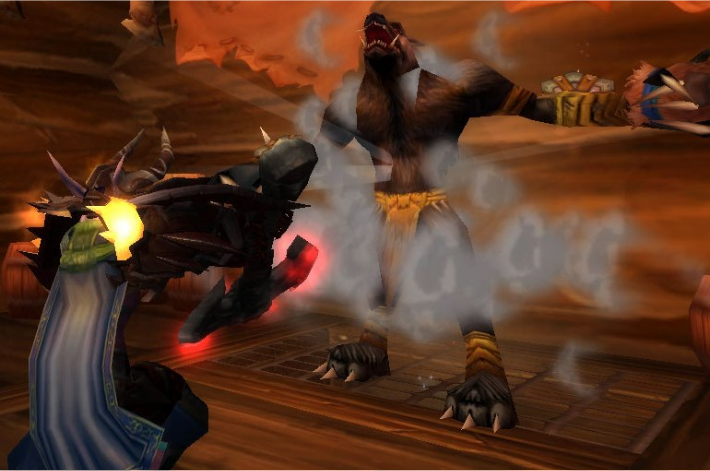
A Swift Response follows immediately. The surviving Silverbrook worgen have regrouped at Forest’s Edge Post, blockading the road under Vladek‘s command. You’re sent to break the blockade. The Silverbrook Hunters there carry a “Lycanthropy” ability; when wounded, they transform mid-combat, shedding their trapper guise for fangs.

Among the bodies, you recover Mikhail’s Journal, documenting how a father tried to warn Silverbrook before the Wolfcult killed him and kidnapped his daughter, Anya.

After Cataclysm added playable worgen, Gilnean players could run this quest and listen to Dumont curse their race to their face. Blizzard never changed his dialogue. The awkwardness is part of the texture.


Arugal’s Line of Sin

The road from Shadowfang Keep runs through these woods. Archmage Arugal was once a Gilnean patriot and royal archmage who summoned the worgen on the orders of King Genn Greymane himself, using the mage Ur’s research to conjure defenders against the Scourge.

The Kirin Tor never rated him. The Forsaken mage Dalar Dawnweaver called him a charlatan whose spellcasting was so transparent he was “unworthy to even clean chamber pots in Dalaran.” The beasts turned on everyone. Arugal went mad, enthroning himself as “father” to the packs infesting Silverpine Forest. Horde adventurers killed him in Classic, beheading him at the behest of the Forsaken.

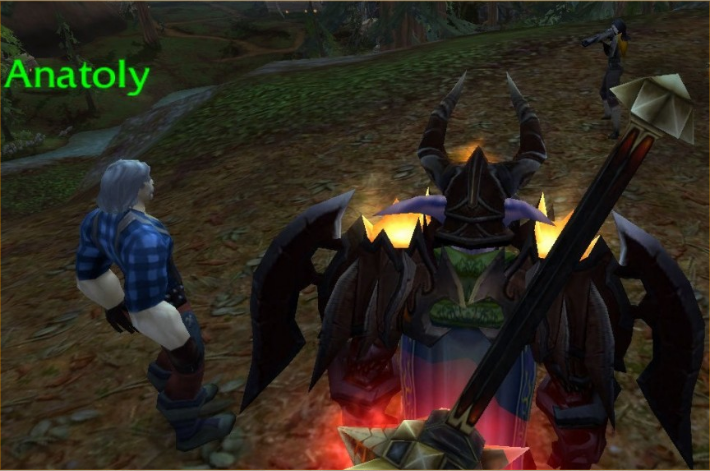
But the Lich King noticed Arugal’s work. The San’layn princes, Keleseth, Valanar, Theraldis, and Atherann, resurrected him as the Shade of Arugal and dispatched him to the Grizzly Hills to convert the trapper communities. Arugal arrived first at Solstice Village, then spread to Silverbrook. Anatoly‘s testimony wasn’t volunteered. Adventurers captured him and delivered him to Sasha, and his interrogation is what led her to her kidnapped sister Anya at the White Pine Trading Post. Everyone would inevitably serve the Lich King, and it was better as a worgen than as undead.

Those who refused faced worse fates. The workers of Hollowstone Mine rejected the cult and were cursed to undeath, forced to keep mining as shambling corpses. Their former friend Petrov asks you to burn their bodies and give them rest.

The hunt for Arugal leads through Sasha‘s vengeance arc. She’s Mikhail’s surviving daughter, a trapper-hunter whose hatred for the Wolfcult burns cold, and Ruuna the Blind‘s prophecies, culminating at Shadowfang Tower on Bloodmoon Isle. There, Arugal’s lieutenants Varlam, Selas, and Goremaw guard the approach. The Shade himself waits at the tower summit, phase-shifting and mind-controlling through a four-phase encounter that felt like a raid boss before raids. 

Sasha joins you for the kill. “We got him good… but not good enough. One thing’s for sure—we won’t be seeing him around these parts any longer.”


A Swift Response

A Swift Response


The Deeper Curse (Wrath → Cataclysm):

What Arugal tapped, he never understood. The worgen weren’t simply extradimensional monsters from some nightmare realm. Later canon reveals they originated from the Druids of the Pack, night elf druids who practiced a forbidden wolf form during the ancient War of the Satyr. 

Their leader, Ralaar Fangfire (later called Alpha Prime), sought to temper the form’s rage by creating the Scythe of Elune, a staff combining Goldrinn’s fang with the Staff of Elune. Instead of control, the Scythe transformed the druids into the first worgen: bestial, curse-spreading, impossible to contain.


Malfurion Stormrage banished them to the Emerald Dream. Millennia later, Arugal pulled them back.

The Silverbrook revelation, a folk community consumed from within while you watch the trappers mask and molt, foreshadows exactly what Gilneas will face in Cataclysm. The worgen curse that Arugal spread through Silverpine eventually crossed the Greymane Wall, reaching pandemic levels among the isolated Gilneans.

By the time the Cataclysm shattered the wall, the curse had transformed nearly the entire population.

The playable worgen of Cataclysm are Gilneans who learned to balance their beast and human natures through the night elf ritual. But before that resolution, they experienced what Silverbrook experienced: neighbors turning, packs hunting in the night, the slow horror of realizing your community has already fallen.


Horde Perspective:

Horde players see the Wolfcult threads crisscross their Conquest Hold itinerary differently. Conqueror Krenna dismisses worgen talk as “nonsense” (her word, in the completion text of My Enemy’s Friend), though her sister Gorgonna recognizes the threat.

The Horde attacks Silverbrook directly in Attack on Silverbrook, engaging Silverbrook Defenders who also transform when wounded. Both factions eventually save Sasha (Alliance through the Words of Warning chain, Horde through Tactical Clemency), and both can pursue the Bloodmoon Isle finale.

But the set-piece horseback chase? That’s Alliance-only horror, designed to make you feel the trap closing.


Cross-Expansion Continuity:

Per Exploring Azeroth: Northrend (2022), the Bronzebeard brothers returned to Grizzly Hills after the war against the Jailer. Muradin reports that despite Arugal’s death, the Wolfcult “still lingers” on Bloodmoon Isle.

The curse may be contained. The resentment remains.

Rage Fang Shrine: Where Ursoc’s Son Waits in Exile


Where: South of Grizzlemaw, tucked into a forested hillside (≈ 50.2, 56.8). The Frostpaw tribe controls the shrine proper, their white-furred warriors and shamans patrolling the perimeter. A cave mouth opens in the back, and inside waits someone far older than any of them.

The village section spreads before the cave entrance with its fire pits, totems, and weapon trophies mounted above doorways. But the real discovery is the Ancient guardian inside: Orsonn, son of Ursoc, nephew of Ursol.

He does not attack. He speaks. 


Children of Ursoc

Children of Ursoc


The Quest Connection: When Hierophant Thayreen sends you to find Ursoc’s children during the Children of Ursoc quest, you discover something unexpected at Rage Fang Shrine. Orsonn is not a prisoner in chains. He says so himself: “You don’t understand. If I wanted to I could fight my way out of this cave.”

The mad furbolgs will not let him leave, and because he loves his people, he will not make them try to stop him. His words:

“I once roamed the Grizzly Hills, son to the great Ursoc, who ruled over this land. But now… now I’m doomed to spend the rest of my life in this cave.”


When you ask about the corruption, he tells you the truth that breaks the quest open: “The thing that now walks the Grizzly Hills is not my father and it must be put to rest.”

Orsonn’s account fills in the rest. Ursoc gave his life during the War of the Ancients, ten thousand years before this cave. The furbolgs spent centuries seeking a way to bring him back, and finally regrew the failed World Tree to do it. The sapling bore a fruit. “At first it seemed to work. Ursoc did come back and I was filled with joy for a brief moment.”

Then the recovery revealed the truth: whatever evil felled Vordrassil the first time lived in the new tree too, and it poisoned both the resurrected god and every furbolg who prayed for him.


Lore Threads:

  • The Tribal War That Surrounds You: The Frostpaw and Redfang tribes once lived in peace within Grizzlemaw for thousands of years. Corruption from Vordrassil’s roots shattered that unity. Now they wage war over the same tree-stump city their ancestors built together. The Redfang hunters even yell it at you mid-combat: “All who slay Frostpaw are our allies!” No mechanic backs the offer, both tribes will kill you all the same, but the yell tells you everything. These clans are brothers driven to fratricide by an Old God’s poison, so far gone they recruit strangers into it.
  • A Line Back to the Beginning: Furbolg oral history speaks of the jalgar, ancient bear-folk who once roamed Northrend. When the Dragonflayer vrykul learned to ride proto-dragons, the jalgar were driven south into Kalimdor’s forests, eventually evolving into the furbolgs. The Rage Fang Shrine you stand in connects back through twenty thousand years of bear-worship, to a time before the Titans finished shaping Azeroth.
  • The Clan Totem System: Throughout Grizzly Hills, scattered clan totems mark territorial boundaries. You might never notice them while questing, but they are there. Each signals that you have entered Snowspring territory, or Winterpaw land, or Snow Flurry hunting grounds. Brann Bronzebeard’s field notes advise travelers to “declare yourself openly once you see the totem, since a furbolg may be watching and won’t appreciate your trying to sneak past.” The Rage Fang Shrine is merely the largest and most permanent version of a tradition.
  • Warcraft III Echoes: If you played the night elf campaign in Reign of Chaos or the orc missions in Frozen Throne, you remember furbolg camps: the totems, the spirit-talk, the barkskin guardians, the sense of ancient shamanistic power rooted in forest soil.
  • Kalimdor Mirrors, Corrupted and Uncorrupted: Walk through Felwood’s Deadwood Village or Felpaw Village, and you see what happens when demonic or Old God corruption twists furbolg culture. The totems darken. The shaman go mad. The ceremonies turn from reverence to rage. The Frostpaw at Rage Fang Shrine are not uncorrupted, not completely, but Orsonn’s presence keeps some fragment of the old faith intact.
  • The Twin Shrines: Rage Fang Shrine houses Orsonn. Heart’s Blood Shrine to the east (66.4, 52.9) houses his sister Kodian, daughter of Ursoc. Both children are “prisoners” of their respective tribes, the Frostpaw and Redfang. Both refuse to leave, bound by love for their maddened people. When you visit both during the quest chain, you piece together the full picture: the Timbermaw representative Tur Ragepaw came from southern lands, thinking he could purify Vordrassil’s taint and save Ursoc. He was wrong.


Ursoc, the Bear God

Ursoc, the Bear God


Cross-Expansion References:

The threads you pick up at Rage Fang Shrine weave through later expansions:

Legion (Emerald Nightmare): Ursoc becomes a raid boss in the corrupted Emerald Dream version of his Grizzly Hills shrine. Xavius captures the bear Ancient and turns his protective nature into nightmare fury. When you defeat him, the veil lifts just before his spirit passes, and you see Ursoc’s true self for one final moment. His claws become the Guardian Druid artifact, titansteel weapons forged by Keeper Freya that the furbolgs could never master, returned at last to Ursoc’s spirit in the Dream.


Shadowlands: After his second death in the Nightmare, Ursoc’s soul travels to Ardenweald, falling into slumber within a wildseed at Tirna Noch. The anima drought threatens even his rebirth. Everything you did in Grizzly Hills, every ash you purified, every Old God tendril you burned, was only the first chapter of his long suffering.

Dragonflight’s 10.2 Guardians of the Dream storyline includes Ursoc’s rebirth in the restored Emerald Dream. It’s the true final chapter, everything from the ashes you sprinkled to the wildseed’s drought finally resolving.


Exploring Azeroth: Northrend (2022): The Bronzebeard brothers return to Grizzly Hills years after the war against the Lich King and manage to slip past the furbolgs to speak with Kodian. She tells them Orsonn still waits at Rage Fang Shrine, still hoping their people will someday find peace. The siblings have spent over a decade imprisoned by love, watching the corruption slowly ebb but never fully fade.

Kodian aided the brothers’ research, and to thank her, the dwarves traveled to Rage Fang Shrine carrying a message to Orsonn: she misses him. He sent one back. He misses her too. Two immortal children of a god, a few miles of forest apart, unable to visit for decades, passing “I miss you” through dwarf couriers. If Grizzly Hills has a saddest sentence, it lives in that exchange.


Dragonflight (Azure Span): Blizzard explicitly cited Grizzly Hills as inspiration for the Azure Span’s design. The Winterpelt and Longclaw furbolgs carry the same totem traditions, the same ceremonial beads decorated with shells and feathers, the same reverence for Ursoc (whose spirit they can still invoke at hidden shrines). If you helped Orsonn and Kodian in Northrend, you recognize this when you meet their distant cousins on the Dragon Isles.


Why This Matters: Rage Fang Shrine is easy to rush through during the Ursoc quest chain. Kill some Frostpaw to reach the cave, speak to Orsonn, collect quest update, move on. But if you pause, you are standing in one of the oldest continuously occupied sacred sites in Northrend. The cave behind you has heard bear-prayers since before the Sundering. 

The corruption you will burn at Grizzlemaw, the Ursoc you will “defeat” at his den, the ashes you will sprinkle on his corpse… all of it traces back to this moment. To a furbolg who stayed when he could have run. To a daughter who kept faith when despair made more sense. To two children of a god who loved their people more than their freedom.

Ruins and Fables: Grizzlemaw to Thor Modan


Mr. Floppy’s Perilous Adventure is one of Wrath’s strangest escort quests. A little girl’s lost toy becomes the centerpiece of a journey through hostile wilderness, blending childhood innocence with Northrend’s casual brutality.

Grizzlemaw stands as the furbolg nation’s last great sanctuary, built around a failed world tree. The corruption spreading through their ranks parallels what players saw with the Timbermaw in Kalimdor, but here there’s no reputation grind toward redemption. Just a culture collapsing in real time.

Harrison Jones returns at Drakil’jin Crypt, continuing WoW’s long-running Indiana Jones homage. 

Thor Modan introduces the iron dwarves properly, titan-forged beings who never suffered the Curse of Flesh.

And the Hugh Glass reference with Griselda pulls from American frontier history. The real Glass survived a bear mauling and crawled hundreds of miles for revenge. Blizzard translated that legend into Northrend’s pines.


Grizzlemaw: The Ancient Furbolg Sanctuary

Grizzlemaw: The Ancient Furbolg Sanctuary


Where: Center of Grizzly Hills (≈ 50, 43). The stump dominates the zone’s heart, visible from half the map. Ringed by ramps and rope bridges, the structure is carved straight into the remains of Vordrassil.

What it is: A city-sized hollow stump that functions as both a furbolg capital and a monument to druidic hubris. 4,500 years before the First War, Archdruid Fandral Staghelm planted a branch from Nordrassil here to combat saronite growth, naming the resulting World Tree Andrassil (“Crown of the Snow”).

Without the Dragon Aspects’ blessing, the tree’s roots bored into Yogg-Saron’s prison. The Old God’s corruption drove nearby creatures mad, forcing the Cenarion Circle to fell the tree and rename the stump Vordrassil (“Broken Crown”). 

The furbolg moved into this giant corpse and built Grizzlemaw, a sanctuary that slowly soured with the same taint that killed the tree.

The old sourcebooks tell a warmer founding story, non-canon but worth the telling: Grizzlemaw began as the Frost Paw tribe’s lodge, built large enough to shelter friendly tribes through the winters, and those shared winters turned scattered hunters into something like a nation. Some tales add that the tribes first banded together against the Drakkari, whose new keep at Drak’Tharon made the trolls organized in a way numbers alone couldn’t answer.

The city ruled by chieftain Baergar Blackpaw in those stories is the same stump you walk through, before the poison in its floor turned brothers on each other.


Grizzlemaw


How to Read the Space

  • Old God Architecture as Quest Hub: The Vordrassil questlines send you to the tree’s three fallen segments (Heart, Limb, Tears) to sample the black ooze corrupting them. Then you descend into Grizzlemaw to burn the sapling the furbolg are regrowing and gather seeds to halt future growth. The purified ashes become the key to confronting corrupted Ursoc in his den. Only after sprinkling those ashes on his defeated form does his freed spirit warn you: “Beware Yogg-Saron, the beast with a thousand maws. His evil extends beyond Vordrassil’s roots.”
  • Tribal Politics: Redfang (auburn-colored) and Frostpaw (white-furred) tribes feud under one roof, driven to fratricide by the same corruption that killed their gods. Killing one tribe grants a real five-minute buff, Frostpaw Ally or Redfang Ally, making you neutral with the other. Players worked out the full exploit within weeks of launch: kill one furbolg from each tribe with a single AoE tick and both buffs land at once, opening a five-minute window to stroll through Grizzlemaw unmolested. The trick spread through exploit forums in 2008 and still works.
  • Furbolg Religion Carved in Wood: Totems and wall art venerate Ursoc and Ursol, the twin bear gods. Grizzlemaw functions as both the city hall and the shrine. The furbolg carved the entrance to Timbermaw Hold into a giant growling bear head for the same reason. Those who follow Ursol carve statues from dead trees; those who follow Ursoc brew.
  • World-Tree Archaeology: The Aspects’ blessings mattered. Without that protection, Andrassil became a conduit for corruption into the Emerald Dream itself. Yogg-Saron used Fandral’s unauthorized planting as a doorway into the Emerald Dream, seeding the Nightmare that would plague druids for millennia.


Ursoc was a brewer in his mortal days. The ales he made were so good that furbolg clans across Kalimdor and Northrend still try to reproduce his recipes thousands of years after his death. When you see mead barrels in Grizzlemaw, that’s what they’re chasing.


Grizzlemaw Inside


Cross-Expansion Echoes

Wrath: Ulduar Easter Egg: Vordrassil’s roots are visible in Yogg-Saron’s boss chamber, a subtle environmental confirmation of the quest text.

Legion: Guardian Druid Artifact: The Claws of Ursoc questline brings druids back to Grizzlemaw through the Emerald Dreamway, where Ursol tests their worth. The Guardian artifact’s challenge skin is named “Might of the Grizzlemaw.” In the Emerald Nightmare raid, Ursoc becomes a boss in a Nightmare-corrupted version of his Grizzly Hills den.

Shadowlands: After his Nightmare death, Ursoc’s soul traveled to Ardenweald, where he slumbered in a wildseed awaiting rebirth during the anima drought.

Mr. Floppy’s Perilous Adventure: a grim fairytale in the pines


Where: Heartwood Trading Post (≈ 49.0, 33.0), an abandoned trapper outpost with a lone tower in northern Grizzly Hills. Southeast of the Westfall Brigade Encampment.


Mr. Floppy's Perilous Adventure

Mr. Floppy’s Perilous Adventure


What you see in Mr. Floppy’s Perilous Adventure: A little girl named Emily stands beside a tower, clutching her rabbit, Mr. Floppy. She and her pet wandered into the woods when her brother Walter got busy with “squire things,” found themselves surrounded by wolves, and took refuge here. Now she needs an escort home.

The walk back looks innocent enough. It isn’t. Wolves harry the trio along the forest path, attacking Mr. Floppy. Emily yells warnings like “He’s going for Mr. Floppy!” and “There’s a big meanie attacking Mr. Floppy! Help!”

Then the final ambush: a massive Ravenous Worg “chomps down” on the rabbit.

Mr. Floppy collapses. Emily screams: “Don’t go toward the light, Mr. Floppy!” You kill the worg, and the rabbit miraculously revives. Emily cheers. The quest continues as if nothing happened.

Turn in the quest to Squire Walter at the encampment, where he tends Old Blanchy and worries about finding oats for the hungry horse.


A Fairytale Weaponized 

Blizzard staged Little Red Riding Hood as a roadside escort: a child, a wolf, a forest path. The setup inverts the classic tale. Instead of grandmother’s house hiding danger, the danger waits in the woods themselves. Emily plays Red Riding Hood, and the player becomes the woodsman who slays the wolf.

Even the quest rewards tell the story. The gear includes Boots of Safe Travel, Legguards of Unerring Navigation, and the real giveaway: Bracers of the Chaperon. “Chaperon” IS Little Red Riding Hood. The French title of the fairy tale is “Le Petit Chaperon Rouge.” Blizzard named the loot after the character.

Jeff Kaplan, asked in 2007 to name his favorite World of Warcraft character, chose Old Blanchy: “Most epic character ever.” Two years later, Metzen joked at BlizzCon that Westfall might survive the Cataclysm untouched because “Old Blanchy is core.” Neither the zone nor the horse was spared.

Veterans of the Burning Crusade recognize references from the Karazhan’s Opera Event, where the Big Bad Wolf turns raid members into helpless Little Red Riding Hood targets. That encounter forced players to flee from the wolf while debuffed. Here in Grizzly Hills, you’re not the victim running away but the protector watching a rabbit get “eaten” while a child provides play-by-play commentary.


Mr. Floppy's Perilous Adventure Eaten


Mr. Floppy’s First Job

“Mr. Floppy” nods to Unhappily Ever After (1995-1999), a WB sitcom created by Ron Leavitt and Arthur Silver of Married… with Children fame. In that show, divorced father Jack Malloy (Geoff Pierson) copes with his dysfunctional life by talking to a stuffed rabbit named Mr. Floppy, voiced by Bobcat Goldthwait. The rabbit is Jack’s sarcastic, foul-mouthed imaginary friend.

Where the sitcom’s Mr. Floppy was a cynical voice in a man’s head, this Mr. Floppy is a real rabbit who apparently cannot die, watched over by a child with complete faith in his immortality.

Harrison Jones’ Expedition: Drakil’jin Crypt


Where: Drakil’jin Ruins crypt, eastern Grizzly Hills. Entrance at [72.6, 24.6], with the ceremonial chamber deeper inside at approximately [71, 25].


What to look for: You find Harrison Jones locked in a cage inside the Drakkari burial complex. Free him, and he pops up with his trademark bravado: “Listen, kid. This is no place for you to be playin’ around.” What follows is the escort quest Dun-da-Dun-tah!, named for the first four notes of John Williams’ iconic Raiders March.

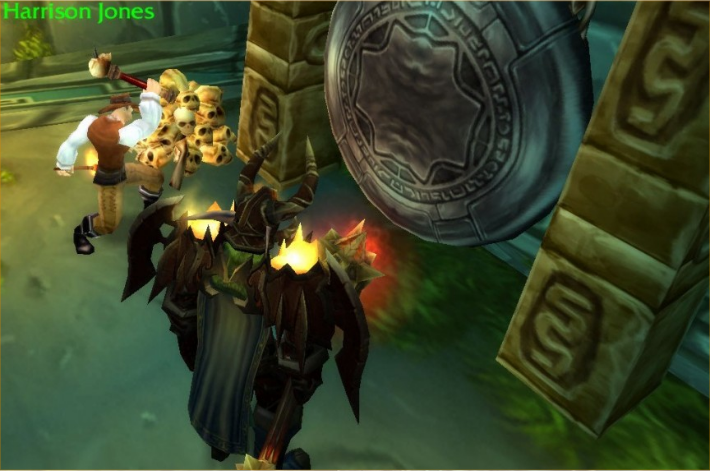
Harrison leads you through the tomb, pausing to free Adarrah from her own cage along the way. In the ceremonial chamber, he strides up to a massive gong and hammers it twice. “Odd. That usually does it.” Flames erupt at the exit. Then Tecahuna slithers in: a giant serpent guardian of the ancient Drakkari kings.

“Aww, not a snake!”

Harrison tanks the cobra while you deal with spawning adds, and once the serpent falls, he escorts you out to Harkor’s Camp [73.8, 34.0] with a casual “See ya ’round, kid!”


Dun-da-Dun-tah!

Dun-da-Dun-tah!


The running gag, perfectly staged. Harrison Jones debuted in Zul’Aman (TBC) as an Indiana Jones homage, helping players gong open the inner gates before getting “killed” by an Amani ambush. His Northrend return proves he survived, and this Drakil’jin pit stop cements the character’s identity: the hat, the quips, and a snake set-piece that directly echoes the Well of Souls scene from Raiders of the Lost Ark.

Where Indy groaned “Snakes… why did it have to be snakes?” while torchlight revealed hundreds of asps, Harrison delivers his own protest before punching the problem in the face.


Archaeology meets deep time. Drakil’jin Ruins is Drakkari stonework, part of the same cultural footprint stretching to Drak’Tharon Keep and up into Zul’Drak, where the ice trolls infamously sacrifice their own loa in desperation against the Scourge.

Parking Jones here foreshadows the bigger arc: trolls as one of Azeroth’s oldest peoples, their loa tied to Wild Gods tended by Keeper Freya, their cities layered over Titan-era geology.


Recurring companions, recurring trouble. Adarrah first appeared as a polymorphed frog in Zul’Aman’s original timed run. Here she’s caged again. In Cataclysm, she’ll wash up in Vashj’ir after her ship sinks, then join Harrison’s caravan into Uldum, where she picks a lock to save the player from pygmy captors. By Ramkahen, she’s hinting at “desert sunsets” with Harrison. Her cross-expansion arc mirrors his: comic-relief adventurers who keep stumbling into the same ancient messes.


Quick Notes & Follow-Ons

Harkor connection: The turn-in NPC, Harkor, was himself a Zul’Aman prisoner rescued during the timed event. He set up camp here seeking revenge on the local trolls for his imprisonment. Fellow ZA prisoner Kraz is also at the camp.


Companions, foils, and running jokes: Harrison’s recurring allies include Adarrah (the adventurer with growing romantic tension by Uldum), Sullah (Uldum comic relief whose name echoes Indy’s friend Sallah), and Budd Nedreck (his treasure-hunting partner since Zul’Aman).

He also crosses paths with Brann Bronzebeard and the Explorers’ League. His antagonists include Commander Schnottz in Cataclysm and the Horde’s tongue-in-cheek counterpart Belloc Brightblade, a direct reference to René Belloq, Indiana Jones’ nemesis in Raiders of the Lost Ark.


Signature gags: The hat, snakes (Drakil’jin), gongs (Zul’Aman, Drakil’jin), mine carts, collapsing ruins, and “belongs in a museum” energy throughout.


Cross-game appearances: Harrison appears as a Legendary card in Hearthstone, “That belongs in the Hall of Explorers!”, and his hat shows up as a Hunter spell. He also cameos in two Heroes of the Storm battlegrounds, escaping across Sky Temple and lurking in the Tomb of the Spider Queen.


Dun-da-Dun-tah! - See ya 'round


Harrison Jones: The Rest of the Tour

Harrison’s journey through WoW spans nearly every expansion. In The Burning Crusade, he first appears at Zul’Aman’s inner gate, donning the hat and helping players gong the door open to start the 20-minute timed rescue event before an Amani ambush “kills” him.

His Wrath of the Lich King return is the Drakil’jin escape this entry opened with, proof he survived Zul’Aman.


Cataclysm gives him his biggest role. He becomes the Archaeology trainer in Stormwind’s Royal Library, dropping Ford-style one-liners to students. In Uldum, he gets the full pulp pastiche treatment: Khartut’s Tomb explosives, getting shot off a mule by pygmies, lighting the Obelisks of the Sun, Moon, and Stars, plane set-pieces, and sparring with Commander Schnottz (a goblin amalgamation of Indiana Jones’ Nazi foils with Hitler parody elements).

The Uldum finale restages Raiders’ climax beat for beat: Harrison warns “Close your eyes, kid. This ain’t gunna be pretty…” as the Coffer of Promise unleashes the energy that obliterates Schnottz and his dragons, the Ark melting the Nazis with the serial numbers filed off. Then Brann Bronzebeard climbs out of the artifact itself: “Two steps ahead of ya again, junior! As usual.”


Mists of Pandaria offers a brief ride-by cameo in Silvershard Mines, nodding to the Temple of Doom mine-cart sequence.


In Warlords of Draenor, Harrison shows up at your Garrison (patch 6.1 onward) with rotating Relic Hunter missions. Complete a handful, and he joins as a follower for both factions, bringing his usual booby traps and witty asides.

The Horde recruitment is quietly absurd, and the wiki says so: on Ashran he’s a killable Horde bonus objective and a sworn enemy of the Reliquary, yet patch 6.1 hands him to Horde garrisons anyway. You can kill him on the battlefield in the morning and send him on a relic run in the afternoon.


Battle for Azeroth (patch 8.3) finds him at Maker’s Ascent during the Uldum Assaults, clipboard out, cataloging Titan and Old God fallout alongside the Explorers’ League.

Thor Modan: Secrets of the Iron Dwarves


Where: Thor Modan [62, 26.4], northeastern Grizzly Hills. The blasted vaults and bridgeworks of an iron dwarven capital under active siege. Runed golems clank across the terraces while earthen skirmishers and the stone giant Kurun [65.7, 17.7] pelt the site from the Boulder Hills above.

Adventurers who come upon Thor Modan first encounter a fierce battle between the earthen and the iron dwarves. The iron dwarves scramble to repair constant damage from an army of nature giants who barrage the area with huge boulders and trees ripped from the ground.

The defenders send stone golems to push back the earthen; the giants hurl debris from the heights; neither side gains permanent ground.


Find Kurun!

Find Kurun!


Field notes:

  • Keeper politics. Thor Modan stages the proxy war you’ll later decode in Ulduar: Loken’s iron host (iron dwarves, runed giants, piston-fisted constructs) versus stone/earthen loyalists. The iron dwarves are a people created by the mad Keeper Loken, who wanted an army to do his bidding and ask no questions. This is the prequel to Brann’s Tribunal of Ages briefing in Halls of Stone.
  • Bread-crumb to Dun Argol → Ulduar. Alliance side, the arc flows straight into Dun Argol [74, 54] to assassinate Iron Thane Furyhammer in The Iron Thane and His Anvil. Furyhammer’s bodyguard is a construct called The Anvil; disable it, and his protection disappears. Dun Argol became the iron dwarf capital after Thor Modan’s fall.
  • Runes over flesh. Yogg-Saron commanded Loken to create a new army from the Forge of Wills. In Loken’s hands, the forge churned out legions of iron dwarves and vrykul who sought only bloodshed and war.
  • Explorers’ League shrapnel. Alliance adventurers assist the Explorers’ League in retrieving excavation information from fallen League members who ventured in and never came out. Scattered camp gear, fallen surveyors, and loose journal pages. The architecture mirrors Ironforge, down to a statue resembling Modimus Anvilmar at the entrance hallway, underlining the shared dwarven origins the League came to investigate.


Why it matters:

Thor Modan condenses Titan history: earthen (proto-dwarves) versus iron dwarves (Loken’s re-forged line), runic industry versus stone/wood colossi, and a living example of how Keepers weaponized the forges to manage (or overwrite) creation. 

When the Tribunal later recounts Loken’s treachery, you’ve already felt its consequences here. The Tribunal was created by Loken to replace the Discs of Norgannon after they were stolen; he adjusted historical events to cover up his crimes, making Thor Modan’s chaos an unredacted chapter of the story he tried to bury.


Connections & echoes:

The runic plating, forge braziers, anvil iconography, and piston constructs match Ulduar’s trash and bosses. The iron armies are led by three fearsome generals in the Assembly of Iron, each representing a different titan-forged race.

The iron armies answer to the Assembly of Iron in Ulduar, where Stormcaller Brundir, an iron dwarf, fights alongside Runemaster Molgeim and the iron giant Steelbreaker.

Geography of the makers. Thor Modan sits along the old Titan arteries that climb toward Ulduar, one node on the logistics spine that also touches Crystalsong and the Path of the Titans routes. A network of tunnels beneath the ancient city leads to the Icecrown Glacier, a foreshadowing of deeper Titan plumbing.

Kurun’s balcony. Look upslope into Boulder Hills to spot Kurun hurling boulders and uprooted trees. He leads a faction of earthen and giants, serving as a diegetic artillery tutorial that frames the conflict: iron (brand and bind) versus elemental will (break the brand).

The sons of iron have used their runes to enthrall many of his brothers, forcing them to break their own siege on Thor Modan.


Events in Wrath:

Start with Find Kurun! to meet the stone giant leading the siege. Raining Down Destruction has you throw boulders into Thor Modan’s trench. Rallying the Troops uses earthen shards to free enthralled giants. Into the Breach! sends you inside to kill Iron Thane Argrum, the commander defending Thor Modan (distinct from Furyhammer at Dun Argol).

From there, the Dun Argol infiltration arc unfolds at Prospector’s Point [77, 48]: rescue captured prospectors, steal blueprints, build a war golem, and finally take down Furyhammer in The Iron Thane and His Anvil.

The Storm Peaks follow-through comes in Halls of Stone, where Brann Bronzebeard’s Tribunal of Ages briefing connects Thor Modan’s chaos to Loken, the Curse of Flesh, and the forges’ true mandate.

When Brann hears about Loken’s crimes, he remarks, “This ‘Loken’ sounds like a nasty character. Glad we don’t have to worry about the likes o’ him anymore.”

Per Exploring Azeroth: Northrend, the Bronzebeard brothers returned to Thor Modan years later and found the war still raging. Despite Loken’s fall and the iron dwarves rejoining Ulduar’s uncorrupted forces, the earthen and stone giants here never stopped fighting. The cause is gone but the conflict isn’t.

Hugh Glass & Griselda: Frontier Myth in the Pines


Where: Redwood Trading Post [69, 40], central-eastern Grizzly Hills, just northeast of Camp Oneqwah. Quest: A Bear of an Appetite.

A grizzled trapper named Hugh Glass asks you to collect salmon for his “best girl,” a hulking bear called Griselda. You’re handed a Fishing Net and sent to the Eastwind Shore, where schools of Northern Salmon swim just offshore (these don’t show up on [Find Fish] tracking and can’t be caught with a rod). 


A Bear of an Appetite

A Bear of an Appetite


Return, and the turn-in triggers a scene: Hugh initially mistakes you for his friend Limpy Joe, then pivots to accusing you of murdering Joe (“By the Light, you killed Limpy Joe and took the meat! How did you know where to find us?”). Which makes three versions of Joe’s fate from one man: his campfire mutterings say the wolfmen got Joe, his greeting says you are Joe, and his accusation says you killed Joe.

All three can’t be true, and Hugh believes each one completely while he’s saying it. He feeds her anyway, resigned: “Here, girl. I’ve got one last meal for you before Limpy Joe’s killer does us in!”

Then the logic snags on itself: “How could you kill poor, defenseless old Joe? And why did you bring the meat back? You’re an enigma, that’s what you are… And let me tell you, enigmas and I don’t get along….” He warns you off before Griselda decides she’s in the mood for dessert.


  • Frontier myth, Azeroth edition. The name and setup nod to the real Hugh Glass, the American fur trapper who survived a grizzly mauling in August 1823 near present-day South Dakota and crawled some 200 miles to Fort Kiowa after being abandoned by companions Jim Bridger and John Fitzgerald. His legend was mythologized across two centuries, most famously in the 2015 film The Revenant. Worth pausing on the dates: Blizzard planted this reference in 2008, seven years before The Revenant made Hugh Glass a household name. In 2008 this was obscure Americana that most players walked past as a funny fish quest. The easter egg aged into legibility, and players who returned after 2015 found a reference that had been waiting for them the whole time. Museums know this phenomenon well. Where the historical Glass was nearly killed by a grizzly, Blizzard’s Glass has made peace with one.
  • Tone piece for the zone. Grizzly Hills is all fiddle and fresh pine until the wolves start talking. Hugh’s paranoia isn’t baseless theatrics: he escaped from the Wolfcult, but his friends Limpy Joe and Flannel McGee “weren’t as lucky.” His madness reads as survivor’s guilt filtered through frontier isolation.
  • Design grace note. Mechanically, it’s a simple fish-and-feed. But the man is kind of crazy, and the game tells you so directly: Gryan Stoutmantle’s quest text for Softening the Blow (Alliance) calls Hugh “not right in the head, but you won’t find better moonshine out here.” Horde players get a different glimpse via In the Name of Loken, where Hugh’s paranoid response to questions about the Titan Keeper opens with the tell that he still hasn’t sorted out who you are: “That’s not something Limpy Joe would ask! But yeah, I know Loken. He’s out to get me, too! I’d be careful around here if I was you, traveler. You never know which tree he’s hiding behind!”


Lore threads:

  • Man & bear across the zone. From Ursoc’s corrupted return at Grizzlemaw to furbolg totem grounds and Redfang attacks, Grizzly Hills keeps circling the bond (and rupture) between people and bears. Hugh and Griselda are the calm inverse: the trapper who made peace with the predator that nearly killed his namesake’s legend.
  • Trapper country. Redwood sits on the same frontier circuit that hides Wolfcult conversions and Venture Co. sawmills, and Hugh’s paranoia reads like a local survivor’s ledger of everything that can go wrong in these woods. His Howlin’ Good Moonshine for Alliance players is proof he’s been out here long enough to perfect a still.

Tributes in the Pines: Firefly and Old Friends


Firefly fans will recognize the Browncoats scattered through Grizzly Hills. Blizzard’s affection for Joss Whedon’s cancelled sci-fi western shows up in NPC names and dialogue, a quiet tribute to a show about outcasts on the frontier. 

Old Blanchy’s appearance in Northrend marks another chapter in WoW’s longest-running equine saga. The horse from Westfall has died, been mourned, and somehow persisted across expansions in various forms. 

The Westfall Brigade Encampment brings old Alliance drama to new shores. The Westfall Stew feud, a petty conflict players remember from their first hours in the Eastern Kingdoms, resurfaces here among soldiers who carried their grudges across an ocean.

And at Blue Sky Logging Grounds, Blizzard placed a quieter tribute. The Synipus memorial honors Nathan Nelson, known as EgoRager, a player whose presence in the community earned him a permanent place in Northrend’s wilderness.


Firefly and Serenity: Browncoats in Northrend

Firefly and Serenity: Browncoats in Northrend


Joss Whedon’s cult space-western Firefly and its film continuation, Serenity, earned a devoted fanbase who call themselves Browncoats, named after the rebel faction Captain Malcolm Reynolds fought for during the Unification War. 

Blizzard’s developers clearly counted themselves among that number, scattering references across Northrend that reward fans who know their way around the ‘Verse. There are also many more throughout the other zones and expansions. Here are some.


Local Support

Local Support


Amberpine Lodge, Grizzly Hills [32, 60]. Inside the Alliance’s coziest frontier outpost, two vendors stand side by side: Saffron Reynolds (poison supplies) and Yolanda Haymer (reagents).

These are two of the aliases used by the same character in Firefly, the seductive con artist who tricked Mal into marriage in “Our Mrs. Reynolds” and later resurfaced under her “Yolanda” identity in “Trash.” The show never revealed her real name. She collected identities like other people collect debts.

Both names are placed on separate NPCs standing together. In the show, you’d never catch Saffron and Yolanda in the same room. They’re the same woman. Here, the grift is split into two, letting players piece together the reference. And Amberpine Lodge is exactly the kind of rustic frontier stop where Saffron would be “on the level” for about five minutes before the other boot dropped.


The Burning Crusade – Where It Started

Blizzard’s Browncoat streak began in TBC, more than a year before any Northrend references.

Captured Firefly (pet, Zangarmarsh). The non-combat pet drops from Bogflare Needlers in Zangarmarsh. Its flavor text reads “Still flying…”, an echo of an exchange between Mal and Simon after a terrible day. Mal: “We’re still flying.” Simon: “That’s not much.” Mal: “It’s enough.”

K. Lee Smallfry and the Capissen 38 (gnome engineer + fishing item, Zangarmarsh). Blizzard’s deepest Firefly nesting doll. K. Lee Smallfry is a redheaded gnome engineer at Telredor whose name mirrors Kaywinnit Lee “Kaylee” Frye, Serenity’s mechanic. Her idle chatter includes “Isn’t it just shiny?”, the show’s slang for “cool.” Fish a Strange Engine Part from the Steam Pump Flotsam pools, and the flavor text reads: “It reads ‘Capissen 38′ on the bottom.” Turn it in to K. Lee, and she stares into the distance: “This is somethin’ real special. Difficulty to say where it’s from, like it just fell out of the sky.”

That’s Kaylee’s own warning from the film played back as quest dialogue. The turn-in is Alliance-only. Horde players can fish up the part, but K. Lee won’t talk shop with them. Three references (name, catchphrase, quest turn-in) wired through a single NPC.

Mingo and Fantei (reagent vendors, Ogri’la and Lower City). Named after the twin fixers who hire Mal for the heist in Serenity’s opening sequence. In the film, you never quite trust them. In Shattrath, they sell you reagents. Whedon borrowed the pair’s names from a duo of thugs in the 1955 film noir The Big Combo, which makes the WoW vendors a reference to a reference.

Caregiver Inaara (innkeeper, Sun’s Reach Harbor on the Isle of Quel’Danas). An innkeeper whose name, face, and outfit echo Inara Serra, the Companion. The spelling change is just enough plausible deniability.

Mudder’s Milk (Brewfest seasonal item). A purchasable beer during Brewfest, named after the thick, protein-rich drink from “Jaynestown” that Jayne calls “all the protein, vitamins and carbs of your grandma’s best turkey dinner, plus fifteen percent alcohol.”

An Antique Gun/The Lasitor (junkbox drop, rogue-only). A rare drop from pickpocketed junkboxes, the Lasitor is a misspelled nod to the Lassiter, the priceless antique laser pistol at the center of the heist in the episode “Trash.” The in-game version sells for pocket change, a forgery of a priceless original. Only rogues can find it, which tracks: in the episode, Saffron and Mal had to steal the original too.


Wrath of the Lich King – It Continues

Mosswalker Village, Sholazar Basin. Moodle is a gorloc from Mosswalker Village who speaks fluent Common. His idle chatter includes the rhetorical phrase: “Does that seem right to you?” This is a reference to Jubal Early, the bounty hunter from the Firefly episode “Objects in Space” (2002), who uses it as a recurring catchphrase. This Easter egg is often missed.

Chain of Command, Icecrown. The quest name Chain of Command in Icecrown is a well-known military phrase, but it may also be a nod to Firefly. In the episode “The Train Job” (Season 1, Episode 2), the character Jayne Cobb delivers the memorable line about the chain of command being the chain he beats people with.

K3 Outpost, The Storm Peaks. While the Karakoram mountain range is the common attribution (K2 is Earth’s second-highest mountain), K3 may also reference “K-3,” a mining planet from Serenity. A goblin mining outpost on a remote, hostile mountain fits the vibe.

Amber Ledge, Borean Tundra. The Kirin Tor’s outpost at Amber Ledge houses a darker homage, one that generated real-world controversy when Wrath launched. The quest The Art of Persuasion tasks players with using a Neural Needler to extract information from an Imprisoned Beryl Sorcerer. Librarian Normantis hands you the device and conveniently busies himself with the bookshelves. The Kirin Tor’s code of conduct forbids such “extreme measures,” but you, as an outsider, face no such restrictions.


Amber Ledge


The quest drew criticism from MUD co-creator Richard Bartle, who objected that the game offered no option to refuse. But buried in the sorcerer’s anguished whispers was an Easter egg for Browncoats: according to archived documentation, if players continued using the Neural Needler after the quest objective completed, the sorcerer would eventually murmur, “Are you trying to meet the real me?”

That line inverts one of Captain Mal’s most iconic moments from the episode “War Stories.” After enduring hours of torture at the hands of crime lord Adelai Niska, including being killed and resuscitated so the torment could continue, Mal breaks free and corners his captor with the taunt: “You wanna meet the real me now?” It’s the moment Niska discovers that his torture sharpened the man instead of breaking him.

In Firefly, the torture survivor threatens his torturer. In Azeroth, the torture victim asks the question, and you’re the one holding the Neural Needler. The Easter egg doesn’t celebrate Mal’s defiance. It casts the player as Niska. The Kirin Tor’s convenient moral outsourcing suddenly cuts deeper.

The line no longer appears in current wiki documentation, suggesting it may have been quietly removed in a later patch, perhaps as part of the broader discussion the quest sparked about torture in games. I certainly remember it back in 2009 during Vikstone’s first original playthrough.

What remains is that the Kirin Tor gets their intelligence, you get your reputation, and nobody in Dalaran has to think too hard about how the information was obtained.

Old Blanchy “lives”: A Horse Across Expansions


At the Westfall Brigade Encampment in Grizzly Hills, a calm chestnut mare grazes by the corral. Old Blanchy stands neutral, untamable, a wordless nostalgia plant that tethers Northrend’s frontier to Classic Westfall’s farmstead stories. 

For veterans who remember scrounging oats across those dusty fields, seeing Blanchy alive and well beside Captain Gryan Stoutmantle’s war camp is a comfort cameo.

The Classic Connection. In vanilla WoW, the quest Poor Old Blanchy sent Alliance players across Westfall gathering 8 Handfuls of Oats from sacks scattered among the farms. Verna Furlbrow’s exhausted horse needed feeding after their wagon broke down, and completing the task rewarded you with Old Blanchy’s Feed Pouch, a humble 4-slot bag (patch 2.4 later doubled it to 8) that veterans kept far longer than justified.

Veterans kept it for the memory of a tired horse they helped once, back when the game was new.

in 2007, Jeff Kaplan named Old Blanchy his favorite WoW character, calling her the “Most epic character ever.” Westfall was the first zone he worked on.


Westfall Brigade Encampment


Wrath’s Quiet Echo. When the Westfall Brigade shipped north to fight the Scourge, Blanchy came with them. At the encampment, Squire Walter and Squire Percy share responsibility for caring for her alongside the other mounts. But it’s Walter who carries on the oat tradition. He periodically walks away from Blanchy to search through nearby crates and supplies, muttering to himself:

“What’s that, girl? You’re hungry already? Don’t worry, I’ll get the oats.”

He rummages. He returns empty-handed.

“Hmm… maybe over there. No… no oats here, either.”

It’s easy to miss if you’re just passing through. But for anyone who remembers running that Classic quest, watching Walter fail to find oats for Blanchy is a quiet callback: the same problem, a continent away, a war later.


The Burning Crusade – Old Hillsbrad Foothills (Caverns of Time): Young Blanchy gets a prequel in the past. At the Tarren Mill stables, she watches jealously as a horsehand feeds apples to another horse named Bessy. The stablehand notices and reassures her:

“Aww, Blanchy, don’t worry, my brother in Westfall will take good care of you. I hear he’s got a beautiful farm with lots of space for you to roam.”

“Now, now, Blanchy. Don’t be jealous, you’ll be going on a big adventure of your own, soon.”

He has one more line, and it’s the one that stings in hindsight: “Whoa, there, Blanchy, you can’t be having any apples today. Tomorrow, we’ll be taking you down to Southshore, where you’ll take a boat way across the seas.”

Hold that thought about the apples.

Promises of a beautiful farm with space to roam, and they came true, for a while.

Young Blanchy also plays an unintentional role in the Escape from Durnholde escort event. When Thrall sneaks into the stable, she startles and whinnies, and the guards outside take notice: “Something riled that horse. Let’s go!”


Wrath of the Lich King – Grizzly Hills: Blanchy accompanies the Brigade north and grazes peacefully at their encampment while Squire Walter hunts for oats that never materialize. She’s a still point, serene amid the zone’s worgen threats and iron dwarf incursions.


Cataclysm – Westfall Noir: The zone reopens on a crime scene. Theodore and Verna Furlbrow lie dead near the Jansen Stead, and Blanchy lies beside them, murdered by Defias thugs under orders from Vanessa VanCleef, the shadowy figure plotting revenge against Stormwind. Lieutenant Horatio Laine surveys the scene and deadpans: “Double homicide… Single horse… icide.” One of the quest rewards is even named the Equicide Cloak. It kicks off the investigation that reshapes Westfall.

At BlizzCon 2009, Chris Metzen joked during the Cataclysm preview panel that “Old Blanchy is core,” implying Westfall might escape the world-reshaping changes. Not only did Westfall change dramatically, but Blanchy herself became a murder victim at the heart of its new storyline.


Shadowlands – Revendreth Epilogue: Death wasn’t the end. As Dead Blanchy, she runs the Endmire’s river in Revendreth at a sprint no mounted player can match, condemned to the realm of atonement as a sinrunner. The mount journal asks the uncomfortable question: “What evils must she have committed in secret to have earned her place among the condemned souls of Revendreth?”

Players can earn her trust across six days by bringing gifts that echo her lifetime of care:

  1. Handfuls of Oats (8) – looted from Sacks of Oats in Westfall, the same fields from the original quest
  2. Grooming Brush – borrowed from Snickersnee in Darkhaven
  3. Sturdy Horseshoes (4) – scavenged from Revendreth’s roads
  4. Bucket of Clean Water – filled in Bastion or Ardenweald’s pure streams
  5. Comfortable Saddle Blanket – purchased from Ta’tru at the Night Market
  6. Dredhollow Apples (3) – bought from Mims at the Hole in the Wall


Complete all six days and you receive Blanchy’s Reins. But ride her back to where she died at the Jansen Stead, and the game delivers one final gut-punch: “Sinrunner Blanchy screams in anguish and then fades from view.”

The mount despawns from under you. She can’t go home.

And the final gift that earns her trust, after a lifetime and an afterlife, is the apples she was denied in that Tarren Mill stable.

“Westfall Stew” feud reignites in Northrend: Westfall Brigade Encampment


At the Westfall Brigade Encampment in Grizzly Hills, two soldiers turn a warfront mess tent into a tiny Westfall reunion, and a surprisingly heated argument.

Private Furlbrow and Private Jansen fall into a dispute over who really deserves credit for Westfall Stew, and what starts as mess hall griping escalates into accusations of cowardice and ends with Jansen flat on his back.


Westfall Brigade Encampment


The Argument. It begins innocently enough. Jansen, sick of military rations, gets nostalgic:

“Boy what I wouldn’t give for a bowl of old Salma Saldean’s Westfall Stew right about now. Gruel and Hardtack are no way to survive.”

Private Furlbrow corrects him, and the correction carries weight, because Furlbrow isn’t just any soldier. He’s the son of Theodore and Verna Furlbrow, the farming couple every Classic Alliance player met at that broken wagon near the Elwynn border.

“Y’know, It’s not Salma Saldean’s recipe. It’s my Ma’s. She asked some passerby to deliver it to Salma right before she and Pa left Westfall with Old Blanchy.”

That “passerby” is you, or was, if you played through Westfall in Classic. Verna Furlbrow’s first quest asked you to carry her hastily scribbled recipe to Salma Saldean at the nearby farm. Salma made the stew famous, but the recipe was always Verna’s.

Private Furlbrow is defending his mother’s credit, thousands of miles from home, to a guy who doesn’t even know whose cooking he’s craving.


The Escalation. Jansen doesn’t take the correction gracefully:

“Yeah? Well, at least the Saldeans didn’t flee Westfall when things got tough.”

That’s the line that turns a recipe dispute into something personal. The Furlbrows left because the Defias Brotherhood overran their pumpkin farm. Their wagon broke down near the Jansen Stead, and they spent years stuck there, waiting for repairs that never came. Calling them cowards for fleeing hits a nerve, especially since Private Furlbrow joined the military while his parents remained stranded in a zone that was falling apart around them.

The argument gets physical. Furlbrow wins.

“Glad you decided to see it my way…”

Jansen vanishes from the camp, nursing his pride and possibly his jaw. Roughly seven minutes pass before he reappears with a concession:

“OK, I take it back! Your Ma and Pa weren’t cowards!”

The loop resets. The stew wars continue.


Classic Echo. The Westfall Stew quest chain was one of the human starting experience’s most memorable errands. Verna gave you her recipe; Salma sent you gathering ingredients: 3 Stringy Vulture Meat, 3 Goretusk Snouts, 3 Murloc Eyes, and 3 Okra, from the hostile wildlife infesting the zone. The reward was the recipe itself plus a bowl of stew. Read the recipe closely and you’ll notice the punchline: it calls for no okra at all. Salma praises how nicely the okra thickens the broth, takes your three, and hands you a recipe that never uses it. Somewhere in that kitchen discrepancy may lie the real reason the stew’s attribution got murky.

It taught new players how Westfall worked: farms under siege, refugees everywhere, and locals helping each other survive.

Two Northrend grunts still litigating recipe attribution years later proves the stew wars never ended. They just shipped north with the Brigade.


Surname Storytelling. Neither name is random. Furlbrow connects directly to the farming family whose broken wagon, lost pocket watch, and tired horse anchored Westfall’s opening questlines. Jansen likely ties to the Jansen Stead, the northernmost farm in Westfall, where the Furlbrows were stranded and where, in Cataclysm, their bodies would be found.

Private Furlbrow doesn’t know that yet. He’s in Northrend fighting the Scourge while his parents wait by that wagon. The argument about stew and cowardice carries an irony: his defense of his family’s honor happens before their story ends in murder.

The Blanchy Connection. Private Furlbrow explicitly mentions Old Blanchy in his dialogue — “right before she and Pa left Westfall with Old Blanchy” — directly linking this Easter egg to the horse grazing nearby at the same encampment. Pair this chatter with Squire Walter’s fruitless oat searches, and the Westfall Brigade Encampment becomes a pocket museum of Westfall lore transplanted into Northrend’s pines.

Historical Erasure. There’s something bittersweet about the argument. Verna created the recipe. She gave it freely to Salma as a parting gift when she thought she was leaving Westfall forever. Salma made it famous, and over time, it became “Salma Saldean’s Westfall Stew” in everyone’s memory. 

Private Furlbrow is fighting against that erasure, insisting his mother’s contribution be remembered. It’s a small thing. But small things matter when you’re far from home, and your family’s legacy is all you’ve got to defend.

Synipus/Nathan Nelson (aka EgoRager) Memorial: Blue Sky Logging Grounds


At the Blue Sky Logging Grounds in Grizzly Hills [39.5, 43.6], a gnome named Synipus stands among the shredders and log piles in the southeastern yard. He offers the daily quest Shredder Repair, sending Alliance players to retrieve broken-down machines from the contested lumber operations below. 

It’s practical work: maintenance, logistics, keeping equipment running. And that’s fitting, because Synipus honors a man who understood that games only stay fun when someone keeps the systems working.


Blue Sky Logging Grounds

Shredder Repair


Who He Was. Nathan C. “Nate” Nelson (1978–2008), known online as EgoRager, was a computer program supervisor in Columbus, Ohio. He graduated from DeVry University and served in the Army National Guard. He was also the kind of player developers knew by name, beta testing games and collaborating with the people who built them.

But to the gaming communities he helped build, he was a pillar: someone who showed up, understood how things worked, and made sure others could enjoy themselves.

Nate was a member of TeamEgo, a gaming organization that traces back to the earliest days of online multiplayer. TeamEgo’s RPG branch, Mortis Consortium, became his guild home across multiple games.

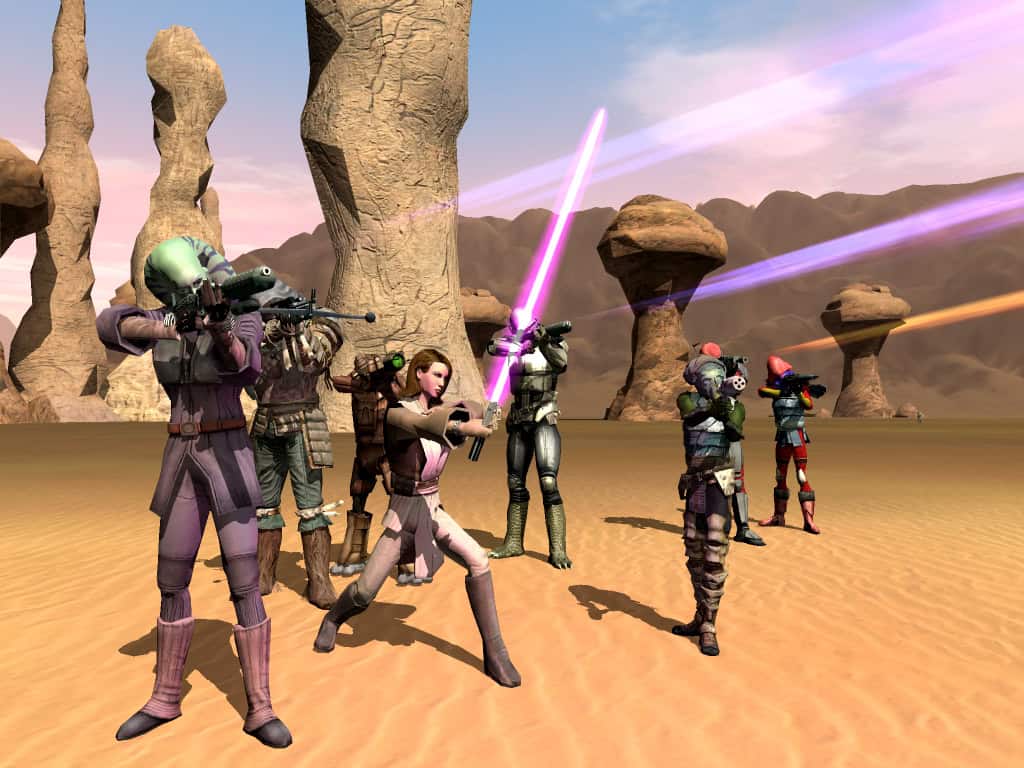
On WoW’s Illidan server, he played Horde. His characters included Berg, an orc hunter, and Domi. Before Azeroth, Nate used the name Synipus in EverQuest and Star Wars Galaxies, building the same reputation for reliability and leadership wherever he went.

He passed away from cancer in 2008, four days before his 30th birthday.

Why a Gnome. Blizzard made Synipus a gnome rather than matching Nate’s Horde main, and the choice was personal: Nate loved playing small characters, gnomes especially. The result fits him twice over, a tiny engineer keeping machines running in a war zone.

Faction loyalty mattered less than playing what brought him joy.


The PvP Issue. Most memorial NPCs in WoW are neutral or unattackable, protected spaces where players of any faction can visit without risk. Synipus is flagged for PvP.

Horde players who travel to Blue Sky Logging Grounds to pay their respects should be careful. The camp is contested territory, and approaching Synipus can flag you for combat. Unlike other memorials where the game creates a moment of peace, this one sits in a war zone. 


The Quest. Shredder Repair sends you down toward Venture Bay to recover three Broken-down Shredders and drive them back up to the logging grounds, where they’re refurbished and sent to the front. It’s a daily, part of the Grizzly Hills PvP content loop. Synipus greets you:

“Listen, pal. Why don’t ya roll up your sleeves and grab a wrench? There’s work to be done!”

When you return with a salvaged shredder, he whistles:

“Oh, she’s a beauty! We’ll fix her up nice.”

Grizzly Hills Storyline Quests


Every quest below was documented during my original 2008-2009 playthrough. Each quest page includes War Journal excerpts from the field, as Vikstone tells his story.

Click through for full walkthroughs, lore notes, and the original screenshots that make this time capsule possible.


Support the Archive
GamerTribute is a free museum, built and hosted out of pocket. If these pages brought back your Northrend, you can help keep them online.
Cover the Repair Costs
One-time support through Ko-fi. Every contribution goes to hosting and upkeep.

Amberpine Lodge

Westfall Brigade Encampment

Prospector’s Point

Ruuna’s Quests

Drakil’jin Ruins

PvP - Venture Bay

Thor Modan

Granite Springs

Harkor’s Camp

Redwood Trading Post

Share this:

The Making of the Guide

Solo PvP Guide

The Guide to SWGEmu

>