

Last Updated on July 1, 2026 by Vikas Reddy
I’m a nephrologist. I spend my days managing patients with kidney disease, electrolyte imbalances, and the downstream consequences of systemic illness. I’ve also published in the medical literature, including a case on a rare and always-fatal brain disease I’ll come back to later in this piece. I also spent my late teens and early twenties playing World of Warcraft on US-Terokkar with my guild, Trinity Exiles, which is where I first lived through the Corrupted Blood incident.
The Corrupted Blood incident has been covered endlessly. I bring it up because this article is something I never expected to write about: a video game that accidentally modeled human pandemic behavior so accurately that epidemiologists came calling, and a follow-up event that gave millions of players a personal reason to hate the Lich King.
“A video game predicted COVID!” makes a good headline. But the actual science is more interesting and more nuanced than those headlines suggest, and the Zombie Infestation that preceded Wrath of the Lich King deserves far more attention than it gets. That event was Blizzard’s masterpiece of community manipulation, and it set the emotional stakes of an entire expansion.
This is the full history of all three: the accidental one, the engineered one, and the one the Horde built in secret.
The Corrupted Blood Incident (September 2005)
What Happened
On September 13, 2005, Blizzard released patch 1.7.0, opening the gates to Zul’Gurub, a 20-player raid tucked into the jungles of Stranglethorn Vale.
The final boss, Hakkar the Soulflayer, cast a debuff called Corrupted Blood. It dealt 263 to 337 damage every two seconds and spread to nearby allies on contact. For level 60 players sitting at 3,000 to 4,500 HP, this was painful but survivable. For lower-level players (below 50), it killed within seconds.
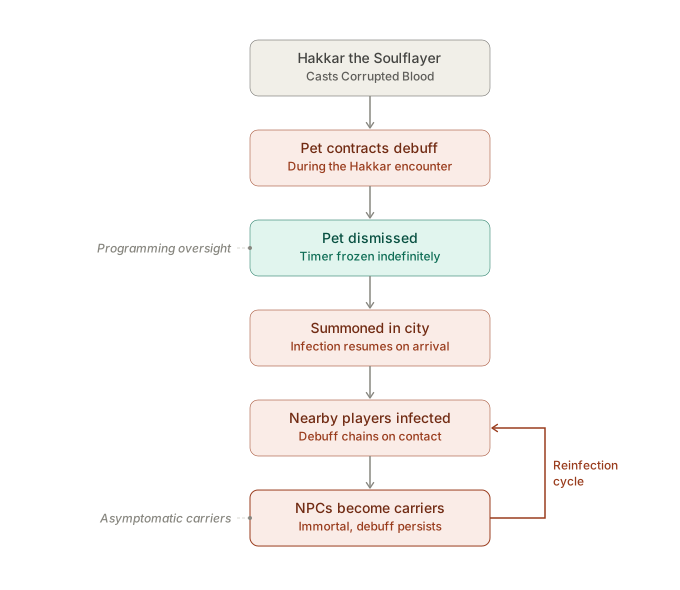
The debuff was never supposed to leave the raid. But a programming oversight changed that.

The Escape Vector
Hunter pets and warlock minions could contract the debuff during the Hakkar fight. If dismissed mid-encounter, those companions retained Corrupted Blood with its timer paused. When summoned later in Ironforge or Orgrimmar, the infection resumed and immediately spread to anyone standing nearby.
Auction house NPCs, flight masters, and stable masters became permanent carriers. They couldn’t die, so the debuff never left them. It would quietly dissipate when every player in range was dead, then flare up again the moment someone returned. They were “asymptomatic carriers.” They don’t show symptoms but can still spread the disease.
Within hours of the patch going live, major cities were killing fields.
The 2014 West Africa outbreak killed over 11,000 people, but it stayed regional. The 1918 Spanish Flu killed roughly 2 to 3% of the people it infected. That’s a fraction of Ebola’s lethality. But it spread through respiratory droplets, often before symptoms appeared, and it kept people on their feet long enough to carry it everywhere. It killed an estimated 50 to 100 million people worldwide. The lower the kill rate, the further the disease travels, and the further it travels, the higher the body count.
The “stupid factor.” This was Fefferman’s term for players who entered infected areas just to see what was happening, then carried the disease elsewhere. She later incorporated this behavior into her pandemic models because traditional epidemiological models had no parameter for human curiosity. People don’t always act in self-interest during an outbreak. Sometimes they just want to look.
Intentional griefing. Some players deliberately infected themselves and traveled to clean zones to spread the plague. This was 2005. The conversation about compliance, willful noncompliance, and biological malice in pandemic scenarios wouldn’t enter mainstream public health discourse for another 15 years.
All of those behaviors have a downstream cost in the real world, and it’s the one I watched firsthand. Every infected player a healer kept alive was also a player who stayed mobile, stayed in the crowded zones, and kept the chain going. In a real system, it’s that simultaneous load that breaks things. The well-meaning healer and the overwhelmed hospital are two faces of one failure.
I was a nephrology fellow when COVID hit. Even with preparation, our ICUs ran at full capacity, and we ran more continuous dialysis, CRRT (needed for the most unstable patients), than at any point in the hospital’s history.
I won’t relitigate that whole period here. But I’ll say the thing the textbooks undersell. When your own colleagues are the ones getting sick and dying, fear changes shape. You still have to show up. Then you go home and wonder whether your job is going to kill the people you live with. A waiting room full of infected players in Ironforge is funny. The version that stops being funny is the one where the healers start going down too.
Blizzard’s Response
The dev team was caught off guard. According to GamesRadar’s retrospective, Jeff Kaplan (then WoW’s lead designer) received a 2 AM phone call from a panicking Game Master who was killing players in Stranglethorn to contain an exploit. Kaplan’s response: “Okay, step one: stop killing all the players in Stranglethorn!”
The timeline of their containment efforts reads like a TLDR version of real-world pandemic response failures:
- September 13, 2005: Zul’Gurub opens. First infections escape within hours.
- Mid-September 2005: Rolling server restarts attempted. Outbreaks re-emerge immediately after each restart.
- September through October 2005: Quarantine zones attempted and bypassed. Hard resets deployed.
- October 8, 2005: Pandemic ends via hard reset and emergency hotfix removing the spread mechanic.
- Patch 1.8.0 (October 10, 2005): Pets made immune to Corrupted Blood.
- Patch 1.9.0 (January 3, 2006): Mechanic redesigned entirely. The debuff no longer spreads between players.
The Research Legacy
The CDC contacted Blizzard after the incident. They believed it was a planned disease simulation and wanted the data. Blizzard informed them it was an unintentional bug, so no controlled data existed. The CDC was probably disappointed.
Epidemiologists studied the event independently:
Fefferman and Lofgren (2007) published “The Untapped Potential of Virtual Game Worlds to Shed Light on Real World Epidemics” in The Lancet Infectious Diseases. Their models incorporating the “stupid factor” and the well-meaning healer problem now inform pandemic preparedness research, including COVID-19 modeling.
Ran Balicer at Ben-Gurion University published parallel findings in Epidemiology, drawing specific comparisons between pet and NPC disease reservoirs and avian influenza animal reservoirs, and between WoW’s fast-travel flight paths and SARS-era air travel.

What Corrupted Blood Did and Did Not Prove
I want to be fair here, because most articles about Corrupted Blood oversell its scientific value.
Critics raised legitimate points. The debuff had an impossibly high implied R₀ (basic reproduction number), no acquired immunity, infinite refresh via NPC carriers, and relatively low mortality for max-level players. Dr. Dmitri Williams at USC cautioned the Washington Post that in-game decisions “can vastly differ from real-life behavior.” Nobody actually dies in WoW, so the stakes are completely different.
That said, the researchers weren’t claiming WoW was a perfect epidemiological simulator. Their argument was narrower and more defensible: MMOs capture behavioral dynamics at scale that purely mathematical models cannot. The models can predict transmission curves. They can’t predict that a subset of your population will deliberately infect others for entertainment, or that your healthcare workers will inadvertently become super-spreaders.
Those behavioral inputs had to come from somewhere, and a game with millions of players provided them.
I would compare it less to a clean trial and more to watching a crazy emergency department waiting room. You do not get perfect data. Instead, you get recorded behavior: who panics, who helps, who wanders in and out of curiosity, who ignores instructions, and who makes the situation worse without meaning to.
Fifteen years later, COVID gave them the real thing. The behavioral patterns Fefferman described in 2007 were walking through my hospital doors in 2020.
The Zombie Infestation: Azeroth’s Prelude to Wrath (October 2008)
Three years after Corrupted Blood burned through Azeroth by accident, Blizzard did it on purpose.
They engineered a pandemic event as the narrative bridge to Wrath of the Lich King, with every escalation planned in advance. The community response was, somehow, even more chaotic than the original.
The Setup
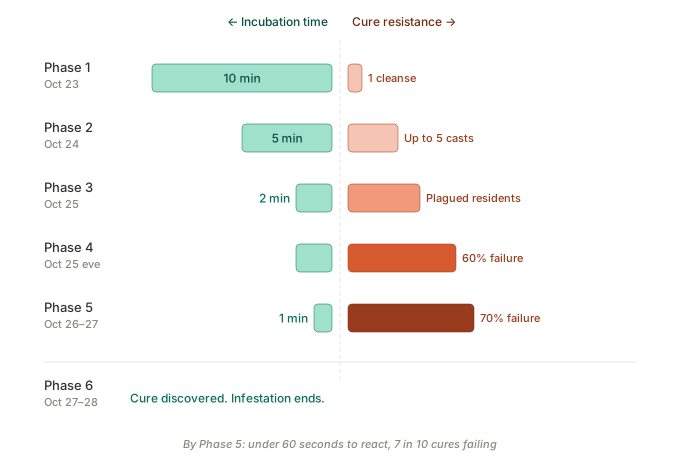
Beginning October 23, 2008, nine days after patch 3.0.2 went live, Azeroth descended into a six-phase outbreak. It started with Conspicuous Crates appearing in Booty Bay. Players who opened them contracted a plague that, over the next five days, became progressively harder to contain.
I still remember the first time I saw someone keel over in Booty Bay and had no idea what was happening. Within a day, opening one of those crates felt like daring the game to kill you, and people did it anyway.
In clinical terms, the crates functioned as fomites: contaminated objects that transmit infection to anyone who touches them. It’s the same reason hospitals obsess over surface disinfection. When the Elysium private server replicated this experiment in 2020, one of the countermeasures they gave players was in-game hand soap.
The event ended October 27 to 28 when the Argent Dawn discovered a cure. After that, the Second Scourge Invasion continued through Wrath’s November 13, 2008 launch.
The Six Phases
The scariest version of this isn’t viral at all. The United States keeps live variola, the smallpox virus, under guard for research, and a weaponized strain sits near the top of anyone’s nightmare list.
What genuinely unsettles me, though, is prions. That brain disease I mentioned at the start? This is it. I published a case on sporadic Creutzfeldt-Jakob disease, a prion illness that misfolds the proteins in your brain until it kills you, with no cure and no immune response to mount against it.
A prion isn’t even alive. It doesn’t hijack a cell’s machinery the way a virus does. It just converts the normal proteins around it into more copies of its own broken shape, and that cascade is what destroys the brain. You can’t vaccinate against it and you can’t reliably destroy it without incineration. Azeroth’s plague had a cure waiting in the Argent Dawn’s hands. Some things in the real world don’t come with one.
Not everything about the event was that heavy. One of the most memorable details was lighter: zombie chat was cross-faction.
Horde and Alliance zombies could communicate with each other. This was one of the first times in WoW’s history that the faction barrier was broken, and it took a plague to do it.
Tenris Mirkblood and the Karazhan Bonus
Phase 4 added Prince Tenris Mirkblood to Karazhan’s Servant’s Quarters, hidden behind a Bloodstained Door above Attumen’s stables. He was a walking Harry Potter tribute. “Mirkblood” mirrors “Mudblood.” His associated quest was called Chamber of Secrets. His title of “Prince” referenced the Half-Blood Prince. He’s also canonically tied to a Blood Mage named Tenris Mirkblood from Warcraft III: The Frozen Throne. He dropped two rewards that became iconic:
Vampiric Batling: A guaranteed 100% drop rate companion pet, unobtainable since the event ended.
Arcanite Ripper: An epic two-handed axe that transforms you into Bergrisst, guitarist of the in-game band L80ETC, complete with a face-melting guitar solo. An homage to the Arcanite Reaper, this weapon is now among WoW’s rarest transmogs and occasionally surfaces on the Black Market Auction House.
I missed the Mirkblood window entirely, which I’ve regretted every time I’ve seen an Arcanite Ripper sell for a fortune on the Black Market years later.
The Haunted Memento
During the Scourge Invasion phase, invading undead mobs near Necrotic Shards dropped the Haunted Memento. This item summons an untargetable Scourge Haunt, the shade unit pulled straight from Warcraft III, that follows you everywhere. It was a constant, silent companion for years until Blizzard nerfed it in Warlords of Draenor because it had become “the #1 source of spawn creatures in the game.”
Why the Event Was Polarizing (And Why That Was the Point)
Community Manager Bornakk posted an official “Zombie Infestation Survival Guide” on October 22, complete with diary excerpts from Eric Farrington of Andorhal, connecting the event directly to WoW’s foundational Scourge lore.
Players organized zombie raids that rolled through capitals. Others formed defensive militias. Hallow’s End was running simultaneously, which meant achievement hunters were stranded mid-holiday with their quest NPCs dead on the ground.
The event was divisive, and modern players sometimes dismiss the complaints. But context matters. In 2008, you could not fly in old-world Azeroth. There was no “just fly over it.” You couldn’t mount up and zip away from a swarm of player zombies pouring through the auction house district. You were on the ground, on foot in many cases, and the plague was everywhere.
That was the point. Blizzard needed every player, regardless of whether they cared about lore or raiding or PvP, to feel like something terrible was happening. The Lich King wasn’t an abstract villain in a cinematic. He had disrupted your daily routine. He had killed your auction house NPC and ruined your holiday achievement run.
When you sailed to Northrend three weeks later, you had a personal grudge. Howling Fjord and Borean Tundra do not feel like random leveling zones. They feel like the counterattack. The plague had reached your cities, and now you were sailing north to find the hand behind it. In my character Vikstone’s case, it was a personal vendetta against the Lich King and the fictional Malthrax the Undying.
I’ve seen game studios attempt pre-expansion events since then. None of them have committed to the discomfort the way Blizzard did in October 2008. They’ve learned from the backlash, which means they’ve also lost the impact.
The New Plague That Came From Inside
The Lich King’s plagues came from outside. The Zombie Infestation was his opening move, and Northrend was the counterattack. But the most devastating plague in WoW’s lore didn’t come from the Scourge at all. It came from inside the Horde.
The Royal Apothecary Society had been developing what they called the New Plague for years, a weapon engineered to kill both the living and the undead. Sylvanas Windrunner personally authorized the research and swore Grand Apothecary Putress to secrecy, knowing it would be considered unconscionable.
If you played Horde through Howling Fjord, you helped them build it without knowing. The quest chain at Vengeance Landing had you collecting plague ingredients, and by New Agamand you were mixing compounds from vrykul blood, spraying plague on vrykul at the village of Halgrind, and deploying plague vials on Alliance sailors from a bat.
You were field-testing a bioweapon and the game framed it as progress against the Scourge. If you played Alliance, you were on the other side of it. At Westguard Keep, a drunk gnome alchemist named Peppy Wrongnozzle tried to brew a plague vaccine, you tested it on a vrykul prisoner, and it backfired. “I perfected their plague for them,” she slurred. Your next quest was to fly over New Agamand and bomb the Forsaken’s plague tanks.
Both factions touched the same weapon from opposite sides, and neither understood what they were feeding. In Dragonblight, the research continued at Venomspite, and the land around every test site turned dead and brown.
The detailed history of the development of the New Plague can be found in the Howling Fjord Lore guide.

Putress, the same apothecary who helped cure the Zombie Infestation from his camp in Shattrath, who sent Horde players running severed zombie heads to their capital cities to develop the anti-plague. After one of those quests, he thanked the player and added: “I also admit mild regret that you will not volunteer for our experiments.” Nobody blinked.
He used that same expertise to finish the New Plague and deploy it at the Battle of Angrathar the Wrathgate. After Dranosh Saurfang fell to the Lich King, Putress appeared on the cliffs above the battlefield and launched the Forsaken Blight from catapults onto everyone below. Scourge. Horde. Alliance. “Did you think we had forgotten? Did you think we had forgiven?”
Even the Lich King retreated. Highlord Bolvar Fordragon was presumed dead. The healer who cured one plague had weaponized the next one. The researcher who understands a disease well enough to cure it is also the person best equipped to weaponize it. That’s the entire argument behind dual-use research oversight in the real world, the recognition that the same knowledge that saves lives can be turned around.
Putress is a fictional character, but the pattern is real, and Blizzard wrote it into the lore three years before it became a mainstream policy conversation. What the Royal Apothecary Society actually did has an even more specific name in modern biosecurity: gain-of-function research. They took an existing pathogen, the Plague of Undeath, and modified it to expand its lethality to a population it couldn’t previously kill. In virology, deliberately enhancing a pathogen’s capabilities to study it or prepare defenses is one of the most contested practices in the field, precisely because the same enhanced pathogen that teaches you how to build a vaccine can also be deployed as a weapon.
The apothecaries built the research, the cure, and the bomb. And a pathogen engineered to destroy both the living and the undead attacks its target below the line of whether the host is even alive. Some weapons don’t need their victim breathing to take it apart.
The aftermath reshaped the Horde. Thrall posted Kor’kron overseers in the Undercity to monitor the Royal Apothecary Society. The full-strength Blight was outlawed. And if you played through the Battle for the Undercity, you watched faction leaders storm their own capital to put down the coup that Putress and the dreadlord Varimathras had launched while the Wrathgate burned. The plague that started as sanctioned research ended as a war crime, and the Horde spent the rest of the expansion answering for it.
The weapon outlived its creator. A decade later (in BfA), during the Battle for Lordaeron, Sylvanas deployed the same Blight on the battlefield outside the Undercity, killing Alliance and her own Horde soldiers alike before raising the dead from both sides. When the battle turned against her, she ordered the entire capital detonated with it rather than surrender the city. The plague Putress built and Sylvanas authorized didn’t end at the Wrathgate.
How much Sylvanas knew about the Wrathgate deployment, and whether Putress was a rogue agent or a convenient one, is a question the lore never fully settles. That’s a story I pull apart in the full Wrathgate questchain breakdown, a story that Blizzard removed from the game.
The Industry Learned From It, Mostly by Becoming Safer
WoW’s plagues didn’t exist in a vacuum. Other studios took notes and adapted the concept:
Death Rising (November 2020): WoW’s own Shadowlands pre-patch event. Zombie mechanics returned with opt-in guardrails, which kept the complaints down and the impact low.
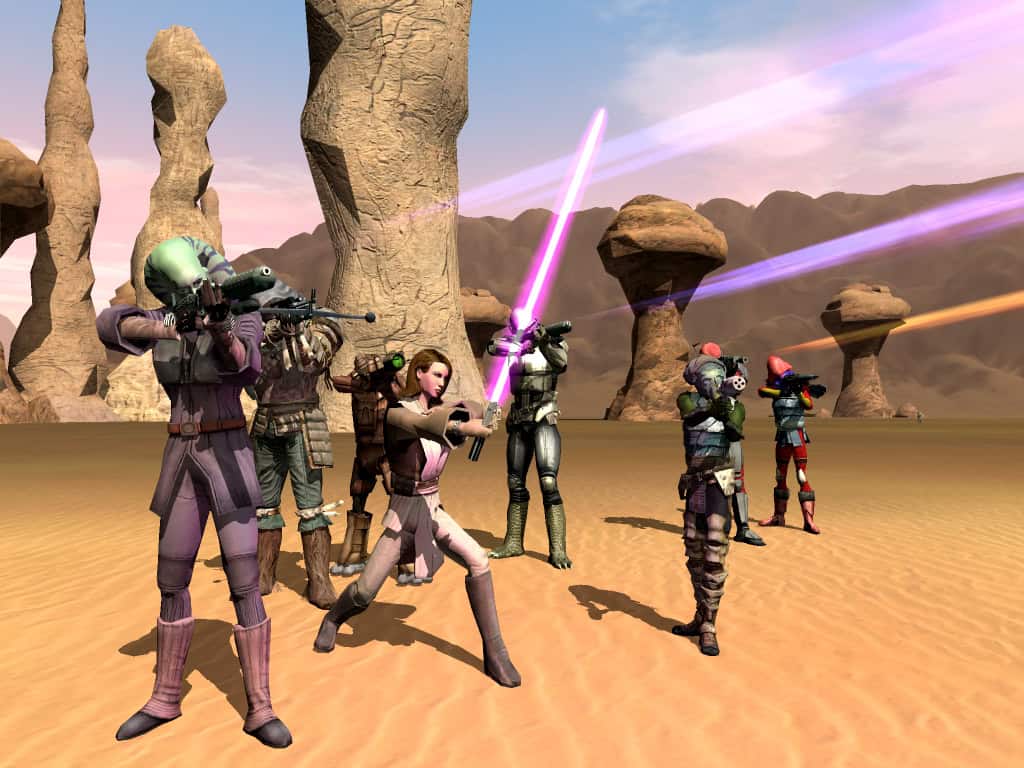
Rakghoul Plague (SWTOR, April 2012): BioWare dropped this one with zero warning. There were no patch notes or datamined leaks. Players logging into the Fleet suddenly heard emergency broadcasts about a rakghoul contamination on Tatooine, where a crashed ship called the Stardream had spilled the plague across the Dune Sea. The event had voiced story content, daily quests, world bosses, and unique rewards including Rakling companion pets and Black-Green crystals sold by a Jawa vendor near the crash site.

The smart part was the infection mechanic. Players who contracted the virus had about 20 minutes before they exploded, infecting everyone nearby and earning DNA samples as a reward. There was a quest to deliberately infect 10 other players. People spread it in warzones, all over Fleet stations, everywhere they could. BioWare channeled the griefing impulse into a reward loop instead of trying to suppress it. That’s the key design difference from Blizzard’s approach.
Lead Writer Daniel Erickson confirmed it was designed as a one-off to give the game “a sense of history” where some things remain in the past. BioWare later went back on that with the recurring Rakghoul Resurgence, but the original event’s exclusive rewards are gone for good. I didn’t play SWTOR at the time, but I have fond memories of the plague from the planet Taris in KotOR.
Season of Discovery (2024): Corrupted Blood itself returned in late 2024 through a similar spell from the Avatar of Hakkar in Sunken Temple. The original hotfix wasn’t applied to this different spell using the same name. Nearly two decades later, it’s the same bug wearing a different face.
When Azeroth’s Plague Returned During Lockdown
In April 2020, the Elysium private server ran “Pandemic in Azeroth,” a custom outbreak event inspired by Corrupted Blood and tuned to mimic COVID-19 spread. Their results: 88% infection rate without mitigation; 42.2% with hand-washing, social distancing, and sanitization measures in place. The admin, who went by Rain, had no stated background in epidemiology. He told Kotaku: “I felt like I had an ability to inform people and help out in this time.”
When Zul’Gurub launched in WoW Classic the same month (April 2020), the original pet exploit was already patched. Classic ran on patch 1.12 code, which included the 1.8 immunity fix. No repeat pandemic was possible.
Think about the timing. The world was locked down. A private server was running plague simulations in a 15-year-old game. And the official Classic servers were, for the first time, immune to the very bug that started it all.
Corrupted Blood in WoW’s Cultural Memory
Blizzard never let the incident fade. It became part of the game’s mythology:
In Hearthstone, Hakkar’s legendary card shuffles Corrupted Blood spells into both players’ decks. The flavor text reads: “ATTENTION: Do not enter any major city while infected with the Corrupted Blood!”
The Mark of Hakkar card back, given to a small group of streamers and journalists in February 2019, then spread to 87% of North American players within roughly 12 hours, mirroring the original outbreak’s mechanics through play.
In Heroes of the Storm, the Dreadlord Mal’Ganis quips: “Don’t get me wrong, I’m proud of the work I did with the Plague of Undeath. But Hakkar the Soulflayer’s Corrupted Blood? Now THAT was a plague!”
In Battle for Azeroth, Zandalar’s backstory references a plague caused by Hakkar that killed thousands, turning the real-world incident into official Warcraft canon.
What These Events Actually Taught Us
As someone who treated patients through the pandemic and also remembers watching Ironforge burn in 2005, the parallels were hard to ignore. The patients who came to the ER “just to get checked out” when they had mild symptoms and ended up exposing an entire waiting room. The healthcare workers who became vectors because the protective equipment wasn’t there yet. The people who refused to follow protocols and treatments because they decided the threat was overblown. Fefferman called it the “stupid factor” in 2007.
In 2020, we just called it human nature.
The intentional griefers in WoW spread the plague for entertainment. The real-world version spread it through denial, and the people on the receiving end ended up just as sick either way. Dr. Eric Lofgren, the epidemiologist who lived through the original Corrupted Blood outbreak as a player, said it plainly in 2020: minimizing how serious something is amounts to real-world griefing.
The Zombie Infestation taught a completely different lesson. A controlled, narrative-driven disruption made millions of people emotionally invest in a story. Blizzard sacrificed short-term player satisfaction (and took real heat for it) to create long-term emotional stakes. Every player who sailed to Northrend on November 13, 2008 carried a memory of the plague with them. That kind of storytelling at scale is something most narrative designers will never get to attempt.
Both events belong in the historical record. Millions of people showed us exactly how humans behave when the world falls apart, and one studio had the nerve to do it on purpose. One plague taught researchers something about people. The other taught players why the Lich King had to die.

The Zombie Infestation ended. Three weeks later, I sailed to Northrend. What I found there, every quest, every zone, every screenshot, is on this site.